
In the spring of 1965, a 32-year-old San Francisco-based documentarian named Lee Mendelson received a call from Coca-Cola corporate headquarters.
Mendelson had two documentaries under his belt at that point: one on legendary center fielder Willie Mays and one on Charles Schulz, creator of the “Peanuts” newspaper strip.
Mendelson had showed the Schulz doc to a number of potential corporate benefactors and underwriters, but all of them had taken a pass.
Coca-Cola had passed too. The company wasn’t calling about the documentary, at least not directly.
Time Magazine had run a cover story on Schulz, Mendelson said in a phone interview, and it likely refreshed the memories of one or more Coca-Cola executives about the Schulz bio.
“They said they’d seen the documentary and they’d liked it and wanted to know if I’d ever considered doing a Christmas show,” Mendelson said.
Mendelson’s answer to this question was “Absolutely.” Coca-Cola told him they’d need an outline in two days. Mendelson called Schulz.
“I said, ‘I think I may have just sold a Charlie Brown Christmas show,’” Mendelson recalled. “And (Schulz) said, ‘What in the world is that? And I said, ‘It’s something you’re going to write tomorrow.’”
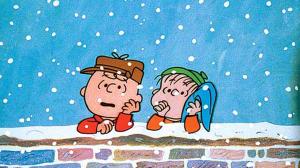
To the surprise of nearly everyone involved, “A Charlie Brown Christmas” was a huge success when it debuted less than nine months later on December 9, 1965. So beloved has it become that its 50th anniversary will be commemorated with a new TV special airing at 8 p.m. Monday, Nov. 30, on ABC.
“A Charlie Brown Christmas” broke some ground that few sages of TV animation at the time thought was breakable.
For one thing, its creators decided that actual children should provide the voices of the Peanuts characters. In the ‘60s and before, adolescent characters in television animation were always voiced by adult actors doing their best to sound elfin (and their best usually sounds bogus to modern ears).
Schulz also bucked conventional network wisdom with two non-negotiable requests: He wanted the special to have a religious message and he didn’t want it to have a laugh track.
“The ‘Flintstones’ and others had laugh tracks,” Mendelson recalled, “and I casually said, ‘I guess we’re going to have a laugh track’ and he said, ‘No, we’re not’ and that was the end of it. It was a very brief disagreement. About 8 seconds.”
The involvement in the special of jazz pianist Vince Guaraldi was the result of happenstance.
Mendelson, a jazz aficionado, was listening to a San Francisco jazz station one day while driving across the Golden Gate Bridge.
He was editing the Schulz documentary at the time and had been wondering what music he should use for some short animated segments.
“I heard (Guaraldi’s) ‘Cast Your Fate to the Wind’ for the first time,” Mendelson said. “It had just won a Grammy. And I said to myself, ‘That’s the type of music that would be good for Charlie Brown because it’s both adult-like and kid-like.’”
Mendelson called the jazz critic at the Los Angeles Times and asked if he’d ever heard of Guaraldi. Not only had the critic heard of him; he was having lunch with Guaraldi that very day.
Guaraldi was in the midst of composing music for the documentary on Schulz when he called Mendelson.
“I recall him playing this song for me over the phone and I almost passed out,” he said. “Because it was the first time I’d heard ‘Linus and Lucy.’
“It was so funny,” Mendelson said. “When he played it, I had the weirdest sensation. I said, ‘That’s going to affect all our lives.’ Why I would say that about a song? I have no idea.”
It was Guaraldi who suggesting using a trombone to approximate adult voices in the first special, he said, as no adults had ever appeared in the strip. And animator Bill Melendez, who had previously worked at Disney, found a novel and enduring way to give voice to Snoopy (and, later, Woodstock).
“He would just talk gibberish and speed it up,” Mendelson said.
After “A Charlie Brown Christmas” had been completed but before it had aired, many people involved in its creation thought they had failed, Mendelson said.
“What happened was, we didn’t think the show worked,” he said. “We thought it was too slow. We took it to the network and they thought it was too slow, they thought it was unusual to have jazz music and to have kids doing the acting.
“They didn’t single out any one thing,” Mendelson recalled, “but they said, ‘Well, we’ll run it one time and, you know, it was a good try.’”
The debut of “A Charlie Brown Christmas” garnered a 45 share, Mendelson said, which means nearly half the country was watching.

Mendelson, Schulz and Melendez subsequently collaborated on more than 40 “Peanuts”-related projects and built a friendship that endured until Schulz’ death from cancer in 2000.
Mendelson said Schulz had a reputation as a recluse but this was more a result of the nature of his work than any innate inclination.
“It’s just that you have to sit at the drawing board every day and come up with a new idea,” he said. “He said it was like having to write a term paper every day. He did 18,000 strips over a 50-year career and he never missed a deadline.
“It wasn’t really that he was reclusive,” Mendelson said. “He had work to do that kept him at home. You can’t draw a comic strip on an airplane.”
“A Charlie Brown Christmas” gave Mendelson the opportunity to craft lyrics for an eventual jazz standard (he added words to a Guaraldi instrumental called “Christmastime is Here”) and the upcoming 50th anniversary special gave him another: He wrote lyrics for a new Charlie Brown-themed David Benoit song called “Just Like Me.”
 aloadofthis