Get Into Gear

Standard

Sweetwater Sound’s GearFest is not only unusual among music industry trade shows.

It is unusual among trade shows in general.

Most trade shows are designed to give retailers who sell goods to customers a chance to interact and haggle directly with vendors who sell goods to retailers.

Customers, those folks who just buy goods for themselves, aren’t usually invited to such shows.

But GearFest is open to everyone.

“You don’t have to be a member of any organization to come,” said Bob Bailey, executive director of the Sweetwater Academy of Music and Technology. “It’s free.”

And most trade shows aren’t nearly as much fun as GearFest.

GearFest is a star-studded affair with concerts and food trucks.

GearFest has a lot more in common with Disney World than it does with World of Concrete, which (believe it or not) is an actual trade show devoted to commercial concrete and masonry.

This year’s GearFest happens June 22 and 23 on the campus of Sweetwater Sound.

Bailey said more than 450 music equipment and music technology brands will be represented at this year’s GearFest.

Sweetwater expects 16,000 people from around the world to attend, he said.

“People plan their vacations around this,” Bailey said. “It has become quite the destination event.”

“GearFest is unique in being free and open to musicians and audio enthusiasts.” Sweetwater Sound President Chuck Surack said. “Unlike most trade shows, which are held for manufacturers and retailers. We’re particularly proud that GearFest has such a reputation that it is now bringing people from literally all over the world to Sweetwater’s campus in Fort Wayne.”

GearFest triggers an “all hands on deck” order at Sweetwater, Bailey said.

Every employee, regardless of his or her role is at Sweetwater the rest of the year, is required to work GearFest in some event-presenting capacity.

Individual GearFests don’t have themes. But if this year’s edition did have a theme, it would be “guitarists.”

“I’d like to say it was a strategic decision,” Bailey said. “But, in truth, it was based on artist availability.”

This year’s GearFest lineup puts the luster in illustrious. Among the serendipitously assembled guitarists: John Scofield, Adrian Belew, Misha Mansoor, Lyle Workman, Nita Strauss, Butch Walker, Tim Pierce, Chris Broderick, Larry Carlton and Yngwie Malmsteen.

Presenters who have become famous for something other than guitar playing include drummer Peter Erskine, bassist Carlitos Del Puerto, DJ Reborn, “Hamilton” drummer Andrés Forero, singer-songwriter Addison Agen, drummer and producer Russ Kunkel, producer Fab Dupont and drummer Steve Ferrone, formerly of Tom Petty and the Heartbreakers.

One of the things that separates Gearfest from a summer music festival is that the musicians don’t just perform.

They teach.

Bailey said most music trade shows are heavily focused on presenting the gear.

At Gearfest, Bailey said, attendees can partake of educational breakout sessions on all aspects on performing music: from playing techniques to surviving-in-the-business techniques.

Bailey estimates that Sweetwater will offer 40 to 50 of these sessions per day.

There will Producer’s Panel this year, he said, featuring several Grammy winning engineers and mixers: Michael Omartian (Johnny Cash, System of a Down and Prince), Sylvia (Tool, Johnny Cash, Prince, Tom Petty and the Red Hot Chili Peppers), Neal Pogue (Earth, Wind & Fire, TLC, Pink, Nicki Minaj and Janelle Monáe) and Kevin Killen (Elvis Costello, David Bowie, U2, and Peter Gabriel).

“Omartian played accordion on ‘Piano Man,’” Bailey said. “He also played keyboards on Steely Dan’s ‘Aja’ and ‘Katy Lied.’”

Erskine and Scofield will present a clinic called “Inside the Groove,” he said.

“It talks about the interaction between musicians on stage,” Bailey said, “and how to listen and how to perform with other musicians.”

YouTube celebrities will preside over a clinic on using the video-sharing website to further one’s career, he said.

Sweetwater’s inside guitar shop and recording studios will offer clinics on guitar upgrades and repairs and on studio craft, respectively.

“(Engineers) will be talking about how they mic up certain sessions,” Bailey said. “Why they select specific microphones, how to place it and how to get the best sound.”

Staging optimal live music experiences is one of Sweetwater’s fortes, as anyone knows who has attended an event that the retailer has sponsored or consulted on.

So it is not surprising that there will be clinics on presenting live music.

Food this year will be provided by 24 area truck-based vendors, Bailey said, in addition to Sweetwater’s in-house restaurant.

On the Friday evening, after a Q&A with Carlton and a clinic from Belew, the Sweetwater All-Stars will perform.

It is a supergroup comprised of Sweetwater employees (many of whom have won Grammies and Dove Awards) and any attending celebs that want to sit in.

“A lot of the artists who are appearing here will get up and play a song,” said Bailey, who sings and plays guitar with the band. “Last year, it ran long. We were supposed to shut it down at 9 o’ clock and there were so many artists that wanted to get up, we ran until 10:30.

“I ran into (guitarist) Eric Johnson recently and he said, ‘Man that was fun. I want to do it again,’” Bailey said. “So I can check that off my bucket list. Eric Johnson said it was fun jamming with me.”

Cool Change

Standard

On recordings, on the radio and on stage, Little River Band is known for feel-good hits like “Reminiscing” and “Help Is On Its Way.”

Behind the scenes, the band’s mellow image has been marred a bit by feel-bad discord.

The band performs June 22 at the Foellinger Theatre.

The person who often finds himself at or near the epicenter of this discord is an unlikely candidate for trouble stirring: current lead singer Wayne Nelson, who comes across on the phone as an earnest and principled guy.

Nelson, a Chicagoan whose first big break in the music business came when he toured with Jim Messina, joined Little River Band as a bassist in 1980.

Nelson was the only American in a band full of Australians and he joined at a time when the Australians weren’t really getting along with each other.

“Little River Band’s history is that it was an assembled band,” he said. “It was constructed from four different acts that were successful in Australia. Management saw an opportunity to put together a vocal band with good writers. The business plan was: ‘We’re going to conquer American radio.’”

The business plan worked, Nelson said, but the personalities weren’t always in sync.

It didn’t take long after the band tasted its first American success for egos to clash.

An essay on the defunct Australian music site Howlspace had this to say about the state of the band in 1976:

“…the band also needed an outsider to control the frictions and competition between the band members. Since the first album, as much as possible, (Glenn Shorrock, Graeham Goble and Beeb Birtles) recorded separately in the studio.

“Everybody knew best, if you know what I mean,” Nelson said. “The guy who wrote ‘Lonesome Loser,’ he knew best. The guy who wrote ‘Cool Change,’ he knew best. So the factions started to go to war.”

Nelson said he was totally unaware of that dynamic when he joined the band.

“I arrived and then I immediately started to feel this tension about what the direction was going to be,” he said. “

Nelson was thrilled to learn that Beatles producer George Martin had been chosen to produce the 1981 album, “Time Exposure.”

“I thought, ‘George Martin can certainly tame the crowd here,’” Nelson recalled.

It didn’t work out that way.

“I just watched this wholesale war going on about how it was going to be,” he said. “George did his job but the guys made it very difficult for him.”

It would be foolish to chart here all the firings, angry departures and returns to the fold that have happened throughout the band’s history.

Nelson quit the band in the mid-1990s, largely because of a family tragedy.

But there were other factors.

“I went back to the band for the 20th anniversary,” he said. “And the attitude at that point was, ‘No new music because then we’d have to talk to the press and we’d have to promote.’ It just didn’t jibe with the band’s politics.

“We limped along,” Nelson said. “We performed 11 songs the same way every night. There was a lot of drinking and a lot of crap. It was not worth leaving home for. So I stopped in ’96.”

Nelson said the band ultimately “shot itself in the foot,” which is to say, it let internal strife capsize external success.

Eventually, a Nelson-fronted version of Little River Band was formed by guitarist Stephen Housden, who owns the rights to the name.

Birtles, Shorrock and Goble subsequently tried to tour as Little River Band but Housden successfully stopped them from doing so in court.

In 2015, however, Shorrock prevented the current incarnation of the band (which has no founding members in it) from performing most of its best-known hits on “The Tonight Show with Jimmy Fallon.”

That same year, Housden appeared on an Australian program called “Sunday Night” and stated that he would never let Shorrock, Goble and Birtles perform under the name Little River Band.

“Not in this lifetime,” he said. “They’d use it as a grandstand to send more rubbish towards us. I can’t see why I should give them a platform to do that.”

What Little River Band is now that it wasn’t prior to 2000 is comprised of people who are eager to collaborate on new music and who actually enjoy sharing a stage together, Nelson said.

The people who say that the current incarnation isn’t the real deal are probably unaware that fans started saying the same thing in 1977.

“The first two guys to be removed from the band were responsible for the first record,” Nelson said. “I always say, ‘By that logic, Little River Band ceased to exist in 1976.’ So where are you then?”

Nelson said he bears no ill will toward people who are loyal to any former Little River Band lineup.

“But please don’t call me a fraud,” he said. “I’ve been in the band for 38 years and I have watched all this stuff happen. I have been part of every lineup change since 1979. You don’t put the label of fraud on me for wanting to continue something that those guys all walked away from.

“Little River Band has always been good,” Nelson said. “If you prefer the ’77 version of Little River Band and you have DVDs and CDs of that version, God bless you. If you want to hear new music and you want to hear Little River Band still being played with energy and still being put out there by a member of the band who was original to five of the hits out of the total of 11, then please come and check it out.”

Wheel In Motion

Standard

If you want a robust career in the entertainment business, it helps to be in the right place at the right time.

Of course, there is no way to accurately predict where the right place will be and what time one should plan on arriving there.

Ray Benson, founder and lead singer of the western swing band Asleep at the Wheel was in the right place at the right time about 45 years ago and he has Willie Nelson to thank for it.

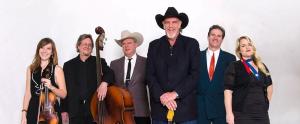
Asleep at the Wheel performs at the Clyde Theatre on June 14.

These days, Benson and his band are the leading practitioners and protectors of the western swing tradition.

Benson didn’t start out to be the leading practitioner and protector of the western swing music tradition.

It just worked out that way.

When Benson was a boy growing up in Pennsylvania, the leading practitioner and protector of the western swing music tradition was a guy named Bob Wills.

Benson loves Wills and has spent his career paying tribute to the man and his music in various ways. But Wills was not the artist who sparked his love of all the country-tinged genres that are now lumped under the rubric of “traditional country music.”

Benson owes his love of country music and country music culture to a woman named Sally Starr.

Starr was a children’s TV host whose flamboyant western outfits were later echoed in garb worn by the character of Jessie in the ‘Toy Story” films.

Starr was just one of the performers who made a big impression on Benson as a kid and as a teenager. Others included Hank Williams, Hank Thompson, Count Basie, BB King, Buddy Guy, Lightnin’ Hopkins, Muddy Waters and Blind Lemon Jefferson.

He said he first encountered one of Wills’ songs when he was 16 years old.

“I just collected a lot of different kinds of music,” Benson said in a phone interview. “It was ‘Brain Cloudy Blues’ and I thought, ‘Wow! What’s this?’”

When Asleep at the Wheel first formed in 1970, it wasn’t a western swing band, per se.

“We did some Bob Wills songs,” he said, “We were mostly about American roots music from the ‘20s, ‘30s and 40s.”

The inception of Asleep At The Wheel happened in Paw Paw, West Virginia at the family farm of one of the band’s members.

In 1973, Asleep at the Wheel released its debut record called “Comin’ Right At Ya.” It caught the ear of a Wills fan named Willie Nelson.

Nelson was not yet the beloved cultural institution and life guru that we know and love today, so perhaps his advice wasn’t as ironclad as it came to be.

But Benson took it anyway.

The band, which had been encouraged by George Frayne of Commander Cody and his Lost Planet Airmen to come out to California, was subsequently encouraged by Nelson to move to Austin.

“He said he’d put us on shows and stuff,” Benson said. “We made $100 for the whole band but that was great.”

The band arrived in Austin at an opportune moment. Hippies and cowboys were commingling in surprisingly friendly and fruitful ways and something that came to be called the Cosmic Cowboy movement was in the offing.

“We could play the redneck dance halls and the hippie hop joints,” Benson said. “Nobody else but Willie Nelson could do that. And Waylon, you know.”

It wasn’t perfect. Benson said that people didn’t always understand or appreciate what the band was trying to do. And Benson admits he didn’t much like some of the music that came out of the Cosmic Cowboy movement.

Benson’s said his musical tastes were too eclectic even to be encompassed by the movement.

The band’s evolution from a “regressive country” outfit to a western swing revival act was gradual, he said.

To wit: The band’s first hit single, “The Letter that Johnny Walker Read,” was a languid duet that Conway Twitty and Loretta Lynn could have covered.

In the ensuing decades, Asleep at the Wheel has collaborated with so many country and Americana artists that a list of who the band did not collaborate with would take up less space in the paper.

The band is well and overtly loved by such Millennial-skewing acts as Avett Brothers, The Devil Makes Three and Old Crow Medicine Show.

As a way of ensuring freshness, Asleep at the Wheel has cycled through more than 100 different members over the years.

Benson said he likes continuously to invigorate the band with young talent and he doesn’t really have to hold auditions.

“They find us,” he said. “There’s a grapevine of musicians that just know. These are folks that I would see. I am always listening to new music. I am always seeking new music.”

Benson admits that he has felt, from time to time, a little constrained by the band’s identity as the standard bearers of western swing.

But Benson said the band’s younger fans seem more open to stylistic explorations and expeditions.

In September, Asleep at the Wheel will release one of its boldest albums yet called “New Routes.”

“It’s different,” Benson said. “We went pretty far field. There’s no Bob Wills on it. We’ve already done three Bob Wills tribute albums.”

The new record will feature an Avett Brothers collaboration, he said.

In these younger artists, Benson said he sees what he was 40 years ago.

Benson is still an avid musical collector and a passionate amateur musicologist. He said it is stunning to contemplate how much the music business and music listening habits have changed in the last century.

“You have to understand that we are living in a time right now when 100 years of recorded music is available on demand by punching a button,” he said. “All of a sudden, there’s 100 years of recorded music. 100 years ago, there was none. 100 years ago, people learned face-to-face.

“It’s just a whole ‘nother ball of wax,” Benson said. “Anybody who is interested in creating music can access every genre, every type of music, that has ever been done and decide how their creativity fits into it.”