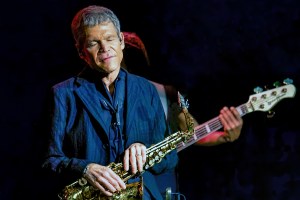
My interview with David Sanborn, who performs at the Clyde Theatre on November 1:
https://whatzup.com/articles/david-sanborn-electric-band-jazz-saxophonist-lives-to-play

My interview with David Sanborn, who performs at the Clyde Theatre on November 1:
https://whatzup.com/articles/david-sanborn-electric-band-jazz-saxophonist-lives-to-play

My interview with LeAnn Rimes, who is performing tonight at the Honeywell Center in Wabash:
https://whatzup.com/articles/leann-rimes-striving-to-inspire
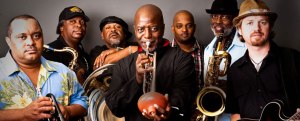
My interview with Roger Lewis of the Dirty Dozen Brass Band. The Dirty Dozen Brass Band is part of traveling revue called Take Me To The River that features New Orleans-based acts. It will visit the Clyde Theatre on October 17:
https://whatzup.com/articles/dirty-dozen-brass-band-the-powerful-medicine-of-music
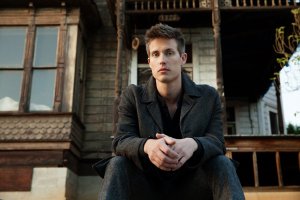
Jon Gordon Langseth Jr., alias Jonny Lang, was discovered in the late 1990s as part of a wave of blues guitar prodigies.
In the late 1990s, we loved nothing so much as white teenagers who could play the blues like aging African-American men.
Lang, who will perform at the Clyde Theatre on August 11, has developed a lot as a player and as a person since that time.
He said it is difficult to listen to recordings from his younger days.
“I would say it’s like looking at an old yearbook photo of yourself,” Lang said in a phone interview. “It’s like, ‘Oh my gosh. What was I wearing? Look at that haircut!’”
In the wake of his first blast of fame, Lang struggled briefly with alcohol. But he said he avoided most of the pitfalls that can swallow up young musicians who experience early success.
“I used to party pretty hard,” he said. “But, all in all, I am happy about the way things turned out. Very happy, in fact.”
In the decades that intervened, Lang expanded his musical palette to encompass soul, funk and rock. He embraced Christianity, got married and started a family of his own.
Lang said everything happened naturally. Well, his family happened naturally, of course, but what Lang is referring to is his musical excursions and explorations.
“There’s not really a whole lot of me consciously directing it,” he said. “I really enjoy letting things fall into place.
“Life is what dictates my next move,” Lang said, “Where I am at in the moment. What I am feeling. I try not to force it too much. Usually the inspired part of it is what makes the most sense.”
New songs tend to come together in the studio with input from the entire band, Lang said.
The music business has changed a lot since the late 1990s. Three decades ago, major musicians made most of their money through CD sales. Nowadays, it’s live performances that pay the bills.
“Fortunately,” Lang said, “I’ve been able to tour and have that be the main source of income all through the years. It’s acted as a buffer against all of those changes you mentioned. Because, yeah, if you’re trying to make money making records, it’s a tricky thing.”
Lang hastens to add that he still covets a radio hit.
“I am not going to pretend I wouldn’t love that,” he said. “That would be great.”
Family complicates touring, of course. Lang said having children (five of them at last count) is the best thing that has happened to him.
“Family is my top priority,” he said. “It’s about more than just me saying, ‘I’m doing something I love and I’ll come and go as I please.’ That was a big change in life. You find out how selfish you are.
“It’s a Catch-22,” he said. “It’s the thing I do to support them and it’s the thing that takes me away from them.”
They’re 10 and younger and Lang said he looks forward to the day when they’re old enough to accompany him on tour.
Lang said he’s been lucky enough to have a number of music legends fill the role of father figure for him.
The most influential of those is Buddy Guy.
“We are out on the road with him now,’ Lang said. “You look up to him because he’s just this iconic legend. He was around when this genre of music he plays was born. And he’s still here.
“To hang out with him and have him be so kind and nice to me and inviting and accepting…He’s just been a really good guy to me and that’s meant a lot. It’s been a good example for me. I have grown up seeing that.”
Asked to cite someone he would like to collaborate with that he hasn’t had a chance to work with yet, Lang gives a surprising answer: James Taylor.
“James Taylor and Steve Wonder,” he said. “They’re my favorites. I’d mop the floor for them. Anything for a chance to be in the same room.”
Lang has realized the dreams of many a young musician. He said he doesn’t have any “long-term, off-on-the-horizon destinations to be reached” at this point.
“Whenever you do that,” he said, “you find out when you get there that it’s not what you thought it would be.
“I just want to be as good of a dad as I can and as good as of a husband as I can,” Lang said. “I want to try to honor what God has give me the best way that I can. Hopefully, the music that we do can be something good in people’s lives.”
The 50th annual Three Rivers Festival happens this year, but executive director Jack Hammer has had to do the math over the phone with people that think he counted wrong.
“One guy went to the library and said, ‘It can’t be. If it started in ’69 and this is ’18, this is not 50 years.’ I said, ‘Just count on your fingers. It’s going to work out.’”
There are some special events for the 50th, but what the festival really wants to celebrate this year, Hammer said, is volunteerism.
“We have had 50 years of volunteers coming forward,” he said. “There is one guy who has come forward every year to help. He’s one of our honorary grand marshals.
“That’s what made it happen,” Hammer said. “It hasn’t been about executive directors.”
Of course, volunteers are as excited as anyone about the commemorative bells and whistles. So they probably wouldn’t begrudge us a preview of those bells and whistles in this article.
For example, the festival this year will end with “multi-point fireworks.”
“Everything goes off the Power Center,” Hammer said. “And then in the last few minutes – that’s the Hanning & Bean Finale Spectacular – four other buildings come into play: The Lincoln Tower, the Ed Rousseau Building, the First Source Building and what looks right now to be the East Tower of (Three Rivers Apartments).”
And the festival will start with parade balloons.
The Three Rivers Festival Parade has always had a lot of recommend it, but its list of assets hasn’t often included honest-to-giganticness parade balloons.
“There’s going to be a 45-foot tall Cookie Monster,” Hammer said, “a 35-foot-tall Abby Cadabby from Sesame Street and some Angry Birds.
“Those are there because of Sweetwater,” he said. “Because of Chuck and Lisa (Surack).”
As part of the Headwaters Park Midway this year, there will be a “10-in-1” sideshow.
“10-in-1” refers to ten acts under one tent for one price.
“There will probably be a woman in it who turns into a spider,” Hammer said. “And a woman with no head. It’s as real as it was in the fifties.”
To clarify, Hammer is being tongue in cheek here. He said the acts will surely opt for humor over gruesomeness.
There will be a family circus in the midway as well.
For a lot of people, ‘family circus’ means a boy named Billy taking a maze-like route to the mailbox.
This family circus will consist of consanguineous tightrope walkers and trapeze artists.
A number of festival features from the days of yore will make a comeback including trivia night (with cash prizes), painted downtown windows, a pie-eating contest, a tug of war, and a tootsie roll hunt.
If you don’t recall the tootsie roll hunt, don’t despair. You’re not losing your mind.
The tootsie roll hunt is a reimagined version of the peanut hunt.
“In this day and age,” Hammer said, “to have a peanut hunt, you’d have to have EpiPens.”
Children’s Fest will move from the campus of the university formerly known as IPFW to North Side High School, Hammer said.
With the institution’s changeover from IPFW to PFW, he said, there’s too much going on for the university to be able to host Children’s Fest this year.
New to Food Alley this year will be the root beer funnel cake.
“Apparently, it has done really great, especially down in Florida,” Hammer said. “They use funnel cake with a root beer batter and then it has a root beer cream on top of it with root beer barrels.”
There will be little surprises around every corner of the festival this year, Hammer said, including strolling performers.
“Those tiny surprises are important to is,” he said. “I can’t be Cedar Point but we can our best to make sure that trash is picked up and paths are clean and we can offer the best adventures we can.”
Some of those adventures will be musical, of course.
The Gin Blossoms, Candlebox and Here Come the Mummies are scheduled to perform in Ruoff Festival Plaza, as is Tony Kishman, who played Paul McCartney on Broadway in Beatlemania in the 1970s.
Kishman’s vocal and physical resemblance to a middle-aged McCartney is uncanny.
Kishman’s “Live and Let Die” tribute act will be the opening show in Ruoff Festival Plaza on Friday, July 13.
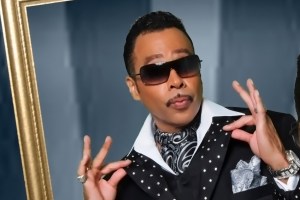
And on July 20, as part of an evening called Heart and Soul Affair, Morris Day & the Time will perform.
Day was introduced to moviegoers and music lovers in the film “Purple Rain” where he made a big impression playing a heightened version of himself.
Day and Prince were rivals in the film but they were friends and collaborators in real life. In high school, they’d formed a band with André Cymone called Grand Central.
These days, Day’s backing band lacks many of the biggest stars from The Time’s heyday: For example, Jimmy Jam, Terry Lewis, Jesse Johnson and Day’s onetime sidekick, Jerome Benton.
But the band is as tight and funky as ever in smart phone concert videos on YouTube.
Day told the Oklahoman that he believes he is “one of the last of the real entertainers.”
“I’m going to bring people the opportunity to see one of the last of the real deal,” he said.
Day’s rider includes transport in “high-end black-windowed SUV,” Hammer said.
The band will be put up in Hall’s Guesthouse, he said.
“They have suites,” Hammer said. “And they have a Prince suite. Morris will be staying in the Prince suite. It has original artwork and it’s all done in purple and lavender.”

Sweetwater Sound’s GearFest is not only unusual among music industry trade shows.
It is unusual among trade shows in general.
Most trade shows are designed to give retailers who sell goods to customers a chance to interact and haggle directly with vendors who sell goods to retailers.
Customers, those folks who just buy goods for themselves, aren’t usually invited to such shows.
But GearFest is open to everyone.
“You don’t have to be a member of any organization to come,” said Bob Bailey, executive director of the Sweetwater Academy of Music and Technology. “It’s free.”
And most trade shows aren’t nearly as much fun as GearFest.
GearFest is a star-studded affair with concerts and food trucks.
GearFest has a lot more in common with Disney World than it does with World of Concrete, which (believe it or not) is an actual trade show devoted to commercial concrete and masonry.
This year’s GearFest happens June 22 and 23 on the campus of Sweetwater Sound.
Bailey said more than 450 music equipment and music technology brands will be represented at this year’s GearFest.
Sweetwater expects 16,000 people from around the world to attend, he said.
“People plan their vacations around this,” Bailey said. “It has become quite the destination event.”
“GearFest is unique in being free and open to musicians and audio enthusiasts.” Sweetwater Sound President Chuck Surack said. “Unlike most trade shows, which are held for manufacturers and retailers. We’re particularly proud that GearFest has such a reputation that it is now bringing people from literally all over the world to Sweetwater’s campus in Fort Wayne.”
GearFest triggers an “all hands on deck” order at Sweetwater, Bailey said.
Every employee, regardless of his or her role is at Sweetwater the rest of the year, is required to work GearFest in some event-presenting capacity.
Individual GearFests don’t have themes. But if this year’s edition did have a theme, it would be “guitarists.”
“I’d like to say it was a strategic decision,” Bailey said. “But, in truth, it was based on artist availability.”
This year’s GearFest lineup puts the luster in illustrious. Among the serendipitously assembled guitarists: John Scofield, Adrian Belew, Misha Mansoor, Lyle Workman, Nita Strauss, Butch Walker, Tim Pierce, Chris Broderick, Larry Carlton and Yngwie Malmsteen.
Presenters who have become famous for something other than guitar playing include drummer Peter Erskine, bassist Carlitos Del Puerto, DJ Reborn, “Hamilton” drummer Andrés Forero, singer-songwriter Addison Agen, drummer and producer Russ Kunkel, producer Fab Dupont and drummer Steve Ferrone, formerly of Tom Petty and the Heartbreakers.
One of the things that separates Gearfest from a summer music festival is that the musicians don’t just perform.
They teach.
Bailey said most music trade shows are heavily focused on presenting the gear.
At Gearfest, Bailey said, attendees can partake of educational breakout sessions on all aspects on performing music: from playing techniques to surviving-in-the-business techniques.
Bailey estimates that Sweetwater will offer 40 to 50 of these sessions per day.
There will Producer’s Panel this year, he said, featuring several Grammy winning engineers and mixers: Michael Omartian (Johnny Cash, System of a Down and Prince), Sylvia (Tool, Johnny Cash, Prince, Tom Petty and the Red Hot Chili Peppers), Neal Pogue (Earth, Wind & Fire, TLC, Pink, Nicki Minaj and Janelle Monáe) and Kevin Killen (Elvis Costello, David Bowie, U2, and Peter Gabriel).
“Omartian played accordion on ‘Piano Man,’” Bailey said. “He also played keyboards on Steely Dan’s ‘Aja’ and ‘Katy Lied.’”
Erskine and Scofield will present a clinic called “Inside the Groove,” he said.
“It talks about the interaction between musicians on stage,” Bailey said, “and how to listen and how to perform with other musicians.”
YouTube celebrities will preside over a clinic on using the video-sharing website to further one’s career, he said.
Sweetwater’s inside guitar shop and recording studios will offer clinics on guitar upgrades and repairs and on studio craft, respectively.
“(Engineers) will be talking about how they mic up certain sessions,” Bailey said. “Why they select specific microphones, how to place it and how to get the best sound.”
Staging optimal live music experiences is one of Sweetwater’s fortes, as anyone knows who has attended an event that the retailer has sponsored or consulted on.
So it is not surprising that there will be clinics on presenting live music.
Food this year will be provided by 24 area truck-based vendors, Bailey said, in addition to Sweetwater’s in-house restaurant.
On the Friday evening, after a Q&A with Carlton and a clinic from Belew, the Sweetwater All-Stars will perform.
It is a supergroup comprised of Sweetwater employees (many of whom have won Grammies and Dove Awards) and any attending celebs that want to sit in.
“A lot of the artists who are appearing here will get up and play a song,” said Bailey, who sings and plays guitar with the band. “Last year, it ran long. We were supposed to shut it down at 9 o’ clock and there were so many artists that wanted to get up, we ran until 10:30.
“I ran into (guitarist) Eric Johnson recently and he said, ‘Man that was fun. I want to do it again,’” Bailey said. “So I can check that off my bucket list. Eric Johnson said it was fun jamming with me.”

On recordings, on the radio and on stage, Little River Band is known for feel-good hits like “Reminiscing” and “Help Is On Its Way.”
Behind the scenes, the band’s mellow image has been marred a bit by feel-bad discord.
The band performs June 22 at the Foellinger Theatre.
The person who often finds himself at or near the epicenter of this discord is an unlikely candidate for trouble stirring: current lead singer Wayne Nelson, who comes across on the phone as an earnest and principled guy.
Nelson, a Chicagoan whose first big break in the music business came when he toured with Jim Messina, joined Little River Band as a bassist in 1980.
Nelson was the only American in a band full of Australians and he joined at a time when the Australians weren’t really getting along with each other.
“Little River Band’s history is that it was an assembled band,” he said. “It was constructed from four different acts that were successful in Australia. Management saw an opportunity to put together a vocal band with good writers. The business plan was: ‘We’re going to conquer American radio.’”
The business plan worked, Nelson said, but the personalities weren’t always in sync.
It didn’t take long after the band tasted its first American success for egos to clash.
An essay on the defunct Australian music site Howlspace had this to say about the state of the band in 1976:
“…the band also needed an outsider to control the frictions and competition between the band members. Since the first album, as much as possible, (Glenn Shorrock, Graeham Goble and Beeb Birtles) recorded separately in the studio.
“Everybody knew best, if you know what I mean,” Nelson said. “The guy who wrote ‘Lonesome Loser,’ he knew best. The guy who wrote ‘Cool Change,’ he knew best. So the factions started to go to war.”
Nelson said he was totally unaware of that dynamic when he joined the band.
“I arrived and then I immediately started to feel this tension about what the direction was going to be,” he said. “
Nelson was thrilled to learn that Beatles producer George Martin had been chosen to produce the 1981 album, “Time Exposure.”
“I thought, ‘George Martin can certainly tame the crowd here,’” Nelson recalled.
It didn’t work out that way.
“I just watched this wholesale war going on about how it was going to be,” he said. “George did his job but the guys made it very difficult for him.”
It would be foolish to chart here all the firings, angry departures and returns to the fold that have happened throughout the band’s history.
Nelson quit the band in the mid-1990s, largely because of a family tragedy.
But there were other factors.
“I went back to the band for the 20th anniversary,” he said. “And the attitude at that point was, ‘No new music because then we’d have to talk to the press and we’d have to promote.’ It just didn’t jibe with the band’s politics.
“We limped along,” Nelson said. “We performed 11 songs the same way every night. There was a lot of drinking and a lot of crap. It was not worth leaving home for. So I stopped in ’96.”
Nelson said the band ultimately “shot itself in the foot,” which is to say, it let internal strife capsize external success.
Eventually, a Nelson-fronted version of Little River Band was formed by guitarist Stephen Housden, who owns the rights to the name.
Birtles, Shorrock and Goble subsequently tried to tour as Little River Band but Housden successfully stopped them from doing so in court.
In 2015, however, Shorrock prevented the current incarnation of the band (which has no founding members in it) from performing most of its best-known hits on “The Tonight Show with Jimmy Fallon.”
That same year, Housden appeared on an Australian program called “Sunday Night” and stated that he would never let Shorrock, Goble and Birtles perform under the name Little River Band.
“Not in this lifetime,” he said. “They’d use it as a grandstand to send more rubbish towards us. I can’t see why I should give them a platform to do that.”
What Little River Band is now that it wasn’t prior to 2000 is comprised of people who are eager to collaborate on new music and who actually enjoy sharing a stage together, Nelson said.
The people who say that the current incarnation isn’t the real deal are probably unaware that fans started saying the same thing in 1977.
“The first two guys to be removed from the band were responsible for the first record,” Nelson said. “I always say, ‘By that logic, Little River Band ceased to exist in 1976.’ So where are you then?”
Nelson said he bears no ill will toward people who are loyal to any former Little River Band lineup.
“But please don’t call me a fraud,” he said. “I’ve been in the band for 38 years and I have watched all this stuff happen. I have been part of every lineup change since 1979. You don’t put the label of fraud on me for wanting to continue something that those guys all walked away from.
“Little River Band has always been good,” Nelson said. “If you prefer the ’77 version of Little River Band and you have DVDs and CDs of that version, God bless you. If you want to hear new music and you want to hear Little River Band still being played with energy and still being put out there by a member of the band who was original to five of the hits out of the total of 11, then please come and check it out.”

If you want a robust career in the entertainment business, it helps to be in the right place at the right time.
Of course, there is no way to accurately predict where the right place will be and what time one should plan on arriving there.
Ray Benson, founder and lead singer of the western swing band Asleep at the Wheel was in the right place at the right time about 45 years ago and he has Willie Nelson to thank for it.
Asleep at the Wheel performs at the Clyde Theatre on June 14.
These days, Benson and his band are the leading practitioners and protectors of the western swing tradition.
Benson didn’t start out to be the leading practitioner and protector of the western swing music tradition.
It just worked out that way.
When Benson was a boy growing up in Pennsylvania, the leading practitioner and protector of the western swing music tradition was a guy named Bob Wills.
Benson loves Wills and has spent his career paying tribute to the man and his music in various ways. But Wills was not the artist who sparked his love of all the country-tinged genres that are now lumped under the rubric of “traditional country music.”
Benson owes his love of country music and country music culture to a woman named Sally Starr.
Starr was a children’s TV host whose flamboyant western outfits were later echoed in garb worn by the character of Jessie in the ‘Toy Story” films.
Starr was just one of the performers who made a big impression on Benson as a kid and as a teenager. Others included Hank Williams, Hank Thompson, Count Basie, BB King, Buddy Guy, Lightnin’ Hopkins, Muddy Waters and Blind Lemon Jefferson.
He said he first encountered one of Wills’ songs when he was 16 years old.
“I just collected a lot of different kinds of music,” Benson said in a phone interview. “It was ‘Brain Cloudy Blues’ and I thought, ‘Wow! What’s this?’”
When Asleep at the Wheel first formed in 1970, it wasn’t a western swing band, per se.
“We did some Bob Wills songs,” he said, “We were mostly about American roots music from the ‘20s, ‘30s and 40s.”
The inception of Asleep At The Wheel happened in Paw Paw, West Virginia at the family farm of one of the band’s members.
In 1973, Asleep at the Wheel released its debut record called “Comin’ Right At Ya.” It caught the ear of a Wills fan named Willie Nelson.
Nelson was not yet the beloved cultural institution and life guru that we know and love today, so perhaps his advice wasn’t as ironclad as it came to be.
But Benson took it anyway.
The band, which had been encouraged by George Frayne of Commander Cody and his Lost Planet Airmen to come out to California, was subsequently encouraged by Nelson to move to Austin.
“He said he’d put us on shows and stuff,” Benson said. “We made $100 for the whole band but that was great.”
The band arrived in Austin at an opportune moment. Hippies and cowboys were commingling in surprisingly friendly and fruitful ways and something that came to be called the Cosmic Cowboy movement was in the offing.
“We could play the redneck dance halls and the hippie hop joints,” Benson said. “Nobody else but Willie Nelson could do that. And Waylon, you know.”
It wasn’t perfect. Benson said that people didn’t always understand or appreciate what the band was trying to do. And Benson admits he didn’t much like some of the music that came out of the Cosmic Cowboy movement.
Benson’s said his musical tastes were too eclectic even to be encompassed by the movement.
The band’s evolution from a “regressive country” outfit to a western swing revival act was gradual, he said.
To wit: The band’s first hit single, “The Letter that Johnny Walker Read,” was a languid duet that Conway Twitty and Loretta Lynn could have covered.
In the ensuing decades, Asleep at the Wheel has collaborated with so many country and Americana artists that a list of who the band did not collaborate with would take up less space in the paper.
The band is well and overtly loved by such Millennial-skewing acts as Avett Brothers, The Devil Makes Three and Old Crow Medicine Show.
As a way of ensuring freshness, Asleep at the Wheel has cycled through more than 100 different members over the years.
Benson said he likes continuously to invigorate the band with young talent and he doesn’t really have to hold auditions.
“They find us,” he said. “There’s a grapevine of musicians that just know. These are folks that I would see. I am always listening to new music. I am always seeking new music.”
Benson admits that he has felt, from time to time, a little constrained by the band’s identity as the standard bearers of western swing.
But Benson said the band’s younger fans seem more open to stylistic explorations and expeditions.
In September, Asleep at the Wheel will release one of its boldest albums yet called “New Routes.”
“It’s different,” Benson said. “We went pretty far field. There’s no Bob Wills on it. We’ve already done three Bob Wills tribute albums.”
The new record will feature an Avett Brothers collaboration, he said.
In these younger artists, Benson said he sees what he was 40 years ago.
Benson is still an avid musical collector and a passionate amateur musicologist. He said it is stunning to contemplate how much the music business and music listening habits have changed in the last century.
“You have to understand that we are living in a time right now when 100 years of recorded music is available on demand by punching a button,” he said. “All of a sudden, there’s 100 years of recorded music. 100 years ago, there was none. 100 years ago, people learned face-to-face.
“It’s just a whole ‘nother ball of wax,” Benson said. “Anybody who is interested in creating music can access every genre, every type of music, that has ever been done and decide how their creativity fits into it.”

While watching “Solo: A Star Wars Story,” I kept thinking of a 1979 movie called “Butch and Sundance: The Early Years.”
“Butch and Sundance: The Early Years” was an attempt to capitalize on the popularity of George Roy Hill’s 1969 film “Butch Cassidy and the Sundance Kid,” which not only made a lot of money but came to be looked at as an important contribution to American cinema.
Since the main characters (played by Paul Newman and Robert Redford) died at the end of the first film, “Butch and Sundance: The Early Years” had to be a prequel (hence the title).
It stars two fine actors who were chosen for their rough resemblance to Newman and Redford (William Katt and Tom Berenger, respectively).
After I returned from watching ‘Solo,” I Googled the late Roger Ebert’s review of “Butch and Sundance: The Early Years.”
Here’s a sizeable excerpt: “How to put it fairly? This is not a necessary film, and that’s really its most crucial shortcoming. As an exercise in filmmaking, it is technically fine…(the photography, direction and performances) are all impossible to dislike. The film even has some of the same easygoing charm (as the original).
“But as we listen to the freewheeling dialog, as we watch young (characters) blunder through their first adventures and finesse their later ones, there’s a nagging question bouncing about in the backs of our heads: Why are we in this theater at this time? Did we want to know about the early days? Now that we’re here, does the movie make us care?
“Not really.”
I know I am going to sound like a stick in the mud here, but I am not sure I was aching to see a bunch of Han Solo’s offhand remarks from the original trilogy fleshed out as scenes in a prequel.
Do we really need to see Solo make “the Kessel Run in less than twelve parsecs.”? The fact that the comment seemed totally nonsensical to us was part of its charm, wasn’t it?
I always assumed it was an empty boast, albeit one I didn’t understand. I think I liked it better that way.
My biggest problem with “Solo,” however, is the guy who was saddled with the toughest task in it: Alden Ehrenreich.
The challenge of playing a character as indelible in American popular culture as Han Solo is exacerbated here by the added indelibility of the man who originated the role: Harrison Ford.
Ford is hardly the sort of actor who disappears into his roles. Every character he’s ever played has had a little Han Solo in him.
So what was Ehrenreich to do? Impersonate Ford?
It was a Sisyphean task and Ehrenreich did his best to perform it.
But he fell short.
I am not saying Ehrenreich is a bad actor. Far from it. He just never found a complete solution to the difficult puzzle with which he was presented.
I couldn’t help but think of Chris Pine’s miraculous resurrection of Captain Kirk while I watched “Solo.”
Mick Lasalle of the San Francisco Chronicle put it better than I could: “…although Alden Ehrenreich is appealing in his own right, there’s none of that flash of recognition we got when we first saw Chris Pine as Captain Kirk and thought, ‘Oh, yeah, that’s the guy.’ Ehrenreich doesn’t really seem like Harrison Ford.”
In fact, the actor Ehrenreich most reminded me of is Jack Black.
Call me crazy, but once you see it, you can’t unsee it.
Ehrenreich has Black’s eyes and eyebrows and Black’s way of grinning mischievously.
Don’t get me wrong: I LOVE Black. But a svelte Jack Black as Han Solo? There’s a skit in there somewhere, but not an earnest entertainment.
As I watched “Solo,” I kept having to remind myself: “Oh, yeah. This guy is supposed to be Han Solo.”
I enjoyed Donald Glover’s performance without fully accepting that he was the Lando Calrissian I had come to know.
I never got sucked into the conceit.
So my experience of watching “Solo” never rose above what I experience when I watch a highly polished fan film.
It seemed like exemplary cosplay to me. Believe me when I write that I very much wanted it to be more.
I loved many of the ancillary characters and several of the action set pieces were exciting.
Some of the Easter eggs were fun and I appreciated all the practical effects.
But I never felt like I was actually inside the “Star Wars” universe.
The fact that a lot of fans are saying online that “Solo” is a truer and purer “Star Wars” movie than “The Last Jedi” flummoxes me.
I can’t unpack it.
Do most “Star Wars” fans really want further installments to be bloodless exercises in nostalgia coddling?
Perhaps.
And regarding that plot twist at the end of “Solo” – If you really judge the return of a certain character to be more believable than Princess Leia’s space flight in “The Last Jedi,” then (to paraphrase author John Gray) you are from Mars and I am from Venus.
Or, you are from Tattooine and I am from Endor.
Yub yub.

The thing that brought Utopia back together ultimately wasn’t a burying of hatchets.
It was a surfeit of significant suitors.
Touring as a band is considerably more expensive and customarily less lucrative than touring as a solo act. So the encouragement, support, resources and deep pockets of a big-time promoter are, at the very least, enormously helpful.
Reached by phone, Todd Rundgren (Utopia’s founder and creative engine) said the band was courted by a number of major players and this helped convince him that a reunion was a good idea.
“We got a really positive response from several different promoters,” he said. “Ultimately, we went with Live Nation. It was their vote of confidence that was the real tripwire for the whole thing.”
Utopia performs at the Chicago Theatre on Tuesday night.
Rundgren has said for years that he wasn’t interested in the sort of half-ass reunion that would involve a couple of rehearsals and a couple of “greatest hits” concerts.
The current tour is the fruit of copious rehearsal time and fine-tuning.
One of the challenges of revisiting this era of Rundgren’s career was the bifurcated nature of the band.
Utopia started as a prog-rock outfit, but morphed into a more pop-friendly act.
Rundgren said revisiting the prog-rock era after all these years was daunting.
“That required the lion’s share of our rehearsal time,” he said. “Going back and trying to recapture everything that was represented in the first three albums of what we did.”
Rundgren said he initially formed Utopia as an opportunity to play guitar.
“The early records reflect that,” he said. “There’s much less singing overall and a lot more instrumentalizing.”
As his career progressed, Rundgren became “much less of a guitar player.”
“To have to go back and refocus on that messed with my brain a little,” he said. “To have to think like a guitar player.”
With all the hats he had to wear while putting this tour together, Rundgren said that the demands of the first few shows on him as a guitarist were a bit of a shock.
“Now I am starting to get back into the head of a guitar player,” he said. “I am thinking ahead instead of suddenly finding that ‘Oh, I am supposed to play this now?’ or “I am playing this now. What am I supposed to play next?’”
Rundgren said it was that way for everyone in the band.
As bassist and vocalist Kasim Sulton told Variety magazine in April: “I was just playing ‘Communion with the Sun’ earlier today and I’m like, ‘Oh man. Why did I play so many notes?’”
Each concert is structured to represent the transition that band went through, Rundgren said.
“The first set is more of the instrumental, prog-rocky stuff,” he said. “And the second set is more of the latter-day, songwriting-oriented pop stuff.”
Rundgren likens the first set to playing in a blizzard.
“Everything is coming at you so fast,” he said. “The second set seems a breeze by comparison. I kept thinking, ‘Maybe we should just do the history of the band backwards. Start at the end and work our way back to the beginning.’”
The band’s transition mirrored Rundgren’s transition into one of the more notable pop songwriters and producers of the 20th century.
Practicality and pragmatism are what drove the band’s transition.
“We weren’t getting a lot of records on the radio,” Rundgren said. “We were always more of an album act. As long as there was album radio, we got some airplay. But as time went on, (the Bearsville record label) lost interest in the band.
“We weren’t getting the tour support which made those big shows possible,” he said. “As we got more dependent on ourselves, we started to think more economically: ‘Let’s not write these big, top-heavy songs that require pyramids.’”
Nevertheless, Rundgren said the band never lost its “conceptual flair.”

While preparing for this tour, the band suffered a seemingly catastrophic setback.
With a month to go before the opening date, keyboardist Ralph Schuckett decided he wasn’t healthy enough for the rigors of the road.
Rundgren said he found a message about Shuckett on his phone after flying from Austin to Hawaii (his home is on the island of Kauai).
Given Rundgren’s perfectionism, perhaps readers can imagine how this news struck him.
“At that point, I wanted to walk into the ocean and just keep going,” he said, laughing. “Not look back.”
A Utopia keyboardist has to be as strong a singer as he is a player, so it isn’t surprising to learn that the search for a replacement went nowhere initially.
“After sulking for a while, I decided we couldn’t just go out and hire the usual stand-in,” he said. “There was somebody out there. We just didn’t know who it was.”
As part of an expanded, all-points-bulletin search, Rundgren sent a message to his son, ReBop.
“I asked him, ‘Who is the best keyboard player you know?’ He is zeroed in on a different generation. I knew our shout-out was only likely to yield a lot of dirty, old guys.”
ReBop came back with a name: Israeli-born keyboardist Gil Assayas.
“What Gil had that nobody else did was copious representation on YouTube,” Rundgren said. “In other words, we could evaluate how he played in all sorts of contexts. There was an interview, so we could get some idea about his personality.”
Assayas turned out to be the ideal choice, he said.
“We sent him this stuff and within a week he was already playing as much as two keyboard players had been playing before,” Rundgren said.
Assayas was even able to recreate all the sounds from the analog era on his modern set-up.
“I was kind of stunned us how quickly he absorbed it,” Rundgren said. “Suddenly, it was a sigh of relief.”
Rundgren said it is too early to tell if this reunion will continue beyond this tour.
“There are those elements that always made it hard to get it organized,” he said. “Roger and Ralph had retired from the road. They had other things to do. They actually had employers. So the question always was, ‘How are they going to find a three-month window?’
“Those issues linger,” Rundgren said. “We have to wait until the end and look back to see what we accomplished. We have to see if it was worth the effort of doing it. If so, we’ll probably start talking about doing it again.”
 aloadofthis