Labor of Love

Standard

Amber Jackson has been the executive director of the Auburn Cord Duesenberg Festival for about eight months and she is still learning the ropes.

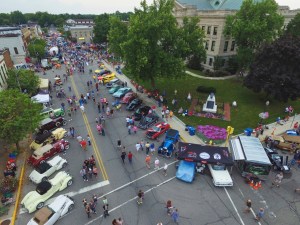
The “ropes” in this instance consist of a classic car festival that has been in existence more than 60 years and sees the influx of hundreds of thousands of global automotive enthusiasts every Labor Day weekend.

Aussies have been known to ship their cars to this thing. It’s a big deal.

People who know Jackson (as I do) will tell you that she’s smart, fearless, gregarious, earthy, approachable and impossible to dislike.

What she is not is an Auburn native.

A couple of things have surprised her about the festival so far.

For one thing, she didn’t expect that the festival would engender such a profound depth of feeling among Auburn residents.

“That’s the big kicker,” she said. “It’s not, ‘Can I do this job?’ or ‘Can I do it well?’ This event means so much to this town. It’s their baby, it’s their son, it’s their daughter, it’s their grandkids it’s their grandparents. It means so much to so many people.

“So I think when I realized that,” Jackson said, “the weight of what this means to the community, it bore an extra responsibility. I thought, ‘I really have to do my best to make this come together and to grow in the right ways.’”

In the early 20th century, Auburn was the home of the Auburn Automobile Company, where Auburn, Cord and Duesenberg automobiles were built.

The Great Depression claimed roughly half of the American automakers that had existed prior to Black Friday, including (eventually) the Auburn Automobile Company.

In 1956, the ACD Club was formed. The ACD Festival grew out of what was, at first, an exceedingly modest parade of club members’ cars.

These days, the Saturday Parade of Classics should feature as many as 300 restored Auburns, Cords and Duesenbergs and the Friday Cruise In should feature no fewer than 700 classic cars of myriad makes and models.

When she first started in the job, Jackson said she wondered how she was going to be able to pull everything together.

The answer, as it turned out, is that no one expected her to pull everything together. Not all by herself, anyway. The ACD Fest is nothing if not a group effort. It’s a well-oiled machine that just happens to tout well-oiled machines.

“Honestly, it’s been amazing because this thing is starting to come together like a symphony,” Jackson said. “At first, it’s all jumbled and it’s everywhere and I’m like, ‘I don’t understand how this all pieces together. There are over 50 events in the span of a week.’ You look at that scope and you think, ‘This is chaos.’”

But Jackson said she’s been awestruck watching the graceful convergence of these components and she’s been impressed with the passion and sincerity of the people with whom she has collaborated.

“I am not an Auburn girl,” she said. “Everybody I have had the pleasure of working with thus far has a community-before- capital mentality. It’s just amazing to me.”

A major addition to the festival this year is a headlining musical act: country singer James Otto.

Otto, who will perform September 2, is a member of the MuzikMafia, a collection of like-minded country upstarts that also includes Big & Rich and Gretchen Wilson.

The 2017 edition of the festival will also see the return of Fast & Fabulous in Downtown Auburn, a popular recent innovation that features such modern luxury cars as Ferraris, Lamborghinis and McLarens.

One of more vexing challenges for the ACD Fest (and all long-lived festivals, honestly) is figuring out how to attract young people to the goings-on.

Jackson, whose background is in education, said the kids’ area will be much expanded this year.

“Our board sees a lot of growth with that area,” she said. “How do we get kids to fall in love with classics? Anything that’s loud and fast, they’re naturally going to be drawn to. But that’s not the nature of a classic.”

In the future, she said, the festival’s education program will be significantly beefed up.

NATMUS, the National Automotive & Truck Museum in Auburn, offers classes in car restoration to high school students, she said.

“A bunch of volunteers come and work with the kids on actually restoring cars that have been donated to them,” Jackson said. “The festival is the gate of exposure. But what the town does the rest of the year really opens it up for what that longevity is really going to look like.”

A longtime fan of the festival, Jackson has a theatrical analogy to describe the position in which she finds herself at the moment: “I went from sitting in the balcony of the second show to being backstage, directing,” she said.

Being the rookie in such a scenario would scare a lot of people, but Jackson said she loves it. She thinks it will help her see what needs to be done to attract more young people and women to the festival.

“I would love to go sit in with the high school kids on the car restoration classes,” she said. “I came from an old school mentality where my dad had speckled, gold, ’79 Charger in the driveway and when I tried to help him work on it, he said, ‘You don’t have to worry about this. You’ll have a husband do that for you one day.’”

Jackson said she has succeeded in business up to now because she has gone in with the perspective of an educator, not of an accountant.

“I don’t go in looking at a bottom line,” she said. “I go in looking at it from an education standpoint: Where are the areas for growth? How can this be connected to people? How can we translate this into real-world experiences?”

A Gavin State of Mind

Standard

When singer-songwriter Gavin DeGraw found out that the WB network wanted to use his song “I Don’t Want to Be” as the theme for its show, “One Tree Hill,” he was not immediately overjoyed.

This union of series and song ended up launching DeGraw’s career, but he had to think it over initially.

The reason for this was DeGraw’s old-school attitude about selling himself.

“I was really apprehensive about affiliating myself with that sort of marketing, TV marketing,” he said in a phone interview. “’Cause years ago – during my parents’ generation – that was considered totally selling out.”

But DeGraw came to realize that the music business had changed a lot from the days when Steve Winwood was widely condemned for letting Michelob use his song, “Don’t You Know What the Night Can Do?”

“To put everybody kind of in their place,” DeGraw said, “I just let everybody know right away that the day you sign your record deal is when you sell out.”

“Whatever you do after that is just a result of that,” he added, laughing.

DeGraw will perform at the Honeywell Center in Wabash on August 31.

Whatever you think about DeGraw’s music, the man himself is hard to dislike.

He is earthy, funny, humble, grateful, often profane and utterly free of self-importance or standardized patter.

DeGraw grew up poor in the Catskills region of New York State.

His mother worked as a nurse specializing in addiction treatment and his dad was a prison guard (among many other things).

“He did landscaping, he built picnic tables, he was a chimney sweep and he welded wood stoves in the basement,” DeGraw said. “He did everything. It was hard to make a living doing a little of this and a little of that”

After seeing a Billy Joel concert in his teens, DeGraw announced to the family that he had found his calling in life.

DeGraw’s parents, both amateur musicians who had attended Woodstock together, were nothing but supportive.

“So when I said I wanted to play music,” DeGraw recalled, “they were both all for it. My father in particular said, ‘Don’t do what I do.’

“It was interesting,” he said. “It was the opposite of the usual rock and roll story. To them, it was cool. There was no battle there at the house. We didn’t grow up in a family where everybody had a master’s degree.”

DeGraw said his parents made him feel as if his dreams were achievable.

“Not only possible but expected,” he said. “If you think about it, that’s a crazy type of guidance from your parents. They were rebels. My parents were total rebels.”

Soon, the young DeGraw was obsessed with music. When school administrators and fellow students would encourage him to play sports, his response was succinct.

“I said, ‘(Expletive) that (expletive). I am playing in bars.’”

Years later, DeGraw’s persistence was rewarded in the most unexpected and serendipitous of ways. Joel asked him to be the opening act for one of his concerts.

DeGraw recalled sharing a smoke with Joel and his band behind the venue after he first arrived.

“Billy said, ‘Hey, Gavin. Thanks for coming,’” DeGraw recalled. “And I said, “Well, thanks for having me. You’re my (expletive) idol.’

“I said, ‘Listen. I don’t know if you have anyone else playing during this block. But if you do, (expletive) that guy. I want the gig.’”

Everyone laughed and thus a lifelong friendship and musical partnership between two blue-collar piano men was formed.

DeGraw has since collaborated and palled around with many of his childhood idols: Shania Twain, the Allman Brothers and Garth Brooks, among them.

And when he speaks of this, he still sounds as giddy as a kid.

“I never expected the artists that I look up to to want to say, ‘Hey, I like your stuff,’” DeGraw said. “Music has this fascinating power; that it can reach out to so many different types of people. It’s a phenomenon.

“The guy who I looked up to as a musician invited me out to play,” he said. “Shania Twain was so complimentary to me and I was standing there at first just trying to process the fact that I was talking to her at all.”

DeGraw thinks he appeals to a wide range of artists because he tries to make genre-free music.

“It’s been a goal of mine not to be in a genre,” he said. “I don’t want anyone who hears me to be able to say, ‘Well, I just don’t like that type of music.’”

Asked if there are any downsides to fame, DeGraw cheekily responded with a story he heard actor and musician Kevin Bacon tell in an interview.

Bacon wanted to attend an event incognito so he had a make-up artist alter his look to make him unidentifiable.

“He thought it would be cool if no one recognized him,” DeGraw recalled. “He said, ‘So I walked around, and about 15 minutes into it, I thought, “This sucks”’

DeGraw roared with laughter.

Stanhope Springs Infernal

Standard

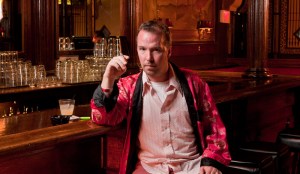
Comedian Doug Stanhope almost always performs drunk, or “well into his cups” as they say in places where alcohol is served in cups, apparently.

That’s because he said he needs to numb himself to an essential fraudulence that he sees in stand-up comedy – the idea that every audience wants to think the evening’s jokes were written specifically for them and that the comedian’s routine is closer to an off-the-cuff conversation than a well-rehearsed speech.

“That’s why, except for very rare occasions, I’ll never do two shows in a row or two shows back to back,” Stanhope said in a phone interview. “Because you’ll have people who will go to both shows, thinking that you’re talking off the top of your head.

“The second time, it’s like they’re underneath the trap door of that magic show,” he said. “‘Oh that’s how you did it.’” The ‘ta-da’ is missing.”

Stanhope will bring his “magic show” to the Tiger Room in Calhoun Street Soups, Salads & Spirits on August 26.

Alcohol isn’t the only consciousness alterer that Stanhope regularly ingests and he isn’t shy about admitting that.

He isn’t shy about much.

Stanhope said touring actually keeps him from drinking more than he otherwise might.

“Stand-up keeps me alive to some extent in that it gives me a time that I can’t start drinking until,” he said. “At home, I’m like, “(Expletive) it. It’s 11 o’clock. I don’t have anything to do. There’s nothing on Netflix.’

“Someone comes over who I really don’t have anything to say to,” Stanhope said. “I have no social skills without alcohol. It’s only the postman, but he chats for a minute or two. So I need a drink.”

Stanhope is known as one of those comedians who “says things other comedians are afraid to say.”

It’s a cliché that doesn’t really cover what Stanhope does and who Stanhope is. Stanhope isn’t a shock comic – he is not some clown who wakes up every morning and complies a list of ways to offend people.

Stanhope is a guy with a genuinely dark and sardonic worldview and a nearly nonexistent sense of decorum.

When his girlfriend, Amy “Bingo” Bingaman, suffered a head injury during a drug binge late last year and slipped into a coma, Stanhope did what any boyfriend would do: he continued to work and posted irreverent comments about the situation on Twitter.

If you know anything about the notorious Bingo, you know she probably wouldn’t have wanted it any other way.

Stanhope is a product of an exceedingly unconventional and unfiltered upbringing that is detailed in “Digging Up Mother: A Love Story,” his book about helping his grievously ill mother to commit suicide in 2008.

Stanhope’s mom was the biggest influence on his comedic sensibilities and he said he still hasn’t fully accepted that she isn’t still around.

“I still have times where I go, ‘Oh I should call…’ When there’s something where I specifically want to call my mother, I still…I’ve got that beat,” he said. “Or my father, who died in 2001. That quick knee-jerk…I don’t know if that ever goes away.”

Another big influence on Stanhope (and another guy who was known for crafting material designed both to entertain and challenge his audiences) was the late George Carlin.

Carlin once told an interviewer that he had 1,300 separate files on his computer filled with notes and notions.

Asked about his creative habits and rituals for coming up with new material, Stanhope answered, “Panic.”

“It’s literally – when I get to a place when I just did a special and I don’t have material to replace it — it’s like if you were on Gilligan’s Island and you had to build a boat,” he said. “I go through every scrap of old notebook and lines that were funny but didn’t fit in anywhere and that chunk I edited out of the last special.”

Stanhope likens the process to dressing up a skeleton.

The cities Stanhope prefers to visit are ones I must euphemistically refer to here as “crap towns,” places that aren’t widely considered to be entertainment meccas. He said that patrons tend to be more appreciative in these sorts of places.

“(Expletive) Vegas,’ he said. “Walk up and down the street. There, you have 10,000 options, all begging for you to come.”

Crap towns also have the best thrift stores, he said.

Yes, in addition to being dedicated consumers of illicit and fermented substances, Stanhope and Bingo are also thrift store devotees.

Stanhope’s least favorite part of touring is the merch table.

“It becomes longer than the shows sometimes, because everybody wants a (expletive) picture now,” “Who are you going to show it to? Your friends don’t know me or they’d be here right now. I have a very unattractive head. I don’t know how to pose. You don’t know how to use your camera.”

Stanhope said he is perfectly happy with where his career is at the moment: stand-up, podcasting, a few acting gigs.

He has no grand ambitions. He said he has actually been looking at ways to dial back on his touring schedule.

“We’ve talked about making this the last tour for a while and then taking a live podcast out,” Stanhope said. “That way, we could just end this (expletive).”

Stanhope knows that stand-up is the only vocation that could support they way he prefers to live when he’s not doing stand-up.

“It would be a lot more difficult if I had any kind of real responsibilities,” he said, “or a workload that required anything more than me yelling at people. My days are unproductive, let me put it that way.”

Given his wild lifestyle, Stanhope said he has no illusions about his own mortality.

“I consider (death) every morning I wake up,’ he said. “Where is it coming from? There’s a sniper out there somewhere but you don’t know what tree it’s in.

“I could quit smoking but she’s probably up in that drinking tree,” Stanhope said.

Red-Hot Ticket

Standard

When a young C.J. Chenier heard his first zydeco record, he wasn’t sure what to make of it.

“It was French and my mom didn’t speak French even though she was from Louisiana,” he said. “She was from a non-French-speaking part of Louisiana. So, most of the songs were in French and the only one I really understood on there was an instrumental.

“I wasn’t resistant to it,” Chenier said. “I just didn’t understand. A lot of it at that time sounded the same to me.”

There’s nothing unusual about a young person failing initially to fully appreciate a style of music that is new to him.

What makes it sort of intriguing in this case is the identity of the artist who made the record: Chenier’s father, Clifton Chenier.

From those exceedingly humble musical beginnings, C.J. Chenier went on to assume his father’s King of Zydeco mantle.

C.J. Chenier and the Red Hot Louisiana Band perform on August 11 at the Foellinger Freimann Botanical Conservatory as part of the Botanical Roots series.

C.J. Chenier was a saxophonist in a funk band in Texas when his dad sent a zydeco summons.

“I was 20 years old,” he recalled. “I was playing in this funk band and we were playing at a bazaar at a Catholic church. A friend of mine’s mom lived down the street and she sent someone to the bazaar to tell me my mom needed me to call her.

“So I went down and called her,” Chenier said. “And that’s the day she said, ‘You’ve got to come home because your daddy wants you to go on the road with him.’”

Chenier’s initial reaction to this directive from his dad was guarded: “I thought, “Man, I gotta go on the road was all them old dudes?’”

But Chenier said his first tour with his dad turned out to be “the best time I ever had in my whole life.”

The phrase “trial by fire” was coined to describe extreme tests of mettle and worthiness. As Chenier prepared to meet up with his father’s band for the first time, he couldn’t have known that what awaited him was something like a trial by zydeco.

“I came from funk,” he said, “and all of a sudden I am taking the place of the greatest zydeco saxophonist I had ever heard, John Hart. I thought he was going to be there but he wasn’t. It was just me. I didn’t know songs. I didn’t know nothing.”

Thankfully, the other band members were patient with Chenier. “They knew I didn’t know nothing,” he said, laughing.

Chenier assumed he’d feel awkward at first performing with the band, but that proved not to be the case.

“I felt real comfortable up there standing next to my dad,” he said. “The way the crowd acted. I had never seen anything like that before. I had been in gigs where they danced a lot. But when we went to places like California and Oregon, people went crazy. It was a new experience for me.”

As Clifton Chenier’s health declined, he pressured his son to become proficient on his instrument: the accordion.

“When I got in the band, he kept telling me, ‘You know you’re going to have to learn that accordion,’” he said. “‘You’re going to have to take over for me some day.’ I kind of started feeling around with it. Let me tell you, that big accordion had way too many buttons on it.”

So Chenier, who’d had some piano training, acquired a smaller accordion and slowly worked his way up to the larger model.

Nine years after C.J. Chenier joined the band, his dad passed away. But Chenier had started taking a lead role long before that.

“When he got sick, man, he started letting me open the shows for him,” he said. “And sometimes he’d be so ill, I’d have to play almost a whole show. So (when he died), it was just a natural thing for us to continue. There was no other way but to keep going. We were red hot.”

Chenier took over officially in 1987 and he said he’s been on the road ever since.

Here’s something that’s interesting to consider: Having grown up in Texas with his mom, Chenier’s familiarity with Louisiana, birthplace of zydeco, is fairly limited.

He said he performs there regularly but he has never spent a significant amount of time there.

The man that the Boston Globe called “the crown prince of zydeco” is a Texan.

Not that there’s anything wrong with that. Zydeco long ago expanded well beyond the confines of Louisiana, but it wasn’t always thus.

Chenier said that when he first joined his dad’s band, zydeco was a household word…just in an extremely limited number of households.

“He had a massive following in California and Oregon and up in Washington,” he said. “And nobody else was doing the traveling. He was the only one doing it at that time. But if you told people who were weren’t in the mix, ‘I play zydeco music,’ and they’d be like, ‘Zyde-what?’

“Nobody knew,” Chenier said. “Now everybody knows what zydeco is. The musicians went out pounding the pavement and the people got interested and started trying to figure out what it was. It’s the happiest music you can find.”

As C.J. Chenier’s renown grew, musicians like Paul Simon, John Mayall and the Gin Blossoms started asking him to collaborate with them.

“I did a few things,” he said. “It’s all fun.”

Chenier was at the center of some unexpected controversy a few years back when Mike Vital, a distant relative, sued him.

Vital claimed that C.J. Chenier is not Clifton Chenier’s biological son and, therefore, is not entitled to use his last name or to benefit from that last name.

Vital wanted documentation, which Chenier said he provided.

“It was all about greed,” Chenier said. “Somebody trying to be greedy. They tried to accuse me of fraud, basically. When I showed them proof of who I am, I haven’t heard from them for almost three years. In fact, I haven’t heard from them since two months after they filed their suit.

“Some people have ulterior motives,” he said. “They think they can get what you got. They’re just that type of person.”

Chenier said the upcoming concert will be his fourth or fifth performance in Fort Wayne.

“I love coming to Fort Wayne, man,” he said. “I love looking out at the people dancing at the Botanical Gardens and thinking about who is discovering zydeco for the first time.”


Philips’ Head

Standard

Emo Philips is what is known as a comic’s comic.

Regardless of his prominence in American pop culture at any given moment, Philips will always be admired by his fellow comedians.

In 2014, Patton Oswalt tweeted this about Philips: “I will NEVER, EVER, write funnier, darker, more disturbing, more inappropriate and 100 percent clean jokes than Emo Philips. Good God.”

Philips is the headliner at this year’s Let’s Fest, a four-day comedy festival happening at seven Fort Wayne venues.

It starts August 3.

Philips was cited on Nerdist founder Chris Hardwick’s list of the top ten living stand-up comedians and on the CineNation website as one of the top comics of all time.

In 2005, Philips was praised by Shipoffools.com for having the created the funniest religious joke of all time (It is a bit too long to be reproduced here).

Philips arrived on the national comedy scene in the mid-1980s with one of the stronger stage personas: a childlike man with a pageboy hairdo and a singsong voice who didn’t seem to be at all aware of how clever he was.

In a 2010 editorial in the British newspaper, The Guardian, Philips was described as a “pith artist.”

“He tells semi-surreal jokes so short and sharp that they make the audience jolt as well as laugh,” the publication opined. “(In the 1980s), Philips was often dubbed an alternative comedian, but his jokes are much cleverer, cleaner and funnier than that term suggests…His jokes are often informed by a sense of cosmic injustice that means all people are cursed with rotten luck. Rather than get angry about it, the Philips way is to coin cheery one-liners.”

Unlike other comics with strong stage personas (Bobcat Goldthwait, for example), Philips tries never to break character in public.

He agreed to an email interview because he likes to take some time crafting answers to questions.

Asked to cite the first joke he ever conceived, Philips responded: ‘I woke up this morning with a bloody nose. I thought, ‘How did this get into bed with me?’”

Philips, a Chicago native, said everyone found him funny as a kid. “It was quite upsetting,” he wrote.

Philips once described his stage character as “the default persona when one has no stage presence.”

He said his joke-crafting process was stubbornly old-fashioned for quite some time.

“Up till the 21st century, I wrote on a 1940’s cast-iron Royal typewriter,” he wrote. “It was not in good condition. If you examine my early gags, you’ll find that few contain the letter ‘j.’”

When on the hunt for new material, Philips said he basically tries to think of things that make him laugh. “Then, once that’s out of the way…” he added.

To young comics seeking advice, Philips recommends a 2009 posting on the Nerdist website by the aforementioned Hardwick about the late Bill Hicks’ Principles of Comedy.

“By referring them to it,” he wrote, “I teach them the most important lesson: to use their time wisely.”

A robust four-decade career in comedy means a lot of touring, of course. Philips compares touring to swimming.

“How fraught with worry and bother beforehand! How pleasurable once one is in!” he wrote.

If he has downtime in the cities he visits, Philips seeks out art museums.

“(I) try to guess what each painting or work of sculpture is about,” he wrote. “I then try to guess the title of the piece. I then look at the title, and read the description, if there is one, and see how close I came. I’m not great at it; I often guess before I have a right to, and miss a crucial detail, and then kick myself afterwards, as one kicks oneself for not correctly guessing the murderer in a whodunnit or the winner in an election.”

One thing Philips is not is a foodie.

“No offense to foodies, but I am the opposite of one,” he wrote. “For me, driving across town to dine at a special restaurant would be like driving across town to wash my hands in a special sink.”

When he’s not on tour, Philips does voiceover work (He has assayed such animated roles as Shannon the Bully on “Home Movies,” Dooper on “Slacker Cats,” Cuber on “Adventure Time,” and Dennis O’Bannon on “Welcome to the Wayne”).

He also pursues one hobby.

“My hobby – which, sadly, I get to indulge only when home in Los Angeles – is leading my own band, Emo & the Emo-Philiacs,” he wrote. “We specialize in tunes from the first half of the twentieth century. I play the recorder and sing, and am very happy to report that, as of our latest show two weeks ago, I have finally gotten the singing out of my system.”

Asked what he thought he’d be doing with his life if he wasn’t performing comedy, Philips responded: “That’d be like asking a butterfly what he’d be if he hadn’t become a butterfly. My childhood caterpillared me into it.”


Rocking the Foundations

Standard

If you are no contemporary Christian music expert, you might conclude that much of the genre consists of slick, sonically safe pop-rock .

This may be an unfair assessment, but it would be hard to dispute the breath of fresh air that the Union of Sinners and Saints brought to this musical genus in 2016.

The band performs at C2G Music Hall on August 5.

The Union of Sinners and Saints is all kinds of improbable. First of all, it owes some of its freshness to nostalgia. The band’s beefy sound is hugely evocative of such arena rock stalwarts as Journey, Asia, Def Leppard and Bon Jovi.

Secondly, the band is a bona fide supergroup uniting members of two of Christian rock’s greatest defunct acts: Petra and Whiteheart.

Guitarist and vocalist Billy Smiley, one of the founders of Whiteheart, said he got the idea for forming a supergroup while watching a performance by the Hollywood Vampires.

The Hollywood Vampires is a supergroup that arose in 2015 from the unlikely (and, perhaps, unholy) union of Alice Cooper, Aerosmith’s Joe Perry and actor Johnny Depp.

Smiley approached former Petra vocalist John Schlitt at a convention and pitched the idea of combining the sensibilities of (and some of the musicians from) Petra and Whiteheart into a new musical entity.

“And so we said, “That would be kind of cool: Grabbing all the Whiteheart fans and grabbing Petra fans and kind of doing something fun,’” Smiley recalled. “When we did the record, the whole purpose was to have a great time and see what energy developed.”

Smiley wanted to make the best use of Schlitt’s vocal power.

“He’s got a very unique voice,” he said. “We really tried to combine the high points of each group. Three of the guys in the group are from Whiteheart.”

Each concert by the band tends to consist of “six Whiteheart songs, six Petra songs and six new ones,” Smiley said.

Given the long histories and amassed fan bases of both bands, Smiley said he is seeing a wide range of enthusiasts in the audience.

“Especially from 35 to 70,” he said, “but a lot of those people are bringing their kids to show them the music they grew up with.”

The band has been touring for a year, but the Fort Wayne show promises to be special.

Both Petra and Whiteheart have Fort Wayne roots.

Petra was formed in 1972 by students of a now-shuttered Fort Wayne bible school.

And one of Whiteheart’s founding members and main songwriters, Mark Gersmehl, was born in Fort Wayne in 1954.

“For that Fort Wayne show, I bet we’ll see people from Illinois and Michigan and Ohio,” Smiley said.

Smiley said the name of the band came out of a brainstorming session.

“The Union of Sinners and Saints had a real ring to it,” he said. “It really said exactly what we wanted to do and be. The union of taking people who need God. It was a perfect title and it was available. Can you believe it?”

Given the state of the music industry these days, The Union of Sinners and Saints isn’t likely ever to be a huge moneymaking venture for anyone involved, Smiley said.

“Our goal is just to keep doing music, keep doing what we love and to do it right,” he said. “We want to honor fans of Whiteheart and Petra and that means doing it right.”

Gizzae Has Got To Keep On Moving

Standard

Brian Rock, aka “Rocket,” came to New York City from the island of Dominica in the mid-1970s as the bassist and lead singer in a reggae band. He was only 16 years old.

The temperature in Dominica rarely deviates from the ‘70s and ‘80s year round. So when that first New York winter hit, Rock said he cried and wanted to go back home.

“From a small island – we have 70,000 people in Dominica – and you move into the biggest city in the world, it was a shock,” he said. “But I knew I was here for music. Music always made me happy.”

Four decades later, Rock heads up a band called Gizzae that has been serving most of Chicago’s reggae needs since 1992.

Gizzae performs at the Foellinger Freimann Botanical Conservatory on August 4 as part of the conservatory’s Botanical Roots series.

Reggae is the music of Jamaica, but “gizzae” is not a Jamaican Creole term. Gizzae means “time” in Amharic, the official language of Ethiopia, Rock said.

“Two guys in the band are from Ethiopia,” he said. “(So Gizzae) is like a metronome. We are music. We are time.

“We also like to be on time,” Rock said, laughing. “I know reggae musicians have a bad rep, I think.”

Rock grew up listening to the music of the Caribbean, of course, but it wasn’t calypso or reggae that impelled him to become a musician. It was the documentary film, “Woodstock.”

“When that movie came out – Jimi Hendrix, Santana, big stars – you soon started to hear a lot of rock music on the radio,” he said. “So I started playing rock music on the islands. That was what started the ball rolling for me personally. That movie changed by life.”

The origin of Rock’s nickname, Rocky, isn’t hard to deduce. Rock said everyone who grows up in Dominica gets a nickname and that becomes the name they’re known by.

“Whenever anybody called me Brian,” he said, “I thought they were teasing me.”

Reggae was what brought Rock to New York City, but it wasn’t the only music that he played in New York City.

One day, he was asked to visit a studio where a singer-songwriter was working on an album.

The singer-songwriter, a stranger to Rock, was unhappy with a bass line that had been laid down for one of his songs and wanted to see if Rock could play something better.

Rock could and did.

A year later, Rock was watching TV and saw the singer-songwriter he’d helped out.

It was Bruce Springsteen.

The song Rock had played on was “Cover Me,” from the album “Born in the U.S.A.”

“I didn’t know who Bruce Springsteen was,” he said, laughing. “It might have been a good thing because I wasn’t intimidated.”

Rock’s collaboration with Springsteen lead to later session work on “Too Much Blood,” a song from the Rolling Stones album, “Undercover.”

Rock eventually tired of New York City and looked for other cities in which to live and work.

He tried Miami and Los Angeles, but they weren’t for him.

Ultimately, Rock settled on Chicago.

“Chicago’s music scene is so cool,” he said. “There’s so much live music and you can actually survive as a musician.”

Gizzae rose from the ashes of one of Ziggy Marley’s former backing bands, Rock said.

The band needed a bass player and Rock, who had just arrived in Chicago, said he “was only too happy to do it.”

Rock inherited vocal duties when Gizzae’s original vocalist was late for a rehearsal and Rock had to step in.

“I was singing and playing,” he said. “And when the singer came and he saw me doing that, he was like, ‘Oh man…’”

“He just quit after that,” Rock said, laughing.

The eventual success of Gizzae helped Rock in ways he couldn’t have predicted when he joined the band.

When Rock’s wife died of cancer, he became a single parent to his young sons. His performance schedule allowed him to be home during the day with his boys. Other relatives were able to take over at night.

Now those boys, Isaiah and Mosiah, are grown and are accomplished musicians in their own right.

Mosiah works as a music producer and engineer, Rock said, and Isaiah recently graduated from college with a teaching degree.

For the time being, however, Isaiah is eschewing the classroom for the stage.

He is on tour with Gizzae this summer.

“He told me, ‘I am going to take a year off and be a musician before I get a real job,’” Rock said.

With his sons out and on their own and Gizzae’s Windy City legacy assured, Rock has begun to fulfill his last big dream.

He is building a club and recording studio in Dominica where he hopes to teach young citizens the ins, outs, ups and downs of the music business.

“I have been here 42 years now,” he said. “I decided it was time to move back. I want to work with kids and show them how it’s done. How to entertain.

“I have spent most of my life on stage,” Rock said. “All I want to do now is to give back. That’s what life is about. You get and then you give back.”

Barenaked Necessities

Standard

Unlike many bands, Barenaked Ladies actually relishes the moments in concert when things don’t go exactly as planned, according to guitarist and lead singer Ed Robertson.

“We’re always ready to stray from the set list and embark on a strange musical journey,” Robertson wrote in an email interview. “To me, that’s what makes the shows unique, and challenging…(it’s) the moments of improv that I live for. It’s a tightrope walk that is so fun and challenging.”

No two tours are ever the same and no two concerts are ever the same, he said.

“Every BNL show is a new experience,” Robertson said. “We leave a lot of room for spontaneity, and improv. We always try to play the songs that people want to hear, and throw in a few off the beaten path, but there are ALWAYS new moments in every show.”

Barenaked Ladies perform July 23 at the Foellinger Theatre.

There have been two distinct phases in the life span of Barenaked Ladies: The Steven Page Period and the Post-Steven Page Period.

In 2009, lead singer and band co-founder Page left Barenaked Ladies in the wake of a drug-related arrest.

Despite the most obvious controversy swirling about at the time, Robertson has said that Page’s leave-taking was not attributable to any single factor.

A lead singer’s exit can be pretty rough on a popular band because departing lead singers tend to take a lot of a band’s signature sound with them.

The remaining members of Barenaked Ladies were anxious about how Page’s absence would be processed by the fans, but Robertson said they took it in stride.

Both Page and Barenaked Ladies went on to produce critically acclaimed new music, so there were happy endings all around.

Over it’s three-decade existence, this Canadian band has moved more than 14 million units (aka “sold albums”), won eight Canadian Grammies (aka Junos) and provided the theme for the hit TV show, “The Big Bang Theory.”

The latter accomplishment might have earned it as many detractors as admirers, but let’s not explore that.

The band’s biggest hits (“If I Had a Million Dollars” and “One Week”) are quirky and lightweight – lyrically dexterous but goofy.

But Robertson said there are serious moments on stage as well: The song “Moonstone,” for example, which is about his mother.

Even when the band is playing silly songs, Robertson said, the musicianship is serious.

The band enjoys challenging itself. It added an acoustic set to dates on last year’s tour and it recently participated in an album-length collaboration with The Persuasions, a Brooklyn-based a capella group that first formed in the 1960s.

The two groups met at Lou Reed tribute show and hit it off. They subsequently moved with alacrity into a studio to see what would develop.

What developed were 15 tracks in a day and a half, Robertson said.

“I thought we were going to get 3 to 4 songs done,” he said. “It was one of the easiest recording projects we’ve ever done…(it) was such a pleasure to collaborate with those guys. They really dug in to the songs, and had fun with the arrangements. It was a blast. I’m super proud of that record.”

Allmusic.com called the resulting record (“Ladies and Gentlemen: Barenaked Ladies & the Persuasions”) one of “the more unexpected but utterly likable Barenaked Ladies releases.”

Barenaked Ladies hits covered on the album “are broadened and given added poignancy by the framework of the Persuasions’ deep harmonizations,” according to the review. The album works “because of the sheer joy and immense talent on display by both groups.”

Robertson said that his only goal for himself and his fellow band mates at this point is to find new challenges – the sort of challenges that are entertaining for fans, of course.

“Is that a crazy goal?” he said. “I would pay to get to play the shows we get paid to do. It’s an incredibly fortunate position to be in, and I don’t take it for granted.”

Robertson didn’t say so explicitly, but other of his personal goals must surely involve “playing the silver ball,” as Pete Townshend wrote.

He has become known far and wide as a pinball aficionado – a collector, restorer and player of vintage pinball machines.

On tour, Robertson said he usually goes off on pinball-related side trips to visit like-minded collectors and dealers.

He said the connection between pinball and music is more obvious than it might seem.

“Pinball is rock and roll under glass,” he said, “so the connection is pretty immediate. It’s lights and sound. Kinetic energy. Structure and chaos mixed. I can’t get enough of either!”

Robertson believes playing pinball actually improves his cognitive functions.

“The challenge of the physicality of the machine mixed with the complexity of the rule set is a great mental work out,” he said.

The Beat of a Different Drummer

Standard

Terry Bozzio, one of the world’s premier rock drummers, first learned about the power of music from an instrument that isn’t usually the instigator of many mystical, musical experiences: the accordion.

Bozzio’s father played that instrument in such a way that it changed people’s lives, according to the accordion player’s son.

“My father was a brilliant accordion player and was on stage by the age of four,” he said in a phone interview. “A prodigy. By the time I was a kid and he was in his ‘30s, people would come over to the house and ask him to pull out his accordion. He would always make excuses and say, ‘No, I ain’t got it anymore.’

“Finally, he’d break down and pull the thing out,” Bozzio said. “And he’d play one chord and silence the room. He could make people cry. When you’re a little kid and you see this power of music, it’s a very envious situation.”

Drums came into it for Bozzio the way that drums came into many boys’ lives in the 1950s and 1960s: through the television.

Flashy percussionists like Gene Krupa, Buddy Rich and Lionel Hampton were all over the airwaves in those days. They were exciting to watch and much revered. It should be easy to understand why any boy growing up in the mid-20th century would develop an interest in pounding the skins, Bozzio said.

Or pounding the end tables.

A Tito Puente album purchased by Bozzio’s dad inspired him to transform a set of Heywood-Wakefield nesting tables (tables that fit together like nesting dolls) into bongos.

Bozzio said he still has those nesting tables, but don’t expect him to play them when he appears at GearFest, Sweetwater Sound’s annual showcase of musical technology and the musical technicians that use it.

GearFest happens June 23 and 24 on Sweetwater Sound’s US 30 campus.

Bozzio said it was the Beatles that convinced him to pursue music as a vocation rather than an avocation.

Just as the accordion isn’t the instrument most often associated with acclaimed music careers, it may be that Beatles drummer Ringo Starr isn’t the first person that virtuoso drummers cite as a primary influence.

But Bozzio said Starr’s drumming is underrated.

“I think Ringo was a very creative drummer in feel and with his beat designs,” he said. “He’s a special case because of his fame and influence. But even if I were to listen without that in mind, I would still think he is a very creative drummer. I would cite ‘Ticket to Ride,’ ‘Tomorrow Never Knows’ and ‘Anna’ as examples.”

Throughout his late teens and early ‘20s, Bozzio played mostly for jazz greats such as Joe Henderson, Eddie Henderson, Woody Shaw and Jack DeJohnette.

He also drummed for TV commercial soundtracks and Broadway musicals.

Then Bozzio was chosen over 100 other aspirants to join Frank Zappa’s band.

At 66, Bozzio can still say the Zappa audition was the toughest of his career.

According to the conventional wisdom among musicians at that point, playing with Zappa meant you could play with anyone, he said.

Bozzio said he became world-famous among music professionals and serious music aficionados within a week of being signed by Zappa. Zappa’s reputation conveyed instantaneous veneration.

There is no one who knew Zappa who disputes the following: He was a taskmaster who required perfection and who wasn’t really open to collaboration.

This was fine with Bozzio at the time.

“I always looked at as ‘He’s the director and I’m the actor’ or ‘He’s the conductor and I am the musician in the orchestra,’” he said. “I was happy to have that kind of discipline. I was used to it. I really respected his genius.

“He was ten years older than me and a serious genius in at least ten talents,” Bozzio said. “He was a humorist and a writer. He was a classical composer. He was a bandleader. He was a rock star. He was an arranger. And he was a fantastic guitarist.

“This was a guy who I looked up to,” he said. “I was happy to take his orders and grow from that. It was like marine boot camp for a musician.”

The only disagreement Bozzio had with Zappa was provoked by the latter’s cynicism regarding the music business. Zappa believed a point had been reached where good music could not succeed, financially, on its own merits.

The music business had grown too corrupt, too addicted to bribery and backroom deals.

Bozzio believed at the time that music could achieve grass-roots success.

He eventually came to realize that Zappa had been right all along.

An apt encapsulation, in terms of weirdness and virtuosity, of Bozzio’s years with Zappa can be found on YouTube: a live performance of a song that we must euphemistically refer to here as “Breasts and Beer.”

Bozzio dons a devil mask and adopts a devilish persona during the segment.

Bozzio’s departure from Zappa’s band was like a father bird pushing a baby bird out of the nest, he said.

“He took me aside and said, ‘Bozzio, I think it’s time you go off and do your own thing. I don’t think you want to do this anymore.’ And I said the same thing I’d said when he offered me the job: ‘Do you really think I can do this?’”

Two years later, Bozzio founded (with his then-wife, Dale) the eighties pop group Missing Persons.

Thanks to catchy tunes and a sexy singer, the band was hugely successful. But it also benefitted from debuting at roughly the same time as MTV.

In the beginning, MTV depended on those rare acts that had shot promotional videos for some unknown reason and Missing Persons was one of those acts.

“We were on heavy rotation because MTV only had three videos,” Bozzio said, laughing.

The end of the band coincided with, and was inextricably linked to, the end of the Bozzios‘ marriage.

In the years immediately after the dissolution of Missing Persons, Bozzio said he tried to remake himself into a pop soloist in the vein of Phil Collins.

But it didn’t feel natural.

He began to think in terms of “orchestral drumming,” featuring a drum set tuned in such a way that it could sound like an ensemble.

Nowadays, Bozzio tours the world giving solo drum concerts on his “big kit.” According to a 2014 article in the Cleveland Plain Dealer, the big kit consists of “26 toms, two snares, eight bass drums, 53 cymbals (including a ride gong), 22 pedals (which operate five hi-hats, a djembe, a foot cymbal, a jingle stick, rik, a tambourine, a foot tom, two ‘metal things’ and a foot gong), a xylophone, a glockenspiel, chromatic gongs, a ‘big’ gong, two electronic drums and miscellaneous percussion…”

The big kit won’t be making the trip to Fort Wayne, alas. Bozzio has a smaller version that he takes to clinics and workshops.

Bozzio said his solo drum tours do extremely well everywhere in the world but the United States.

Or the “culturally bankrupt United States,” as he puts it.

“I look to Europe and Japan, which are way more culturally open minded and have nice places to play,” he said. “Music seems to be something that’s a little more treasured there.

“I don’t blame the American people,” Bozzio said. “I blame dropping music in the schools and devaluing music completely. We’re all battling this.”

The Word On the Street is Buskerfest

Standard

Launching an event called Buskerfest was a brave thing to do in Fort Wayne in 2009.

Busking, both the word and the practice, was virtually unknown in the Summit City eight years ago.

It is safe to say that many of the people who came out to celebrate busking (aka street performing) that year weren’t entirely sure what they were celebrating.

Yet Buskerfest has endured.

It survived a derecho in 2012 and what many of us in 2015 referred to as the mini-derecho, even though it infuriated meteorologists of our acquaintance.

Neither hail nor sleet nor heat nor gloom of dusk stays these acrobats from the swift completion of their appointed flips.

The 2017 edition of Buskerfest happens June 29.

Rick Zolman, events and programming manager for the Downtown Improvement District, wants to highlight two national acts that are visiting the event for the first time this year.

One is the Adorkable Derek, a guy who combines pole acrobatics (aka pole dancing sans salacious connotations) with the comedic sensibilities of a young Jerry Lewis.

Watch videos of him on YouTube and you will see him undergo a transformation reminiscent of a nutty professor: nerd to hottie.

“Derek hails from Los Angeles, California,” Zolman said. “He is a funny combination of pole acrobatics, audience participation nerdy dancing and, of course, a love story. He doesn’t talk while he is doing this. So it’ll be interesting to see how he performs.”

The other is the Boston-based Cate Great, who combines circus skills, stand-up and performance art.

Great makes use of a rolla bolla board, according to Zollman. Rolla bolla boards are those boards that circus performers put tubes under and surf atop.

“She does some gravity-defying stuff,” he said, “and then she stands on her hands toward the end of the act and goes from two hands to one while she is on stilts. It’s amazing.”

Seven nationally and internationally renowned buskers will perform on or at the Busker Central Pitch, which is the name of the Buskerfest main stage.

A “pitch” is busker terminology for a performance space or spot. It’s the place where a busker makes his or her pitch to a prospective audience.

Busker Central Pitch will be located at the intersection of Wayne and Calhoun, Zollman said.

Thanks to technology introduced last year, the main stage performers will have help making their pitches.

The elevated Jumbotron screen that debuted in 2016 will return, Zollman said.

The Jumbotron screen allows attendees to do and see more things, he said.

Much “organic busking” will be happening at the event as well, Zollman said.

Organic busking is Zollman’s term for the sort of busking that happens daily on the streets and sidewalks (and in the subways) of cities around the world.

Zollman predicts that there will be no less than 30 strolling performers at Buskerfest this year: living statues, historical reenactors, jugglers, mimes, fine artists and musicians.

Local music will have its own Loud & Local Pitch again this year. Scheduled acts include G-Money, the Gregg Bender Band, Elle/The Remnant, Silbo Gomero and the Jug Huffers.

A collection of local food trucks (known for their successful cuisine pitches) will be on site, hamming it up (perhaps with actual ham).