Alt-Synopses: “Ghost in the Shell”

Standard

Ghost in the Shell, based on a long-running Japanese comic book, tells the story of Major Motoko Kusanagi (Scarlett Johansson), a state-of-the-art, one-of-a-kind, cutting-edge, overly hyphenated cyborg assassin.

In the film version, the character is called merely The Major because producers thought American audiences might be confused if Scarlett Johansson played a character with such an unquestionably Japanese name as Motoko Kusanagi.

They did briefly consider changing it to Myrtle Krebsbach.

“Ghost in the Shell” has been described in a Paramount Pictures press release as an “internationally acclaimed sci-fi property” and nothing stirs excitement in the true movie aficionado quite like the word “property.”

In the film, the Major leads a cybercrime task force called Section 9 against hackers, cyber-spies and those Facebook friends who say they have a big announcement to make on Facebook Live and then try to sell you bogus dietary supplements.

The Major is hot on the trail of a ruthless criminal kingpin who calls himself The Puppet Master, even though this was also the nickname of Shari Lewis.

At regular intervals, the Major’s body is replaced with a newer, more limber and more vigorous body, just as her husbands are regularly replaced with a newer, more limber and more vigorous husbands.

The Major can choose any body she wants but she repeatedly chooses the Scarlett Johansson model. Asked to explain why, she replies that the Scarlett Johansson model suits her needs. Also, the Kevin James model looks really disturbing in the spandex.

The Major’s form-fitting thermoptic suit is based on the original one worn by Slim Goodbody.

The film has stirred some controversy for casting Caucasian actors in what originally were Japanese roles.

Paramount has countered that they’re just copying the strategy for success followed by such Anglicized hits as “Dragonball: Evolution,” “Speed Racer,” and “The Conqueror,” starring John Wayne as Genghis Kahn.

The original comic book came out 28 years ago and Paramount believes the story is as durable as other things that were popular in 1989: things like Andrew Dice Clay, Richard Marx and “The Slater Dance.”

Ghost in the Shell opens today.


Hustle and Flow

Standard

There is much that is atypical about Love Hustler.

For one thing, the band practiced and tinkered for more than 10 years before performing its first show.

For another, the band only has two members. But those two guys make it sound like they, in the words of Walt Whitman, “contain multitudes.”

Love Hustler is composed of longtime local music stalwarts and multi-instrumentalists Adam Rudolph and Matt Cashdollar.

While it is true that Love Hustler performs electronic music, the reality of what the band does is not fully addressed by that phrase.

Yes, Love Hustler makes use of laptops. But Rudolph and Cashdollar also play instruments and sing.

Love Hustler doesn’t remix or mash-up other artists’ hits. It performs originals – the sort of originals that people take an instant liking to, unless they were brought up wrong.

Rudolph and Cashdollar call what they do electrofunk and it as ingratiating as some club music is punishing (at least to these middle-aged ears).

Advanced technology aside, Love Hustler’s music is more old school than whatever the opposite of old school is.

At first, Love Hustler was purely a studio project, Cashdollar said.

“We just wanted to record as much as possible,” he said.

“And have as much fun as we possibly could,” Rudolph added.

Cashdollar said it took a while for the guys to figure out how they were going to pull it all off live.

“For a long time, we were thinking, ‘Why don’t we just teach these to a band?’” he said. “He and I were in the Freak Brothers together.”

Some Love Hustler material did make it into the Freak Brothers canon, Cashdollar said.

Then, about two years ago, the guys began to slowly construct an elaborate interlinked and interlocking performance system whereby all the elements of Love Hustler could come together on stage.

“There’s been a little trial and error,” Cashdollar said. “Syncing the lights with it – that was all him. I was on vacation. I was in Florida for a week and I came back and he said, ‘There’s a light show.’ And was like, ‘What?’”

Rudolph said he thinks his lighting solution he had never been tried before.

Rudolph worried at first whether Love Hustler – an unusual concept in the grand scheme of electronic things – could find a place on the club scene.

“I just thought the DJs were going to look down at this or any idea like this,” Rudolph said.

But the management at Hush, a downtown club, was intrigued rather than incredulous and asked the band to perform last summer.

“So they took a chance on us I feel like,” he said. “We were very, very gracious to them. They saw the potential and we were like, ‘Yes!’”

“They gambled on us,” Cashdollar said. “Usually it’s a DJ or a team of DJs and that’s it. But we’re a band. We’re a band that functions in the role of a DJ.”

Watching Love Hustler perform is a singular experience. It puts a person in mind of a “one man band,” the pre-digital troubadour who played various instruments simultaneously with various appendages. Cashdollar and Rudolph do a lot of different things on stage and do them all well.

Love Hustler’s roots in eighties funk are unmistakable. Cashdollar cites Zapp & Roger and Midnight Star as especially strong influences.

One of the more intriguing effects of some of the band’s music, especially for a person who grew up during the eighties, is that it can bring you instantly and joyously back to that era, even though you are hearing the songs for the first time.

More contemporary influences include the British band Jamiroquai and the Canadian duo Chromeo.

“Chromeo is a two-man band and they are literally the genre that we’re doing,” Cashdollar said.

“They really pushed us to want to perform it, Rudolph said, “seeing what they’re doing.”

Now that these men have proved definitively that Love Hustler can work beautifully in a live setting, they plan to take the band outside Fort Wayne this summer.

“We want to get the band into different environments in other cities,” Cashdollar said. “We would certainly love to see this on a festival stage and not just in Fort Wayne.”

The guys don’t have any lofty goals beyond having fun.

“We just want to take it where it’s appreciated,” Rudolph said. “If you worry about the music and just being good and making sure the music is good, I think everything else just takes care of itself.”

The band’s next performance at Hush is May 13.

It’s Good to Be the King

Standard

Ask guitarist Marcus King about where he got his love of music and you will hear a story that sounds like it came out of an anthology of southern literature.

“Music was always really big part of my life from a very young age,” he said via phone. “Ever since I can remember, I was hanging out on my great-grandfather’s porch up in Blue Ridge and everybody was making music with each other, playing guitars and banjos and fiddles and singing old gospel tunes. And everybody was really happy.

“No matter what was going on at that time,” King said, “everybody kind of escaped. I think it was very inadvertent to everybody. It was (inadvertent) to me for a very long time until I became aware that I was releasing my emotions through a musical context.”

These days, this Greenville, South Carolina native releases his emotions in a musical context for a living.

His band performs March 23 at C2G Music Hall.

If you knew no more about him than that he’s a Southern guitarist who grew up listening to Lynyrd Skynyrd and the Allman Brothers, you might draw certain conclusions.

You might decide that he must be a blues shredder. Or an heir to the swamp boogie stylings of Gary Rossington.

But you’d be wrong. King is his own man. His horn-infused band is eclectic. Sometimes it sounds like Chicago, pre-Cetera. Sometimes it sounds like it came out of cities where it’s harder to find grits, like Memphis or Detroit.

King said he loves and is heavily influenced by Rossington, Duane Allman and those unrelated but like-minded Kings: B.B., Albert and Freddie.

But, eventually, he started reaching out for other influences.

“I was taking stuff from these guitar players like Stevie Ray Vaughan and Hendrix… Robin Trower,” he said. “And then my ear really started getting more drawn to the singers like Robert Johnson and Hank Williams Sr. – emotions in the voice – and B.B., Albert and Freddie as well.”

King made an effort to emulate the techniques of great singers in his guitar playing. He did the same with the organ playing of Jimmy Smith and the pedal steel playing of Buddy Emmons.

He ultimately came to the realization that he couldn’t fully express himself through guitar playing alone so he decided to teach himself to sing. Otis Redding and James Brown were huge influences here.

He later studied Aretha Franklin and Janis Joplin.

Given the breadth of these influences, it is not surprising to learn that King shies away from describing the band’s “style” in sound bite form.

“I want to avoid branding ourselves,” he said. “We made a decision early on to remain ambiguous. Throw people off the trail. I mean, they say what they want to say anyway. I have always thought it doesn’t do music any good to put it in a box or in a category. You don’t need any chains holding it back.”

King is an exceedingly self-assured guy. He seems driven by an unpretentious search for artistic purity, a quest to fully manifest the music he hears in his head and the music that he will one day hear in his head.

He quit school after his junior year in high school with the full support of his parents. They knew how ambitious and motivated he was, King said.

“It wasn’t like I was quitting school so I could be a drain on society for a while,” he said. “I had gigs lined up. I was ready to go. (School) was only going to be in my way.”

He later earned his GED.

In 2015, the band collaborated with Gov’t Mule guitarist Warren Hayes on the album, “Soul Insight.”

Young bands often tell horror stories about their first encounters with seasoned industry professionals, but King said his band’s artistic partnership with Hayes was a meeting of the minds.

“We were nervous,” he said. “We’d never done anything on that scale, for a major label. We were as green as can be. But Warren made us feel really at home. He was easy to get along with and not pushy in any way. He was open to try anything at least three times. He was very patient with us.”

Going forward, King said the only constants in the band will be a Hammond B3 organ and its accompanying Leslie speaker.

King adheres to a definition of success articulated in the mid-1990s by Lauren Hill.

“I always thought success was like ‘Beauty’s in the eye of the beholder,’” he said. “(Hill) was talking about how she was successful because she had a happy marriage and a happy son. Her success was not defined by money.”

“As long as we’re able to create music every night and keep the lights on in the house,” King said, “we’ll feel successful.”

The Mads Are Back

Standard

When the phone rang, I was not too proud to say aloud, “The Mads are calling.”

Because they were.

The Mads are writer-performers Trace Beaulieu and Frank Conniff. For a better part of the 1990s, they played Dr. Clayton Forrester and his bumbling henchman, “TV’s Frank,” on Mystery Science Theater 3000 (Beaulieu also created and performed the role of Crow T. Robot).

The premise of the show involved virtuosic displays of movie mocking. It also involved robots and outer space and incompetent supervillains. It created a lot of devotees and not a few detractors.

Mystery Science Theater 3000 spawned a new definition of riffing, a term that had previously been used to describe jazz improvisation.

Riffing now encompasses movie-inspired quipping.

After leaving Mystery Science Theater 3000, Beaulieu and Conniff wrote for other comedic series and then toured with Cinematic Titanic, another movie riffing venture with a huge cast of established riffers.

The men subsequently formed a double act and are performing in theaters nationwide under the rubric, The Mads Are Back.

They will riff an as-yet-unnamed movie on Saturday night at the first annual Hall of Heroes Comic Con in Elkhart.

I interviewed both men recently. In the interest of full disclosure, I must confess that I interviewed Conniff separately late last year about his hilarious bad movie memoir, Twenty Five Mystery Science Theater 3000 Films That Changed My Life In No Way Whatsoever.

I ran out if time to write it up then, so I will now attempt to combine both interviews in a manner that is no more than mildly jarring.

Conniff joined Mystery Science Theatre 3000 (aka MST3K) before the start of its second season on Comedy Central.

He replaced J. Elvis Weinstein as Forrester’s sidekick and it quickly became evident that Beaulieu and Conniff shared a rare chemistry.

“I think the thing that really inspired TV’s Frank’s relationship with Dr. Forrester is that Trace and I are both fans of comedy teams like Laurel and Hardy and Abbott and Costello and the Marx Brothers,” Conniff said. “We wanted it to have that kind of a feeling to it: one guy’s a stooge and the other guy takes advantage of the fact that he’s a stooge.”

The characters that Jack Lemmon and Peter Falk played in the 1965 film, The Great Race, Professor Fate and his hapless crony Maximilian Meen, also influenced the Mads, Conniff said.

Conniff said that he and Beaulieu share “a common worldview.”

“We’re very in sync in terms of our comedic sensibilities,” he said. “The things that make me laugh are usually the things that make Trace laugh.”

The name “TV’s Frank” grew out of a convention of print advertising in the 1960s and 1970s.

“When I was growing up,” Conniff said, “you would read in TV Guide – if someone from a TV show would do an ad for something – it would say, ‘Mike Connor, TV’s Mannix’ and that’s kind of where it came from. People just started saying it. It was just another one of those things from the show that came very naturally. Not a lot of thought went into it.

“I probably shouldn’t admit how much ‘TV’s Frank’ is based on the real me,” he said, laughing.

It was Conniff’s job on the show to vet and cull the films for Mystery Science Theater 3000.

This meant opening box after box filled with VHS tapes and viewing hours’ worth of the worst cinema ever created by well-meaning incompetents.

This was not at all akin to ditch digging, Conniff said, but it was not a fun job.

Mere badness was not enough to qualify a movie for comic disqualification on MST3K.

Some bad movies unfold like gridlock, like slow WiFi, like sorting socks, like waiting in a long line to buy stamps.

If the movie lacked a followable plot, it did not lend itself to riffing, Conniff said,

“When you can’t tell what’s happening at all, it just doesn’t lend itself to an entertaining experience,” he said. “Even a movie like ‘Manos’ has a plot to it that you can sort of follow.”

“For every 20 films,” Conniff wrote in the aforementioned memoir, “there were usually one or two that would be deemed appropriate for our needs. ‘Are there films that were too awful even for MST3K?’ is a question I have often got and the answer is: yes, dear God, yes, heaven help me, have mercy on my soul, yes.”

Conniff left the show after the sixth season and Beaulieu after the seventh.

Both men say they wanted to try their hands at other sorts of comedy writing.

Beaulieu spent many years as a staff writer on ABC’s America’s Funniest Home Videos and Conniff was head writer on the acclaimed Nickelodeon cartoon series, Invader Zim.

After MST3K creator Joel Hodgson decided to shut down the Cinematic Titanic project, Conniff received a request to do a one-off live show and he and Beaulieu decided to see if they could turn that into multiple bookings.

The cardboard box method for finding riffable films has been replaced by web surfing, Beaulieu said.

“We’ve been dealing with the Ed Wood catalog because we love his movies so much,” he said, “and then just searching on the Internet for films that are appropriate to our needs. We need a movie that’s got some kind of plot to follow and plenty of room for us to add our comments.”

It’s got to be “the right type of crap,” Beaulieu said.

They try to find good prints, he said, but they’re now riffing a bad print of “a film noir starring Chuck Connors” and the shoddy quality of the copy seems to be working in comedy’s favor.

Of course, when you’re talking about “a film noir starring Chuck Connors,” comedy already has a significant head start.

The shows are tightly scripted, Beaulieu said, but there is room for improvisation.

“The audience is so important for us to keep the films fresh and vital,” he said. “There’s nothing that I have experienced that is as fun as doing these live shows.”

“We love performing live more than anything,” Conniff said. “We love performing in front of audiences. We love meeting our fans.”

As Conniff and Beaulieu tour the country together, Netflix is preparing to debut Hodgson’s MST3K reboot, which features a new cast and crew.

In the interview I conducted with Conniff last year, he admitted that there were some bad feelings about the project among some of the show’s progenitors.

“You know,” he said, “we had all worked with Joel on Cinematic Titanic. When he finally got the rights back to Mystery Science Theater, he kind of just went forward and it was his own thing.

“I can only speak for myself,” Conniff said. “I can’t speak for the other guys. There were some bad feelings on my part that he didn’t include me in the creative process. But the thing is about the reboot is (that) I’m friends with most of the new people who are involved in it: Jonah (Ray) and Patton (Oswalt). I think all the people involved in it are really great and I think it’s going to be really fantastic. I feel like I want to be supportive of it because I really like all of those people.”

Beaulieu said he was asked to “come in and do some work” on the new show but “the offer was not a creative offer.”

“That wasn’t appealing to me,” he said. “Writing for other people – I have done that for the last 20 years. I’d rather write my own jokes and perform my own jokes.”

Conniff said he was not asked to be a part of it at all.

“And that’s outrageous, frankly” Beaulieu said. “Not to ask ‘TV’s Frank’ to participate?”

“We’re not upset about it,” Conniff said. “We’ve got our own thing going on.”

Beaulieu said the duo is booked through fall at this point. The project may progress to the stage where they’ll be able to offer digital downloads of the shows to fans. But, for now, “you’ve got to come and see our show,” Beaulieu said.

It seems likely that Conniff will always be known to most people as “TV’s Frank” and he said he is OK with that.

“I don’t see any downside to it,” he said. “I’m very grateful to have been a part of the show. I’ve done a lot of things since Mystery Science Theater and I’m doing a lot of things now that are very creative, that are very engaging to me and that I’m very proud of. But I know that Mystery Science Theater is the thing that people will associate me with and I have no problem with that.

“I’m very grateful to have been a part of what we can now say is one of history’s classic shows,” Conniff said. “And I’m old enough now to be a part of history.”

(A version of this article can be found at http://whatzup.com)


Alt-Synopses: “Logan”

Standard

logan

After 17 years, nine films and countless, unrelated musical numbers that have proved deeply confusing for comic book fans, actor Hugh Jackman has said that “Logan” will be his last go-round as the razor-taloned superhero known as Wolverine.

Never again will the movie makeup man apply the iconic claws and sideburns, Jackman has vowed, especially since he mixed them up that last time.

As “Logan” opens, Wolverine has been living a peaceful life and limiting the use to his claws to the piercing of tough hides (namely, plastic clamshell packages and Capri Suns).

His once remarkable healing powers have largely abandoned him. He numbs his pain with alcohol, and if a superhero does that, aren’t we all superheroes?

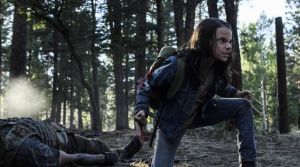
A fly in the ointment (Logan goes through a lot of ointment) arrives in the form of X-23, a feral child who seems to have the same abilities as Wolverine.

x-23two

Chaos ensues, but there are a few heartwarming scenes, such as the one where Wolverine and X-23 paint each other’s nails.

The appearance of X-23, who was first introduced in the animated series, “X-Men: Evolution” and “Jim Henson’s Mutant Babies,” opens up a can of worms that forces Wolverine to use his claws to open one last thing: A can of whoop-ass.

“Logan” is loosely based on the comic book series, “Old Man Logan,” although not much of the source material could be used.

Disney owns the screen rights to most of the characters from “Old Man Logan” and is acting all stuck-up about it if you ask Fox.

For example, the climax of “Old Man Logan” features Wolverine being devoured by a villainous and super-colossal version of the Hulk. Since Fox isn’t allowed to depict the Hulk at all, this cannibalism will have to be committed in the film by some other character, perhaps the X-Man known as Pixie.

pixie

Fox should be credited with having the courage to release “Logan” with an R rating, and the R-rated “Deadpool” should be credited with giving the studio $754 million worth of courage.

So courageous has Fox become that it is promising an R-rating for its forthcoming film, “Ice Age 6: Tear Someone a New Ice Hole.”

“Logan,” which opens tomorrow, promises to be the saddest movie about a tragic hominid with giant claws since “Bigfoot’s Tears.”

Fort Forward: Bonhomie and Clyde

Standard

photo-5

For the Clyde Theatre, the moment of truth is nigh.

Several moments of truth, in fact.

In the next month, the long-shuttered south side cinema will either rise from the dead as a live music venue or sink back into oblivion.

The man who has been trying to revitalize the venerable Bluffton Road movie house is Rick Kinney.

Kinney recently took on one of the best equity partners that a young music industry entrepreneur could hope to befriend: Sweetwater Sound founder Chuck Surack.

“I first went to Chuck earlier in 2015,” he said. “I visited with a lot of people to seek the right partners on this. As it turned out, I was running into some problems with the bank’s side of it and it was getting complicated with our other partners…”

Surack subsequently became “re-interested” in the project, Kinney said.

“As it turned out, he was the right partner for us,” Kinney said. “Chuck is really supportive of the city of Fort Wayne becoming a destination for entertainment, culture, music and community. He’s just really interest in building a strong community here.”

Given Surack’s track record of personal success and public philanthropy, Kinney said he thrilled to collaborate with him.

“The way that I feel having Chuck on as a partner is that I am honored to have the opportunity to earn his trust and respect,” he said.

The 23,000-square-foot Clyde Theatre, part of Quimby Village, was built in 1950. It was one of the first shopping center-based movie theaters in the country and operated under various owners until 1995. A church subsequently rented the space for a time and there was a flashy, if fruitless, attempt to transform it into a nightclub specializing in Latin music.

Kinney acquired the Clyde in 2012 for $500.

His vision for the theater involves turning it into a scalable, general admission concert venue with a capacity ranging from 400 to 2,200 people, depending on how it is configured. The theater will primarily be a standing (as opposed to sitting) venue, although some limited seating will be available.

Every aspect of the revamp has been subject to rigorous research and analysis.

Kinney said he studied more than 100 venues across the country – as patron, performer, stagehand and stage technician – and everything that he learned was brought to bear on renovation plans for the Clyde.

“I even recently spent two years as the technical director of the Embassy Theatre,” he said. “Through these experiences, I have learned what makes a venue good or bad… I have literally played all of (the roles associated with operating a theater) at one time or another.

“Unless your reader has visited the venues I have studied,’ Kinney said, “it is hard to describe what the Clyde will offer without opening the doors and giving them the experience.”

Renovation – which will include upgrades, equipment purchases and a parking lot repaving – will cost $5 million.

Three of the biggest pieces of this funding puzzle, Kinney said, are a $1.5 million bank loan, a $1 million Regional Cities grant and a $1 million Legacy Funds loan.

Each piece is fully dependent on the others.

“If we don’t get the million from Regional Cities and don’t get the one million (Legacy Funds loan) from the city,” he said, “then we don’t get the bank loan and I don’t get the private equity commitment from Chuck.”

Kinney went before the Northern Indiana Regional Development Authority (RDA) again on Feb. 14. If the RDA recommends Regional Cities funding, the Indiana Economic Development Commission (IEDC) will have 30 days to grant final approval.

He will go before the Legacy Committee on Feb. 16. The terms of the Legacy loan will then be negotiated with the Redevelopment Commission. The City Council must grant final approval.

There’s a 50/50 chance, Kinney surmises, that these pieces will come together.

If they do, construction will start in late April or early May.

Kinney hopes the theater’s success will be contagious in that area.

“I cannot tell you how excited I am to see further investment in Quimby Village and the surrounding area if the Clyde gets fully funded,” he said. “Although tons of exciting possibilities exist, it really would be up to the private sector to step in at that point. This will be the beginning of a domino effect of truly blighted, forgotten real estate blossoming into a tax-generating, entertainment and retail district.”

The Hall’s Restaurant chain owns riverfront property nearby that Kinney believes could be developed in much the same way as The Deck at the Gashouse was developed downtown.

While it’s great to have a vibrant downtown, Kinney said, no vibrant downtown is an island. A vibrant downtown needs “strong cornerstones.”

“We can build downtown up all day, but if you drive five blocks out of what they call downtown, you’re still pretty much downtown,” he said. “And if it’s blighted and economically distressed, it’s really not going to be a healthy and thriving community.

“One thing that has been proven by many other cities across the U.S. is that our downtown core will only be as strong as its foundational cornerstones and neighborhoods,” Kinney said. “The thriving success of corridors and neighborhoods such as Broadway to Rudisill; the GE Campus and Quimby Village; Wells Street and North Anthony and Calhoun Street and the many others will be absolutely essential to long term downtown development and population growth in our region as a whole.”


Duane Eby: A Gift Who Will Keep on Giving

Standard

eby

When local singer-songwriter Duane Eby succumbed a week ago to the cardiac problems that had plagued him for many years, the outpouring of grief and disbelief on social media was like a shockwave.

“Duane always made people feel at ease in their own skin,” fellow singer-songwriter Sunny Taylor said. “Whether I was listening to him perform, or talking with him one on one, he always allowed plenty of room for me to be my own weird self. He validated it and encouraged it. It still doesn’t seem real that this world doesn’t have Duane Eby anymore.

Local music booker and booster Brad Etter recalled a time when he was in the hospital suffering from some heart issues of his own.

“Duane had been a patient at various hospitals off and on for the past five years for chronic cardiac conditions,” he said. “This time, though, I was not visiting Duane in his hospital room. Duane was visiting me in mine.

“Duane, armed with only his ‘mighty uke’ and carrying a large black notebook, entered my hospital room,” Etter said. “He told me to pick any song that he had in his big notebook. There were hundreds of songs with lyrics, music notations and charts – literally hundreds of songs, if not more, neatly organized and categorized in his notebook.”

Etter chose “Across the Universe.”

“To this day, every time I hear this popular Beatles song, I immediately think of my lovely, gentle friend Duane,” he said.   “What a treat. What a thrill to have Duane share a solo, mini and private concert for me while I was a patient in the hospital.”

Fans, friends, collaborators and well-wishers will gather at 1 p.m. Saturday at Wunderkammer Company, 3402 Fairfield Avenue, to appreciate Eby’s life and legacy through song.

Local producer Jon Gillespie, who worked with Eby on his 2005 album, “It’s what’s inside that counts,” said his imagination was always pushing his musicianship.

“There are a lot of people who have great chops but not so great imagination,” he said. “Duane was always pushing himself to be better and he made great stuff because of that.”

Gillespie said “It’s what’s inside that counts” was his gift to Eby and, after his death, he knew that “someone had to do a tribute album.”

Unsurprisingly, that someone turned out to be Gillespie.

“People hold him in such high regard,” he said. “And my attitude was “Well, nobody else is going to do this so I’d better do it.'”

Gillespie said he currently has 12 people signed up to perform Eby’s songs and another dozen-or-so sidemen who say they want to play backup.

The idea, he said, is not to do a “cover band” tribute to Eby, but to allow people to interpret his material as they see fit. It’s an approach that Eby would have very much enjoyed, Gillespie said.

“We’re trying to do stuff with a fair amount of variety,” he said. “Everything from neoclassical to electronica to folk and rock.”

For example, Gillespie is arranging Eby’s “Overcome” for string quartet. The tribute album version will feature Hope Arthur on vocals and Jane Heald, Felix Moxter and Derek Reeves on strings.

Gillespie doesn’t want to let the project marinate too long.

“I want to strike while the iron is hot, so to speak,” he said. “I don’t want it to come out a year from now. I’d like it to be a few months. But it’s a huge amount of work to do.”

Gillespie is open to having more folks get on board.

“I want anybody who was very moved by Duane’s music,” he said. “Some of the people who are involved knew him really well and a few people didn’t know him well but were big fans of the music.”

Gillespie said people can contact him about the project via his Facebook page.

Any proceeds from CD sales and downloads will go to Eby’s widow, Janine, Gillespie said.

A secondary goal of the project is to give people a creative way to express and process their grief.

“It’s rare that you see this kind of outpouring of grief and love and admiration for a 65-year-old local songwriter,” he said. “What it’s doing for the community in terms of bringing us together and allowing us to collectively grieve is crucial;”

Asked to assess the musician independent of the man, Gillespie said the two can’t be separated.

“He was such a gentle, encouraging, nurturing soul,” he said, “and that went along with his music. It seems like everyone he came in contact with came away the better for it. Everyone came away more passionate about music.”

Above Average Joe

Standard

joeb

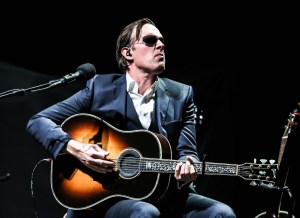
Joe Bonamassa first picked up a guitar at 4 and he was playing with B.B. King at 12.

But don’t call him a child prodigy.

Bonamassa, 39, said there was nothing magical about how or why he got good.

“I always kept to myself,” he said. “Truth be told, I still do. All I ever do is practice. That hasn’t changed. I never thought I had anything special. I just worked hard and tried to make the best music I could. Nothing has changed.”

Bonamassa performs Dec. 2 at the Embassy Theatre.

His reputation is that of an indefatigable and dauntless promoter of the Bonamassa brand and of blues music in general.

Bonamassa has never been afraid to buck whatever the conventional wisdom is at any given moment.

In 2006, he grew tired of playing the small clubs, and of promoters and venue managers who didn’t see him expanding beyond the small clubs.

So he rented out two theaters with his own money: The Florida Theatre in Jacksonville and the Embassy Theatre in Fort Wayne.

Bonamassa stoically reasoned at the time that if he only drew a few hundred concertgoers instead of a thousand, then he’d know it wasn’t time to step things up after all.

“If we had only drawn 200 or 300 people, we would have been back at Piere’s at the end of the day,” he said.

But Bonamassa ended up drawing 1300 or 1400 attendees locally.

“Fort Wayne has always been good to us,” he said. “We rented out the theater because we thought we could do a bigger venue and nobody wanted to take a chance on us. I mean, how do you get to those nice places if nobody is willing to take a chance on you? The way to do it is to take a chance on yourself.”

The 2006 theater experiment became the Bonamassa touring model: a strategy Bonamassa refers to as “the four wall.” The four wall concept means Bonamassa continues to rent theaters himself and maximize profits by cutting out middlemen.

Given Bonamassa’s courage and creativity, it should come as a surprise to no one to learn that the bluesman formed his own label long before it was clear to everyone that the music industry as it had been known for decades had collapsed.

Bonamassa had worked with a number of established labels before launching J&R Adventures in 2003 and his experiences had been less than satisfying.

“The pressure is that you have to sell units,” he said. “To sell units, you actually have to find an audience. And a lot of times, a label will give you really bad advice on how to find that audience.”

It soon became clear to Bonamassa that the traditional model was not going to work for him.

“My manager of 25 years and I, we decided we needed to something really different and it’s been great,” he said. “To be able to set your own hours and make your own rules and control the creativity of it all – that’s really valuable.”

Bonamassa said most musicians have since come to understand that there’s no money in pursuing a career the traditional way.

Musicians today have to be savvier about everything their music touches, he said.

“A lot people forget the business aspect of the business,” Bonamassa said. “It’s really important that you learn all sides of the business. Just because you know how to make a plate of spaghetti doesn’t mean you know how to run an Italian restaurant.”

A few years ago, one of the biggest obstacles to success as a professional musician was illegal downloads. Now it’s streaming.

Bonamassa doesn’t see much difference between the two.

“How to make something illegal, legal? You just refer to it by a different name,” he said.

The streaming of recorded music doesn’t bother Bonamassa. Streaming live concerts, however, strikes him as counterintuitive.

“Some artists think streaming concerts is the coolest thing in the world,” he said. “Ultimately, they find out that they don’t have enough money to get two of the three beans that Jack was purchasing.”

Artists like Bonamassa pride themselves on giving live performances that can’t be reproduced or duplicated successfully anywhere else in any other way.

If you want the best of Bonamassa, you have to buy a ticket.

Even as Bonamassa was devising new ways to succeed, he also devised a new way to pay it forward.

He launched the Keep the Blues Alive Foundation, which helps raise awareness about the blues genre and music in general.

“It’s a way to give new instruments and money to schools that need resources,” he said. “It’s a way for me to give back to the fans that have given to me, to give back to their kids.”


Derek Keeps On Trucking

Standard

trucks

If you want to quickly understand why Derek Trucks is widely considered to be one of the best blues guitarists in the world, seek out a YouTube video of a BB King concert from 2012.

At one point in the show, King, John Mayer and Derek Trucks are performing a Jesse Blevin song that came to be associated with King called “Guess Who?” and King asks Trucks to do a solo.

What ensues is nothing less than magical. Mayer, no slouch himself in the guitar department, gawps at Trucks in disbelief.

The world of electric bluesman and blues rockers is full of shredders, but there aren’t many guys who can make a guitar gently weep like Trucks can.

His solo is a poem in notes. It is more soliloquy than solo.

Afterward, King says, “That’s about as good as I have ever heard it.” And Trucks looks genuinely embarrassed by the praise.

Trucks will perform with the Tedeschi Trucks Band, the group he formed in 2010 with his wife, Susan Tedeschi, at the Embassy Theatre on Nov. 17.

Trucks had an unusual childhood. He picked up his first guitar for $5 at a garage sale when he was nine, which is not an uncommon thing for an American kid to do. By the time he turned 12, he’d performed with music legends like Bob Dylan and Buddy Guy, which is an utterly uncommon thing for an American kid to have done.

“I don’t even know how to explain it,” he said in a phone interview. “I have kids now who are the age I was when I was traveling on the road.”

Trucks said he never craved rock star adulation so the mere act of taking a stage wasn’t enough to swell his head or scare him stiff. He said he just saw playing guitar as a welcome challenge at that age, very much on par with playing Little League baseball.

The joy he got from playing as a kid was unencumbered by adult responsibilities and ramifications.

“When you get in the zone playing sports and music, there’s a thing that happens where everything slows down,” he said. “It’s a little like later on when you take a psychedelic drug for the first time. But when you’re a kid, it’s a very pure thing that happens and you start looking for it more and more.”

Trucks’ father was (and still is) a music aficionado who took his young son to rock, blues and jazz shows.

He was a huge fan of Eric Clapton and the Allman Brothers, so one can only imagine what a thrill it was for him to see his son perform with both those classic acts.

“It was all pretty surreal,” Trucks said. “I think I’d been on the road for a decade when I got the call to join Allman Brothers. I had a record out. At that point, I think I figured that the band was winding down and the guitar chair was never going to open up again. So it came out of left field and was certainly a major honor. I had no idea it would last 15 years.

“I don’t really believe in the preordained script but this was kind of part of it,” he said.

It was during Trucks’ first tour with the Allmans that he met his future wife. Tedeschi, a rising star on the blues scene at the time, was an opening act throughout the tour.

“I always joked with the guys in my solo band at the time,” he said. “I’d just gotten out of a relationship and I was like, ‘It’s kind of fun being a single guy on the road.’ I remember telling them, ‘Unless I find a woman with a CD collection that has John Coltrane, Howlin’ Wolf and Mahalia Jackson in it, I’m just going to hang back a while.’

“And then, when I met Susan, I called Yonrico (Scott), our drummer, and I said, ‘I think I stepped in it,’” Trucks recalled.

Members of the Allmans and of Tedeschi’s band picked up on the future couple’s chemistry and musical compatibility right away, he said.

“They were like, ‘We don’t care if you date, but you’ve got to have at least one child,’” Trucks said.

The couple married in 2001, had a son a year later and a daughter two years after that.

Trucks said they knew they would collaborate some day but they wanted to wait for the right moment.

“Her career was taking off,” he said. “I think not long after I met her, her first record went gold and she was up for Best New Artist. Things went from 0 to 60 with her. I was working with my solo group and the Allmans and things were intense and great. So there was this sense for the first eight years: ‘Your thing is your thing and mine is mine. Let’s not cross-pollinate too much.’”

But after their family had been established for a while, they started talking about teaming up professionally.

In the days when they had two separate bands, they arranged their tour schedules so one parent was always home.

That aspect of things became more challenging after they joined musical forces.

“We’re very fortunate,” Trucks said. “My parents live not too far from us, my brother and his wife live right down the road. We all live on the same street now. Now when we leave, my mom kind of moves in. And we don’t leave for any extended period of time when the kids aren’t out of school. We have the small village thing working for us. I don’t know if we would be able to do it otherwise.”

Doing a lot of shows is imperative for the large band in these economic times. The Tedeschi Trucks Band has swelled to 12 members, including three singers and a horn section.

“It’s an evolving thing,” he said. “When we first put band together, we definitely had a horn section in mind. But you can’t bring 10 people on the road right out of the gate.”

The band always grows after it tries something new and everyone realizes they can’t live without it, Trucks said.

“You don’t go backwards,” he said. “You just keep finding a way to make it work.”

There are no sidemen in the band, Trucks said. Every member is a virtuoso and a visionary.

“Really everyone in the band has done or could do their own thing,” he said. “There are no pick-up musicians. With that, you’re getting a world of experience; you’re getting big personalities.”

The band performs 200 shows a year because Trucks and Tedeschi want everyone to be financially comfortable.

“It’s not want you need to personally get by,” Trucks said. “It’s what the band and the crew need to get by. It sure would be nice to have a month or two of not touring at this period. But we’re like, ‘Maybe next year.’”

Trucks said it’s tough being away from home so much and it’s tough feeling like you’re always in motion but it’s “a good hang.”

“Musically it just gets better the more you do it,” he said, “when you’re actively pushing it forward and trying new things. The band is better because of it. I don’t feel like at any point with this band that we play too much and the inspiration goes away. It’s the opposite.”

Trucks said the band “just keeps feeling this magic kind of bubbling more and more.”

“It is the nature of what we do,” he said. “The more you do it, the better it’s going to get.”