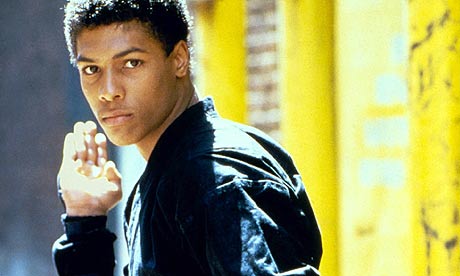
The Last Dragon Returns: An Interview with Taimak

Standard

taimak1

It may be that anyone under 30 who resolved to watch “The Last Dragon” for the first time would find it utterly bewildering, bordering on insane.

It is the sort of movie you get when you combine “Mighty Morphin Power Rangers,” “Pretty in Pink,” “The Karate Kid,” “Pee Wee’s Playhouse” and “Shaft.”

There’s “over-the-top” and there’s “The Last Dragon,” which found new tops to go over.

It is a movie of its time (1985) and it is a movie that has transcended its time: A 30th anniversary Blu-ray edition of the film came out last week.

“The Last Dragon” concerns the romantic, spiritual and martial-artistic maturation of young New York City kung fu expert named Leroy Green, a role assayed by a young New York City kung fu expert named Taimak (full name: Taimak Guarriello).

It pays tribute to grindhouse fare of the ‘70s — blaxploitation and Shaw Brothers-era martial arts films — but the outlook of the film is sunny; the violence, toothless; the racial mix, harmonious; the villains, absurd.

Leroy Green was Taimak’s first major acting role and it shows. But sometimes an actor’s inexperience works in a movie’s favor.

In 1985, the box office was ruled by tough guys like Arnold Schwarzenegger, Sylvester Stallone and Chuck Norris, so the guilelessness of Leroy Green (aka Bruce Leroy) was refreshing.

Asked by phone if he was essentially playing himself in the film, Taimak said…not quite.

“That’s what they say. I didn’t know myself,” he recalled. “I analyze myself now and say, ‘Yeah.’” There was a side of me that was very innocent and there was a side of me that wasn’t. I grew up in New York City. There were sides of me that definitely weren’t innocent.”

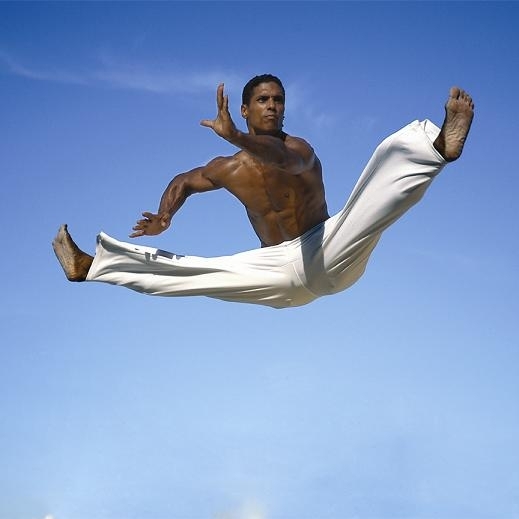
Taimak started learning karate at the age of six, inspired by his father, who also trained. He said that when he saw his first snippet of Bruce Lee on television, he understood the standard to which he wanted to hold himself as a martial artist.

The early ‘80 was an exciting time to be a teenager in New York City, Taimak said.

“I grew up with friends going to all the discos,” he said. “It was an amazing time. Kids were dancing, partying and having a great time. And there was music.”

In the months before his friends informed him of an open audition for “The Last Dragon” at the Apollo Theater, Taimak had been considering college.

“I’d just won a kickboxing title,” he said. “But there was no money in being a professional kickboxer.”

Taimak admits that his first audition for the film was a disaster.

“I choked,” he said.

So he went off to spend some quality time with the script and then returned to ask for another chance.

It is difficult to imagine what it must have felt like for a young, Bruce Lee-obsessed man with no real acting experience — or significant acting aspirations, for that matter — to find himself the focal point of a major Hollywood martial arts movie.

“Going to the set every day was like walking into a comic book,” he said. “A great comic book. We were all just full of life. Everybody had something.”

The movie features a great hammy performance by the late Julius Carrey III (“The Adventures of Brisco County Jr.”), the screen debut of cult action star Ernie Reyes Jr, former Prince protege and pop singer Vanity at the height of her seductive powers, and small roles assayed by William H. Macy and Chazz Palminteri.

Taimak said he knew the film would be popular among martial arts buffs, but he had no idea it would have three-decade staying power.

“I didn’t think I was going to be talking about a year later,” he said, “let alone 30 years later.”

Taimak was offered a sequel long ago, but he turned it down.

“It wasn’t so much about what was in the contract,” he said. “It was about how I was getting treated. It’s not always what it’s cracked up to be.”

The lasting action stardom that Taimak envisioned for himself (and many others envisioned on his behalf) never materialized, but he nurses no grudges.

“It was a different lifetime and I am a different person,” he said. “I’m a trained actor now.”

“I am a grown man,” he added with a laugh. “I’m not a kid anymore.”

taimak3

Taimak said it is a blessing to have people “love you for something you did.” The anniversary has given him a chance to sit with audiences at screenings and re-experience the film with them.

“It’s interesting because you see how much meat is in the movie,” he said. “It is a very positive movie for young people. It celebrate racial differences and it has wisdom layered through it about looking at oneself and finding that inner strength.

“There are a lot of great messages in the film,” Taimak said. “There are black characters who are not shooting people like they do in shoot-em-up movies. (Leroy Green) is a humble character who works hard and has a big heart. It resonates with all races.”

The anniversary has given Taimak the opportunity to meet numerous martial arts champions who have let him know that the movie was what inspired them to start training.

“So, of course, I feel really honored,” he said.

These days, Taimak is training with a Brazilian jiu jitsu champion named Marcello Garcia. He also mentors inner city children, writes screenplays (including a “Last Dragon” reboot) and auditions for acting roles.

He will soon star in the action comedy “Enter the Fist and the Golden Fleecing” alongside other ‘70s and ‘80s action stars including Michael Dudikoff, Reyes Jr. and Don “The Dragon” Wilson.

He said he has worked out a publishing deal for his autobiography. It is scheduled to come out next spring.

Had things worked out differently in Taimak’s career, a book like that might have more scandal, but less perspective.

Taimak, 51, said he’s genuinely grateful to be able to offer more wisdom than gossip.

“There’s only right now,” he said. “If you’re not walking around complete, then you’re putting that in your future. If it doesn’t serve me, I don’t keep it.

“Of course, after the film, there was a lot of expectation,” Taimak said. “But life is a search, a journey. It’s not about making money. We all fall into that because we enjoy things. But, at the end of the day, if you find yourself in a room full of dollar bills but no one to love you, what does it all mean?”
taimak2

It’s Elementary: The Dominion of Earth, Wind & Fire

Standard

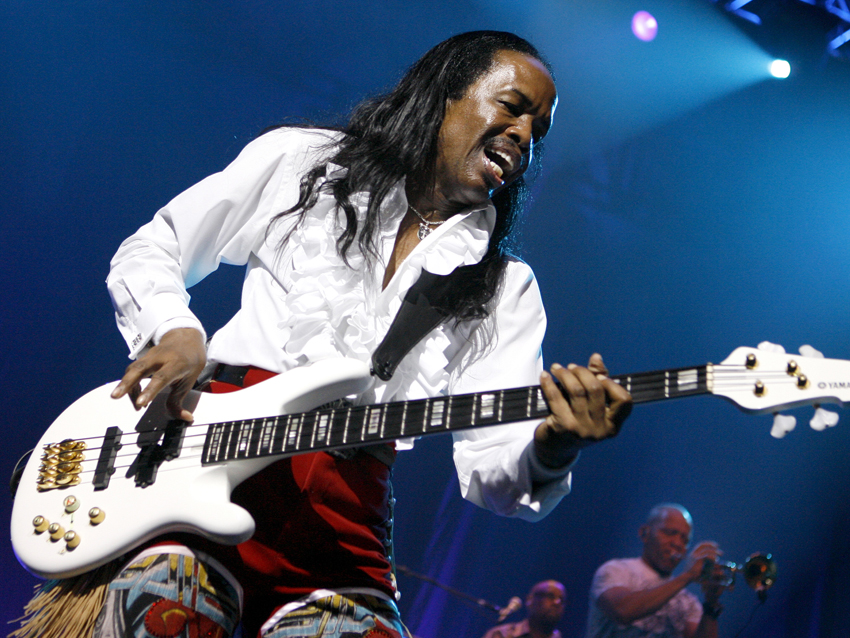
Verdine White performs with Earth, Wind & Fire at the Seminole Hard Rock Live Arena in Hollywood, Florida.

The Internet is rife with tips and lists about persevering through adversity, but there’s nothing quite so inspiring as examples from real life.

Even when they’re pre-Internet examples.

Especially when they’re pre-Internet examples.

Here’s one from 1971.

Somewhere between the beginning of that year and the end of the year prior, Chicago-born brothers Maurice and Verdine White formed a 10-piece R&B band in Los Angeles that released two albums and recorded a movie soundtrack in a span of no more than 11 months.

Then the band abruptly broke up, purportedly because eight of the non-brothers didn’t see eye-to-eye with the two brothers.

Thus it was that Earth, Wind & Fire almost ended after a smattering of well-reviewed but hardly earth-shattering recordings.

Singer-songwriter Maurice and bassist Verdine could have given up and moved back east.

No one would have blamed them.

“Thank God I was young,” Verdine White said in a phone interview. “I was 19. Ignorance is bliss. You know what I’m talking about.”

It wasn’t easy to get records made in those days, White said, so he knew he must have some talent.

“So I said, ‘I’m staying in California. This is what I am going to do,’” he recalled.

“I was getting good at what I was doing. And I started looking like a musician: sideburns, platform shoes, you know what I’m saying? Bell bottoms. People would come up to me and say, ‘Hey, are you are musician?’ And I’d say, (White lowers his voice) ‘Yeah, I’m a musician, man. I’m a musician.’

Added White, with a laugh: “Most musicians are broke anyway, so I fit the bill.”

ewf1

Earth, Wind & Fire, of course, eventually became the sort of musical force that hardly needs to be described by any self-respecting feature writer to any self-respecting reader.

The band performs Wednesday, Aug. 26 at the DTE Energy Theatre in Clarkson, Michigan.

The hits endure, but the band’s achievements go far beyond the persistence of its repertoire.

“It was a big deal,” he said, referring to the group’s eventual success in the ‘70s. “You have to understand — people talk about the music, the songs and the sound, but we were really the first group of color that solidified a certain aspect of the music business.

“We had no infrastructure prior,” he said. “It was because of the work Maurice did and his vision. He enabled other groups to have a career. He enabled record companies to start black divisions for a certain kind of music.”

Were it not for Earth, Wind & Fire, White said, there may not have been a Commodores or a Dazz Band or a Prince.

“A template was established,” he said. “Our contribution was not only to music but to the music business.”

Maurice had a vision, White said, and he “matched up (the people) with what was in his brain.”

That included vocalist Philip Bailey, who Maurice invited to join the band in 1972.

“Philip came over to the apartment at that time,” White recalled. “Maurice wasn’t there so Philip spent the afternoon with me. We talked about music. He played harmonica. He was so talented. I called my mother — my late mother — to tell her about him.

“It was down to Philip and another gentleman and I said, ‘No, you should get Philip. He’s not only talented. He’s a great guy.’”

Character is as important to Maurice as talent, White said.

“In order for us to take this long journey, you not only had to be talented,” he said. “You had to be a good person and a strong person. He had all those qualities.”

When Maurice stopped touring with the band in 1994 due to Parkinson’s disease, it was Bailey who took over as bandleader.

Maurice may not be making as much music as he used to, but he is still in charge, White said.

“He’s got it under control,” White said of the Parkinson’s. “He’s the patriarch. He’s the icon.”

One of the ways a person can appreciate the full scope of Maurice’s artistic genius is to listen (via YouTube, for example) to a range of singles, from “La, La, La” and “Uh Huh Yeah” in 1969 (by Maurice’s early group the Salty Peppers) to Earth, Wind & Fire’s “Mighty Mighty” in 1974.

With “Mighty Mighty,” the band’s first top 30 single, Maurice had found the sound he’d been imagining, a sound like no other before or since.

“We made such a great progression from the first album in 1970 to 1979,” White said. “There was great growth from song to song, great maturity. You hear it record by record.”

The digital age means the same things to Earth, Wind & Fire as it does to other bands: Less interest in new recordings and less interest in paying for old ones.

But White says he is grateful for YouTube.

“People actually can go about going back to the past and seeing the work we’ve done,” he said. “There’s so much information on the Internet now. It’s actually helped extend our career.

“You don’t have to tell people what you did,” White said. “If we didn’t have that, you wouldn’t know.”

Some acts chafe against the prospect of having to tour on their greatest hits, but Earth, Wind & Fire’s position may be unique: The band’s catalog has a rather singular perennial freshness and buoyancy.

White said he saw a survey where “September” ranked fifth on a list of most popular songs in the history of popular music.

He hears “September” everywhere he goes, even at a recent college graduation ceremony, he said.

“We were in the stands and the band way down on the field played Bruno Mars’ ‘Uptown Funk’ and ‘Happy” by Pharrell. And my wife said, ‘Wouldn’t it be interesting if they played ‘September’? And that was the very next song.”

The band didn’t know White was in attendance of course.

“So I go down and thank them for playing it,” he said. “They about dropped their instruments. It was like Superman coming down.”

Krall Space

Standard

diana1

To fully understand Diana Krall’s latest album, “Wallflower,” a person may have to be exactly 50 years old.

Krall turned 50 last November and I will turn 50 in September.

Some fans and critics have been a little bewildered by the album, which consists of fairly straightforward renditions (Krall doesn’t want them described as cover tunes) of pop hits from the ‘60s, ‘70s and ‘80s.

Krall, ostensibly a jazz pianist and chanteuse, doesn’t even play piano on the record.

She’ll visit the Embassy Theatre, piano in tow, on August 4.

A music-loving person who came of age in the mid-to-late 20th century got most of his or her music from the radio.

Songs we heard on the radio as kids, regardless of what critics said about them at the time and say about them now, are sacred.

Even most frivolous songs can be as consequential to us as hymns.

I told Krall in a phone interview that Beatles fans tend to get upset with me when I express a preference for the music of Paul McCartney and Wings.

My rationale for this is simple: The Beatles’ music wasn’t being played on the radio when I was a kid. But Wings provided the soundtrack for every road trip and picnic.

“That’s right,” Krall said. “I grew up listening to Wings before I started listening to the Beatles. Because that’s what was coming out. I can get a direct image of that.”

“Wallflower,” therefore, contains some of Krall’s sacred radio songs.

Enjoying music in the pre-digital days was a waiting game, Krall said: You heard something on the radio and then you waited to hear it again on the radio and then you waited for it to come out on “vinyl, cassette, 8-track or reel-to-reel.”

The waiting, as Tom Petty once opined, was the hardest part.

But the anticipation could be delicious at times.

Krall said she resisted producer David Foster’s entreaties to jazz up some of the material on “Wallflower.”

“You do different records at different times in your life,” she said. “And you try different things and you move forward. Not everything has to be reworked into a jazz vehicle. Sometimes you need to play the songs as they were originally written.”

Krall said it was a relief to cede the piano playing duties to Foster.

“It was fun to sort of step out of being the piano player/arranger all the time,” she said.

“Wallflower” has garnered mixed notices, but Krall said that as long as critics’ comments are thoughtful, intelligent and insightful, she welcomes less-than-stellar reviews.

“I don’t mind that,” she said. “That’s the point of it. People are thinking about you and talking about you. A lukewarm review means you’re still being talked about. That’s all good.”

“Wallflower” hardly represents a renunciation of jazz, Krall said.

“An album is very, very different from live performances,” she said. “I’m not the type of artist who goes out and says, ‘OK, now I’m doing all pop songs. I’ve changed. I’m now not playing jazz. I’m doing this.’

“I was interviewed recently by someone who said, ‘Well, I’m primarily a jazz writer,’” Krall recalled. “And I said, ‘Well, I’m primarily a jazz pianist. But I do other things.’”

Being 50, Krall said, means she has recorded far more music than she could ever play live.

“I’m not an artist who has one album out and one album to plug,” she said. “I have lots of records to draw from.”

Turning 50 is a milestone that some people greet with exuberance and some people greet with defiance and some people greet with terror.

Krall said she really didn’t get a chance to greet it at all as there were more pressing matters in her life at the time.

“I had pneumonia,” she said. “I got really sick. And my father died. All around the same time. So I’m just really grateful that I am healthy and I have a beautiful family and husband and I’m moving forward.

“I don’t really have anything original to say about it,” Krall said, referring to aging. “You just got to feel good about where you’re at.”

Where Krall is at these days is not just on stage, sharing her talents and enjoying the fruits of her success.

It’s at her home in New York as mom to eight-year-old twin boys (Dexter and Frank) and wife to British-born singer-songwriter Elvis Costello.

Asked if motherhood altered her perspective on her career, Krall responded, “Oh, I’m sure. Yeah. Of course. It’s the best. It’s what I live for. It’s all that matters to me. My family. They are the most important thing to me.

“You just have to try to find a balance,” she said. “So you can also do what you love to do. It’s unfortunate that I have to travel so much but we figure it out. They come with me. So it’s good.”

One can be excused for imagining that a household headed by Diana Krall and Elvis Costello would be the scene of one continuous jam session.

Krall said it’s not like that, but close.

“It’s not a constant jam session,” she said, “but I would say there’s music going on in the house all the time. It’s great.

“It’s busy,” Krall said. “There’s lots of different kinds of music going on. That’s a beautiful thing. That’s who we are.”


Wasted On The Way: The Gratitude of Graham Nash

Standard

grahamnash3

In 1968, Graham Nash – then known, if he was known at all, as a member of the pop group, the Hollies – flew from the UK to California to spend some time with his girlfriend, Joni Mitchell.

When Nash entered her home in the Hollywood hills, he heard music being played by two men he’d met but did not know: Stephen Stills, formerly of Buffalo Springfield, and David Crosby, formerly of the Byrds.

This unofficial American duo performed for Nash a song that Stills had written called “You Don’t Have to Cry.”

Nash asked them to play it again and then a third time, not just because he liked it but because he heard something in it or something that should have been in it.

On the third go-round, Nash added his voice to theirs.

Forty seconds later, Nash told me in a phone interview, the trio stopped, stunned.

“That was an incredible 40 seconds,” he said.

The three men were all Everly Brothers fans who had imbued every project they’d undertaken up to that point with close harmony singing.

But the sound they made in Mitchell’s living room that day seemed new, Nash said.

Nash’s life utterly changed in that moment because CSN had appeared, fully formed, out of nowhere. Or next to nowhere.

He left the Hollies behind and moved permanently to Southern California.

Almost a half-century later, those three men are still making music together.

Nash is currently on the Midwestern leg of a solo tour that will bring him to the Murat Center in Indianapolis on Saturday, August 1.

grahamnash4

Indianapolis attendees “can expect everything from the Hollies to the stuff I wrote that morning,” Nash said.

Last September, Nash released “Wild Life” (a memoir so accurately named that it may constitute an understatement) and he recalled having a curious reaction while proofreading the galleys.

“I looked down on it and I said ‘Holy Toledo. I wish I was him.’ It really seemed to me in that moment that it was about somebody else.”

Given the consummate wildness of that wild life, especially in the early days of CSN, it’s amazing that any of these men were able to make music at all.

“A lot of people say to us, ‘Would you have made more music or better music if you’d been less stoned or less egoed out?’ We’ll never know the answer to that question,” Nash said. “It is what it is. We were very high when we were making that early music. And that’s what it was.”

Of course, the wages of pharmacological sin are sometimes paid in increased creativity.

“Everything in moderation, kid,” Nash said.

It is one of the “Believe It Or Not” factoids of rock music that CSN, despite having formed in 1968, did not perform live until 1977.

That’s because the band, largely for practical reasons, had to become CSNY for a time.

Stills had handled the bulk of the instrumental work on CSN’s debut album, but the band needed to add some musical muscle for its first tour.

Enter Neil Young.

Having endured Young’s capricious and erratic behavior in Buffalo Springfield, Stills was against the plan to add Young at first, Nash said.

Nash had his own reservations, so he invited Young to breakfast one morning in New York City.

“I knew he was a great singer,” he said. “I knew who he was musically. I had no idea who he was as a person. And that, of course, is a very important ingredient.

“It wasn’t until that breakfast that I just loved him,” Nash said. “He was very funny. He was very self-secure. He was very compassionate. He was everything I wanted in a partner. He was great.”

CSNY did end up making much beautiful music together. Nash said it was unearthly at times to stand on stage and listen to the interplay of Young’s and Stills’ guitars.

But Nash said the foursome was, to quote Crosby, like “juggling four bottles of nitroglycerine.”

Young has always held himself at a distance from the other men (Indeed, as is chronicled in the book, he has sometimes mistreated them, intentionally and unintentionally).

“Neil is a solo human being,” Nash said, “The three of us had a friendship…well, we were like brothers. The three of us were very close and it was very difficult to slip Neil in between all that stuff but we managed to do it.”

The trio has had its ups and downs over the years, including Crosby’s bout with drug addiction and subsequent jail stint and liver transplant.

But Nash said they are now sounding better than ever.

“We’re certainly stronger together and that’s very important for harmony singing,” he said. “We are very much liking each other these days.”

Nash has a new solo album coming out in the spring and he said that he and Crosby are putting together a compilation of songs they’ve performed with other artists including Mitchell, Bonnie Raitt, Carole King, James Taylor and Phil Collins.

Nash said he writes new material in bursts and can’t rush the process.

“I get moved by something and then have to go to my guitar or piano to express myself,” he said. “That’s what happens. I wake up in the morning. I’m breathing. I’m grateful to be alive and I get on with my day. I have to be moved before I can write.”

He does say, however, that he needs to “create every single day or else I can’t sleep.”

grahamnash2

Even though the music business has changed greatly over the years, Nash’s advice to young musicians hasn’t.

“My advice has always been, ‘Go from your heart,’” Nash said. “Your heart knows whether it has something worth talking about or singing about. Your heart knows. Just go from there.”

Even the most pragmatic person must acknowledge the serendipity that brought Crosby, Stills and Nash together in Mitchell’s living room that day 47 years ago.

Nash acknowledges it and he said he takes nothing for granted.

“I love being alive,” he said.” I love being a creator. I love being a communicator. I’m a very lucky man, Steve.”


“Captain America: Civil War” – What We Know So Far

Standard

captain1

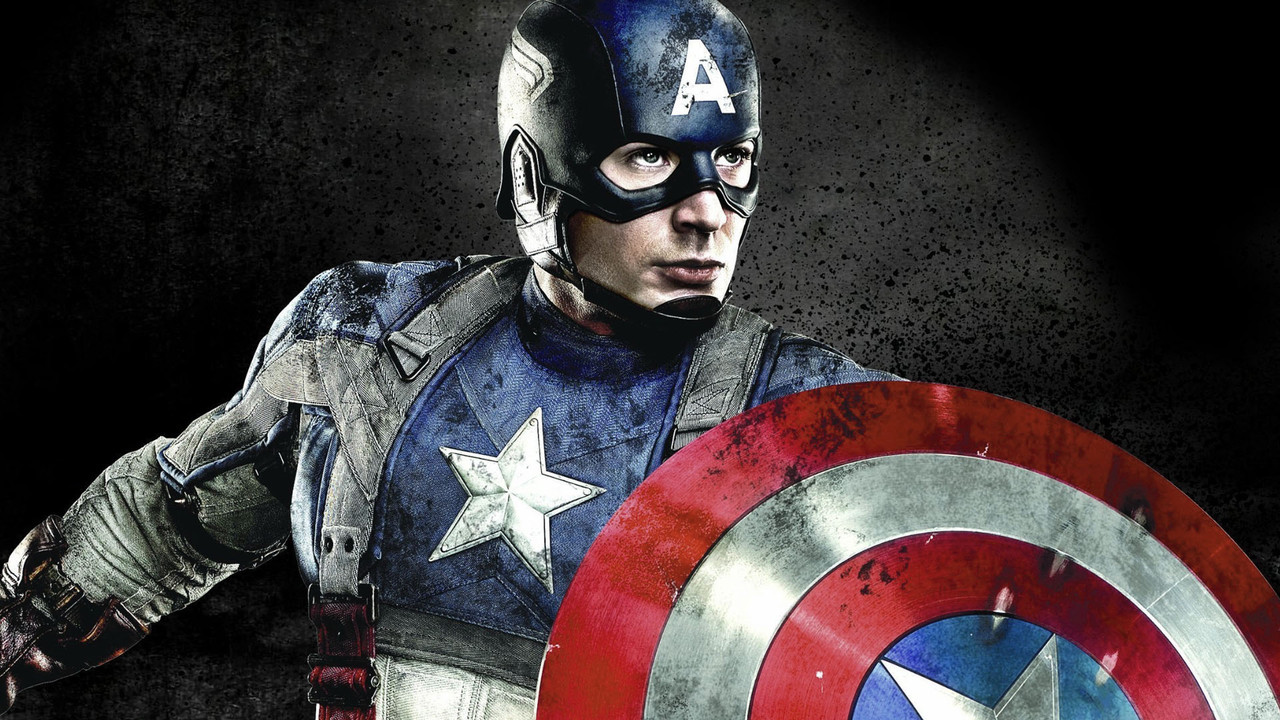
“Captain America: Civil War” is currently shooting in Atlanta on an exceptionally tight production schedule.

The film, a sequel to “Captain America: The Missouri Compromise” and “Captain America: John Brown’s Raid,” is one of the most anticipated superhero movies since “Superman V: The Return of Nuclear Man” and is certain to shake the Marvel Cinematic Universe to its very core, which is located – for some reason – just outside of Elsinore, Utah.

The release date may be ten months away, but fans are already getting a taste of what’s in the film thanks to leaked photos, insinuative tweets and brazen taunts.

Some fans at Mintinthebox.com claim to have sneaked onto the set and watched the filming for a little while. They saw a scene in which Captain America carried a prop cutout of Thor’s hammer, which either means that it will be replaced in post by computer graphics or that Chris Evans was stealing something to sell later on eBay to try to make up the gap between his and Robert Downey Jr.’s salaries.

Another sequence involved a garbage truck heading at top speed toward The Institute of Infectious Diseases. This would seem to indicate that at least a third, if not more than 50 percent, of the film will be devoted to trash collection.

The spies also claim to have caught glimpses of Frank Grillo in his Crossbones and Captain Feathersword costumes.

We have all, I trust, seen recent photos of actor Daniel Bruhl arriving on the set. Bruhl is slotted to play villain Baron Zemo in the film.

In the comics, Baron Zemo shot futuristic glue out of a futuristic spray gun. He is not to be confused with Baron Zima, whose chief weapon was a malt beverage that didn’t taste like it could possibly have any alcohol in it until it was too late.

The plot of “Captain America: Civil War” involves superheroes choosing sides in advance of an epic battle with each other, but one character will reportedly remain neutral.

It’s Black Panther, aka the Prince of Wakanda.

In perhaps the film’s most powerful scene, Black Panther’s Minister of External Affairs advises Iron Man, “Prince Wakanda don’t want done what can’t be undone, son.”

According to Mydinnerwithmanthing.com, Hawkeye will wear a costume with more purple in it this time around, War Machine’s armor will be upgraded with a shoulder-mounted cannon and Ant-Man will develop the ability to use his gut microbes to enhance the nutritional value of food he gathers thus allowing him to survive in nitrogen-poor areas, such as rainforest canopies.

According to the Georgereeveswasmurdered.com, Martin Freeman will assay the role of British Prime Minister Edward Chase. He will take responsibility for cleaning up the collateral damage caused by the Avengers – collateral damage being defined as what happens after superheroes decide that the best way to save a city that has been raised high in the air by an evil robot is just to let it drop to the ground.

Actor Sebastian Stan’s presence on the set would seem to indicate that his character, Bucky Barnes (aka the Winter Soldier) will loom large in “Captain America: Civil War.”

bucky2

Barnes was a villain in the last “Captain America” movie but he became a hero in the comics. Many fans would love to see him embrace some of the benevolence of his namesake, Pope Bucky VIII.

Rumors that Barnes will eventually assume the persona of Australian rock star Chris Gaines are groundless speculation.

Actor William Hurt’s return as Thunderbolt Ross has generated some wild speculation about whether Ross will transform in “Captain America: Civil War” into the Red Hulk (aka Rulk).

If he does, it could open the door for appearances by Gray Hulk (aka Gulk), Blue Hulk (aka Bulk), Whiny Saffron Hulk (Sulk), Cinnamon-Auburn Hulk (aka Caulk) Peach-Terra Cotta-Fawn Hulk (aka Peter Falk) and Firebrick-Russet-Zaffre-Baby Blue Hulk (aka Fairuza Balk).

Forlorn She-Hulk fans have been wondering when that beloved character will ever make an appearance in the Marvel Cinematic Universe.

Since She-Hulk hasn’t even generated rumors to date, it is probably too optimistic to expect appearances by She-Male Hulk (aka Shmulk) and the Fuchsia matriarch of the Hulk clan, Mother Fulk.

Subscribe to this blog for the latest updates!

True Grit: The Tenacity of George Thorogood

Standard

thorogood2

Ask George Thorogood how his love of baseball relates to his love of the blues and you get a life lesson that is applicable across vocations.

But first, a little backstory on the blues singer and guitarist, who opens for Brian Setzer at Detroit’s DTE Energy Theatre on Friday, June 5.

The Wilmington, Delaware, native said he knew at age 15 that music was going to be put to greater use in his life than filling the cracks between desk job stints.

“I never looked at it as a hobby,” he said in a phone interview. “I thought of it as a business. From the very first time I did a gig right to this very moment we’re speaking. I just had the right mindset for it. I was very relaxed about the whole thing.”

Like every 15-year-old guitar player, Thorogood had delusions of grandeur.

thorogoodyoung

Thorogood, 65, likens his early journey as a musician to a story Samuel L. Jackson told about the beginnings of his acting career.

“(Jackson) said, ‘When I started out – when I was 17 – I used to stand in front of the mirror doing my acceptance speech for my Academy Award. A year later, I thought, ‘If only I could get into a Marlon Brando movie.’ A year after that, I thought, ‘If only I could get into any movie.’ The next year, I thought, ‘If I could just do a television commercial.’”

Thorogood’s point is that all artists arrive at a place, or should, where they must weigh an honest assessment of their talents against the competition and the marketplace.

And that’s where baseball comes in.

“You start at 13 and by the time you’re 21, you figure, ‘There’s only one Babe Ruth. There’s only one Willie Mays.’ I looked at music like a young ball player looks at the Big Leagues. I figured, ‘I am never going to be Willie Mays. So I’m going to learn to bunt. I’m going to learn to be a really good double play man. Someone has to bat eighth in the line-up and that’s going to be me.’”

Here’s how that atypically realistic mindset translated into a musical strategy: Thorogood put together a band, got “a couple of tunes,” went to promoter Bill Graham and said, “You need an opening band for the Allman Brothers. You need an opening band for the J. Geils Band.”

“And that’s what this thing is built for,” Thorogood said.

Pragmatism certainly didn’t stop him from earning six gold records and two platinum records or from selling 15 million albums to date.

Thorogood singles such as “Bad to the Bone,” “I Drink Alone” and “One Bourbon, One Scotch and One Beer” have become party anthems and movie soundtrack staples.

The irony of Thorogood’s close association with overindulgence in alcohol is that he’s never been what you’d call a heavy partier.

“The radio picked those songs,” he said. “I didn’t pick those songs. I just made up a whole bunch of songs and hoped people would like them.”

In truth, Thorogood is mildly annoyed by drunken fans at his shows.

“I explain to people, ‘When you’re watching a movie, when you’re reading a book, when you’re having a conversation, you miss an awful lot when you’re drunk.’”

He balked at the suggestion that an established musician might get tired of playing his hits night after night or would have any justification for feeling tired.

“I created these songs for people,” he said. “I didn’t create them for me. So I’m thrilled to play them night after night because that’s what I created them for in the beginning.”

“Let me ask you something,” he added. “Did Don Mattingly ever get tired of hitting home runs?”

Thorogood is a family man these days and he said he cut back to between 60 and 80 concerts a year from 200 when he realized he was making good money playing less and he didn’t have anything left to prove by playing more.

It is de rigueur for feature writers to ask musicians about their retirement plans, even 18-year-old musicians.

And it is de rigueur for musicians to claim that they have no plans to retire.

But Thorogood is a little different.

Asked if he ever wonders what set of conditions would make him want to hang up his guitar, he responded, “About every other day, Steve.”

“Then,” he said, “the phone rings and I go, ‘How much? Hold on a second. Let me check my calendar.’”

Faked Out: The Return of Practical Effects

Standard

godzilla

In late April, my seven-year-old son and I watched “The Avengers” in preparation for watching the sequel.

Seven-year-olds being what and who they are, “The Avengers” actually spoiled my son’s appetite for the sequel rather than whet it.

Where loud, intense action films that can be described by using eating clichés are concerned, my son’s eyes are bigger than his stomach.

Watching the original film on the small screen for the first time, I was forced to admit something to myself that I’d overlooked in the movie theater.

I never feel bad about having overlooked something in a movie theater because I know everybody goes there to hide their secret delusions and shames, if only for a couple of hours.

Wait. What was I writing about?

Oh, yeah. Being forced to admit something to myself.

I was forced to admit to myself that the Hulk really doesn’t work as a special effect. He sort of works as a character thanks to Joss Whedon’s writing and direction, but he really doesn’t work as a special effect.

I just can’t make myself believe the computer-generated Hulk exists in the same space as the flesh-and-blood actors in these big-screen movies. His skin looks wrong, like an algae bloom with an oil slick on top of it.

hulk

The moment Eric Bana or Edward Norton or Mark Ruffalo starts grunting as a prelude to transformation, the part of my brain that is devoted to believing in the reality of things that were added in post-production shuts down.

When the Avengers all stand in a circle with their backs to each other, which they seem to do a lot, all I can envision is the mess of masking tape on the pavement that was put there to let everyone know how much space the Hulk would take up when he was added later.

Computer-generated imagery (CGI) can achieve many wondrous things these days but it can’t create realistic (albeit green and outsize) humans.

Four decades ago, the Hulk was portrayed by a bodybuilder painted green.

ferrigno

Four decades ago, it was a strange thing to be a bodybuilder. Since every man living in the ‘70s wanted to be wiry like Paul Newman or Burt Reynolds, the only plausible explanation back then for having gotten as big as the Rock was an overdose of gamma radiation.

So, times have changed.

Computer graphics guys and gals may not be able to create believable Hulks but they sure as heck can create believable robots.

After I watched “Star Wars: Episode One – The Phantom Menace” in 1999, I decided that watching superheroes destroy rows of computer-generated robots was surprisingly boring – akin to watching assembly line workers inspect rows of commercial light fixtures.

So you can guess how I felt 16 years later when the climax of “Avengers: Age of Ultron” involved superheroes destroying rows of computer-generated robots.

Excited, of course! Who wouldn’t be?

I just read that “Tomorrowland,” which opens today, also has computer-generated robots.

Yippee! You can’t have too much of a good thing, I always say.

Sigh. I may as well fess up right now: I am suffering from CGI fatigue.

I realized how bad it was when I was watching the “Godzilla” reboot last year and I wasn’t sure at one point what arrangement of pixels was attacking the city.

I’m not saying I didn’t care whether I was watching computer-generated dinosaurs or computer-generated Transformers.

I am saying I wasn’t sure whether I was watching computer-generated dinosaurs or computer-generated Transformers.

Since then, I have taken to watching Italian-made sword-and-sandal epics for free on YouTube.

reeves

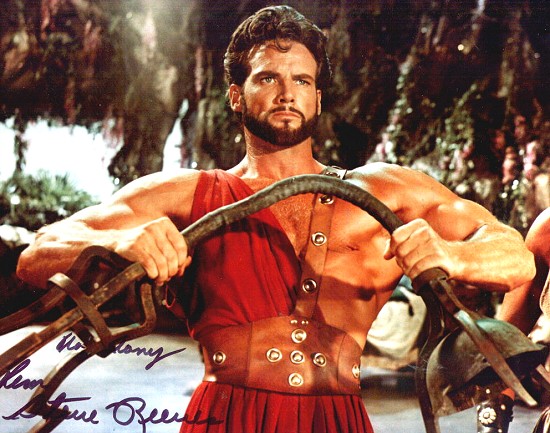
Sure, the guys playing Hercules in those films throw foam boulders, but at least you never doubt the existence of foam boulders.

I am almost 50. The way I figure it, I no longer have to feel ashamed about my fondness for the foam boulders in Italian-made sword-and-sandal epics, not to mention my fondness for the homoeroticism in Italian-made sword-and-sandal epics

Wait. What was I writing about?

Oh, yeah. CGI fatigue.

I even joined a Facebook group devoted to practical effects, a term that refers to any special effect accomplished with an actual thing (prop, contraption or prosthetic) with which an actor can interact.

CGI brought to life cinematic visions that were unfilmable before CGI, but it was the worst thing to happen to many pre-existing franchises, including “Alien,” “Star Wars,” and “The Thing.”

If you are a devotee of John Carpenter’s “The Thing” and you’re still angry about the crappiness of the prequel (and the predictability of that crappiness), you will cry actual, non-computer-generated tears at this highlight reel of practical effects created for the film that were largely scrapped in favor of CGI.

Warning. It’s a little gruesome (because these guys knew what they were doing).

The good news here is that Hollywood seems to be returning to practical effects.

I haven’t seen the new “Mad Max” movie yet, but my understanding is that it is a masterpiece of people actually having done the things they seem on the screen to be doing.

Director JJ Abrams appears to be trying to mock up everything that’s mock-uppable on the new “Star Wars” sequel, including a new fully functional droid called BB-8.

It seems like just yesterday that George Lucas’ monomaniacal devotion to CGI meant that his prequel actors spent much of their time doing mime on otherwise empty green soundstages.

The results of that strategy – intentional and otherwise – all ended up on the screen: sumptuous CGI and wafer-thin emotions.

As any fan of the insane and dangerous heyday of Hong Kong action cinema knows, it is far more exciting and compelling to watch an actor do a thing than it is to watch him pretend to do it.

Look, I am not saying we go back to the days of rubber dinosaur suits, but all the CGI in the world did not help the creators of the most recent “Godzilla” reboot solve an essential conundrum: How do you computer-generate a Godzilla that is as appealing as a guy in a rubber dinosaur suit?

Recline With Wine (Hopefully)

Standard

While you are deciding which multiplex to grace with your presence this weekend, you may want to take this into account: Regal Coldwater Crossing in Fort Wayne now has reclining seats.

recliners

The north side movie complex completed this week a theater renovation that involved replacing all of its old seating with what were described to me as “leather recliners” (although, perhaps the material is more leatherette, leatheresque or leatherish).

Ticket prices will remain the same. There is no extra charge for these seats.

My source at Coldwater tells me that total seating capacity in all the theaters was sacrificed so that the head rests on these new chairs can be pushed back without hitting any knees and the foot rests can be raised up without hitting any seat backs.

recliners2

Regal started adding recliners to some of its multiplexes in 2014, according to a story by David Lieberman on Deadline.com.

“We’re all going about this strategic objective of improving the premium experience,” Regal CEO Amy Miles reportedly said at the 2014 Gabelli & Co Movie and Entertainment conference.

In a press release touting seating upgrades at Regal Manor Stadium 16 in Lancaster, Pennsylvania, Rob Del Moro – chief technical and theater operations officer at Regal Entertainment Group – said, “Regal is redefining the level of comfort at this theater. Our guests will soon be able to stretch out, relax and recline while watching the movie.”

My Coldwater source told me some concessions upgrades are also coming, although he wasn’t sure what those would be.

But a company called Enomatic Wine Serving Systems announced in September 2014 that they’d partnered with Regal to bring something called the Enoline Elite to some multiplexes.

Basically, it’s a wine vending machine that offering “5 oz pours of 8 different wines,” according to the company.

IMG_3846

It seems unlikely that Regal would bring anything like this into Fort Wayne, but a dipsomaniac can dream, can’t he?


Now Is The Summer Of Our Disportment

Standard

Ahhh, summer.

‘Tis a time for major studios to pitch their tentpoles, to walk amongst the commoners under the Big Top hawking their nuts and to prove that they’re fliers on the trapeze and not mere swingers.

Luckily, there’s always a little something for everyone during summer movie season.

Whether you’re a fan of robots, monsters, superbeings, androids, behemoths, demigods, cyborgs, leviathans or Übermenschen, the studios will have you covered.

So grab a tub of popcorn and head into the nearest screening room.

Grab a tub of anything, really, as long as it’s a tub of something.

Age-of-Ultron-Art-Marvel-Comicsjpg

“Avengers: Age of Ultron”

If you haven’t heard of this superhero sequel, then you must have spent the last three years living under The Rock.

At the start of the film, the Avengers have grown weary of crime fighting and are anxious to devote themselves to side projects involving metal formalwear, Norse theology rebranding, and shishkabob kiosks.

So billionaire Tony Stark (Robert Downey Jr.) creates Ultron, a robot Avenger designed to take up the slack.

Unbeknownst to Stark, Ultron achieves sapience, which is not the same thing as what happens when your girlfriend cries after reading your pastel greeting card.

Ultron comes to believe that humans are the planet’s ultimate threat, which shocks Stark because he has apparently missed every other movie and novel about robots ever created.

Ultron proves to be a formidable enemy because Stark has programmed him with his genius, his wit and his tendency to walk out on interviews where his history of drug use and his political affiliations are explored.

“Avengers: Age of Ultron” is not just a series of superhero battles; it is also the story of a “father” (Samuel L. Jackson’s Nick Fury) trying to hold his “family” (The Avengers) together.

His struggles should be familiar to any parent who has ever worn an eye patch (Opens May 1).

Tomorrowland_(film)_09

“Tomorrowland”

In “Tomorrowland,” inspired by the Disney theme park area of the same name, a young boy discovers a mythical realm that transcends space and time, but cannot – for some reason – slip the surly bonds of merchandising.

The boy grows into a cranky, but dashing, inventor played by George Clooney who is pressured to return to the magical universe by a girl (Britt Robertson) who has uncovered its existence.

As the frightened girl makes the journey to the otherworldly kingdom, her fears are allayed somewhat when the inventor assures her that he never saw any sign in the enchanted dimension of the Country Bear Jamboree (Opens May 22).

sanandreas

“San Andreas”

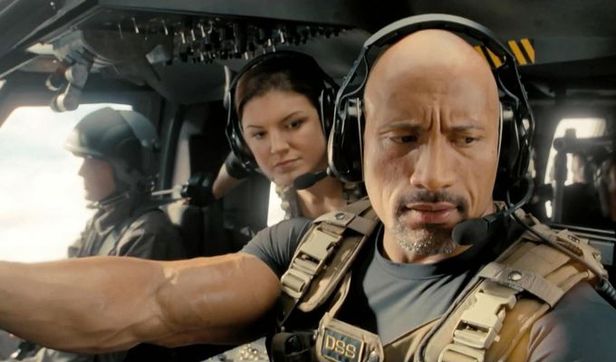
After a 9.0 earthquake brings the California to its knees, a Los Angeles Fire Department rescue-helicopter pilot named Ray (Dwayne “The Rock” Johnson) tries to help it back onto its feet, perhaps by lifting under its arms.

With the quake’s aftershocks threatening to trash more famous western landmarks than an escorted motorcoach filled with University of Michigan fraternity and sorority members, the firefighter must journey the length of the state to rescue his daughter, with whom he has a strained relationship.

His single glimmer of hope is a prophetic suggestion given to him by a psychologist: that he and his daughter might benefit from some “apocalypse therapy.”

But surviving the aftermath of “the big one” won’t be easy.

A seismologist played by Paul Giamatti has already warned Ray that the quake would be felt on the east coast “perhaps as an upheaval in White Zinfandel prices.”

Later, while Ray is preparing his copter for flight, Giamatti’s character wishes him well, saying, “I knew Charlton Heston. Charlton Heston was a friend of mine. You, sir, are no Charlton Heston.”

Luckily, some levity is provided by the tendency of the film’s characters to giggle whenever anyone says “the big one” (Opens May 27).


jurassic-world-super-bowl-trailer-1

“Jurassic World”

It only took four movies and countless eviscerations to accomplish it, but the Jurassic World theme park is finally up and running.

Jurassic World is not unlike most other theme parks, really: It must take precautions to prevent its visitors from being killed by its attractions, its admission fees have to cover the cost of DNA manipulation and it has to pretend to its unsophisticated attendees that it isn’t staffed almost entirely by gay men.

Jurassic World is like other theme parks in one additional respect: It has to keep coming up with fresh thrills.

So Jurassic World execs, doubtless inspired by Cedar Point ‘s decision to update Millennium Force with rotating knives, authorize the creation of a dangerous new dinosaur, Indominus rex.

Indominus rex makes Tyrannosaurus rex look about as fearsome as a family pet, especially after the former is seen walking the latter on a giant leash and collecting its poop into giant bags recycled from the delivery of giant newspapers.

When animal trainer Chris Pratt points out to Jurassic World geneticists that their new predator seems to have been expressively engineered to kill humans more efficiently and with greater passion than any actual dinosaur they could have resurrected, they look at him with genuine puzzlement.

Everything Pratt’s character needs to know is encapsulated in a Jeff Goldblum quote from the first film: “Money finds a way.”

So he sets out after Indominus rex with his Velociraptor pals, all of which undoubtedly will be available in Happy Meals, but not all in the same week.

The movie hopes to strike a few nostalgic notes with scenes featuring vibrating cups of water, kids trapped in a broken-down vehicle and a dinosaur bred to laugh like Goldblum (Opens June 12).

Terminator-Genisys-4

“Terminator: Genisys”

With “Terminator: Genisys,” Paramount Pictures hopes to put another feather in this franchise’s cap, a cap that no studio has worn confidentially since 1991.

In this installment, Kyle Reese (Jai Courtney) travels back in time to save the life of Sarah Connor (Emilia Clarke) and to prevent his mother from marrying Biff Tannen.

Reese discovers that the titular Terminator he volunteered to fight has actually been a doting surrogate dad to Connor for many years –destroying all the assassins sent to kill her and all the vice principals sent to send her to detention.

The Terminator (Arnold Schwarzenegger) has grown surprisingly elderly in the process, but he explains that he has no control over how the living tissue covering his metal endoskeleton ages or how it sleeps with the housemaid.

New characters in “Terminator: Genisys” include one played by J.K. Simmons. He’s an alcoholic detective who comes to regret ever getting involved in this film’s shenanigans when the future sends him his own metal man: an Oscar.

A potential wow factor arrives in the form of a robot made of liquid metal, but this factor may only work on anyone who hasn’t said wow since 1991.

What the word “Genysis” means in the future is any moviegoer’s guess at this point. It could refer to a Monsanto rebranding, a robot with the face of Phil Collins or the most popular baby name of 2029.

As timelines overlap and universes multiply, viewers will be left wondering if the dilution of the space-time continuum isn’t to blame for the characters growing increasingly more boring with each installment (Opens July 1).

ant-man

“Ant-Man”

After biochemist Henry Pym (Michael Douglas) discovers an unusual set of subatomic particles, he quickly labels them “Pym particles” before Marvel Studios can steal another of his scientific achievements from a comic book and give credit for it in a movie to Tony Stark.

Pym particles intensify the strength of things that are shrinking, but Pym bypasses the lucrative erectile dysfunction industry for some reason and moves directly on to creating a superhero.

Eventually, Pym asks a conman named Scott Lang (Paul Rudd) to wear the Ant-Man super-suit and to curate his collection of candelabras and ostrich capes.

Ant-Man’s subsequent secret missions have a high rate of success, as long as he steers clear of a villain known as Yellowjacket and any kid holding a magnifying glass.

In the comic books, Ant-Man eventually became a succession of enormous superheroes named Giant-Man, Goliath and Overcompensation Man.

Despite Ant-Man’s prominence in the early days of Marvel Comics, it is not known where or even if he will fit into Phase Two of Marvel Studios’ apparent campaign to gorge us on superhero movies the way foie gras geese are force-fed corn.

On “Ant-Man,” Edgar Wright – a director whose film “Scott Pilgrim Vs. the World” is much beloved by comic book fans – was dismissed and replaced with Peyton Reed – a director whose film “Bring It On” is much beloved by cheerleaders.

Marvel Studios has made such bewildering moves before and most have been successful.

The moral of the story: It’s Marvel’s world. We just shake pom poms in it (Opens July 16).


fantastic-four_612x380

“Fantastic Four” (aka “Fant4stic”)

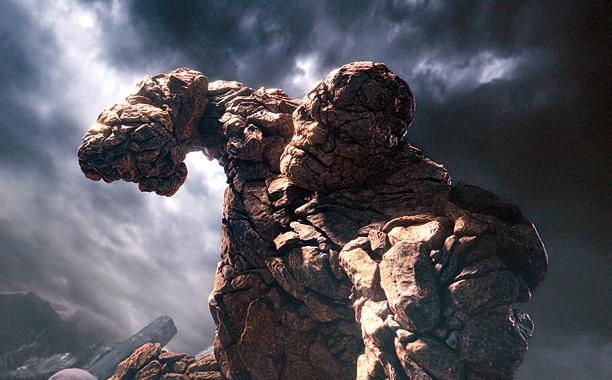
Even in a summer (and a decade) that has been glutted with superhero movies, Fantastic Four is distinctive in two respects: It’s about the first superhero team that Stan Lee and Jack Kirby ever created together and it’s the last reboot anybody wanted.

So much has happened since 2007.

Chris Evans became Captain America, Jessica Alba got married and gave birth to two daughters, Michael Chiklis’ band released its first single and Ioan Gruffudd’s name became no less unpronounceable.

The last movie these four actors will ever star in together, “Fantastic Four: Rise of the Silver Surfer,” managed to make even Lawrence Fishburne look bad and all he contributed to the film was dubbing.

Like “Man of Steel’s” Zack Snyder before him, Josh Trank – the latest Fantastic Four director – was recruited largely because he’d helmed a moderately successful superhero satire (“Chronicle”).

The last Fantastic Four film was widely criticized by fans for departing from the source material, and Trank’s strategy has been to depart even further.

Even if Trank manages to pique moviegoers’ interest on July 30th of a franchise-packed summer, what unfolds on screen won’t be half as riveting as what has unfolded behind it.

First, there was Trank’s decision to cast a black actor (Michael B. Jordan) as Johnny Storm, a character that is white in the comic books.

Many fans thought this was a totally horrible idea for reasons that they assured everyone were totally not racist which they tried to explain in totally non-racist paragraphs that tended to start, ‘I’m totally not a racist but…”

Second, there is Marvel Entertainment’s feud with Fox.

Thanks to a deal that predates Disney’s acquisition of Marvel Entertainment in 2009, Fox owns the movie rights to a handful of Marvel characters including the Fantastic Four.

So incensed is Marvel Entertainment by Trank’s upcoming film that it decided to cancel the comic book on which it is based.

Presumably, when children who have seen Trank’s film and enter their local comic book stores looking for tie-ins, they will be told (in the style of Sergeant Schultz), “I know nothing!” (Opens July 30)

mission-impossible-rogue-nation-motorcycle-explosion_1920.0

“Mission: Impossible – Rogue Nation”

Mission: Impossible?

I’ll tell you about a Mission: Impossible, my friends.

Imagine being a feature writer or copyeditor who has to figure out a sensible and visually pleasing way to punctuate a second subtitle.

It can’t be done; not even by Ethan Hunt.

Hunt, Cruise and this franchise are what the Department of Irregular Poultry would call odd ducks.

Action franchises thrive not just because of special effects and spectacle but because the actors and writers have created indelible characters that we want to revisit again and again.

Yet, five movies in, Hunt remains bewilderingly generic.

The franchise has never been particularly good at (or interested in) evoking its progenitorial TV series, every episode of which began with some magnetic tape starting to smoke and a voice intoning, “This sound recording format will self-destruct in two decades.”

For Paramount, “Mission Impossible” remains little more than a clothes hanger on which it drapes the latest in cinematic finery.

To be fair, Paramount is an outstanding draper.

Watch a “Star Wars” trailer and you talk about how good it is to see your old friend, Han Solo, again. Watch a “Mission: Impossible” trailer and you talk about a stunt.

Stunts are the indisputable selling points of these installments: the escalating craziness of them and the fact that Cruise performs them himself.

In “Mission: Impossible – Rogue Nation,” Hunt purportedly hangs off the side of a jet, a stunt which –hypothetically – is far wilder (but less poignant) than hanging off the side of Katie Holmes’ departing limo.

The second subtitle here refers either to Hunt’s increasingly marginalized IMF or to an antagonistic organization, the name of which is known only to agents who have achieved “Top Secret” clearance or Operating Thetan levels.

Hunt needs all the help he can get, so he tells all disgraced agents that they can safely come out into the open as long as they don’t refer to it as “going clear.”

We can expect more rubber mask reveals in this sequel, although probably not one where Laura Prepon pulls off a mask to reveal that she’s really Mimi Rogers (Opens July 31).

gallery-hitman3-gallery-image

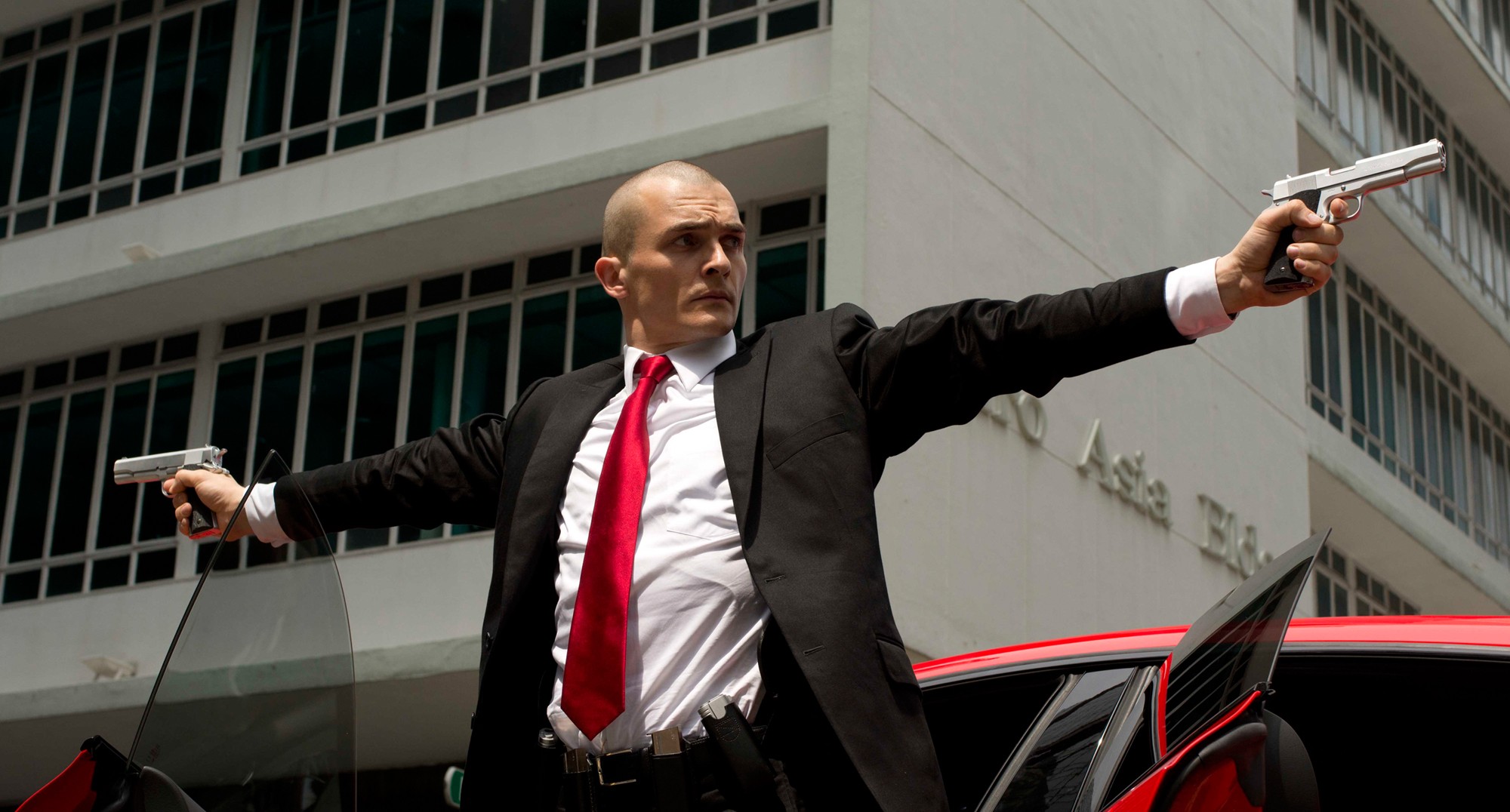
“Hitman: Agent 47”

This film will be utterly bewildering to anyone who hasn’t seen the other 46 installments (Opens August 28).