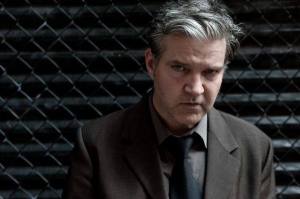
My interview with Lloyd Cole, who performs on Sunday at the B-Side at One Lucky Guitar:
https://whatzup.com/music-comedy/lloyd-cole-songwriter-strives-for-strong-tunes

My interview with Lloyd Cole, who performs on Sunday at the B-Side at One Lucky Guitar:
https://whatzup.com/music-comedy/lloyd-cole-songwriter-strives-for-strong-tunes
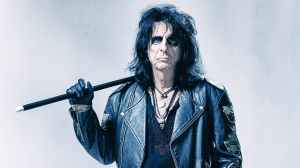
My interview with Alice Cooper, who will perform tonight at the Honeywell Center in Wabash:
https://whatzup.com/feature/alice-cooper-leave-it-to-cooper-to-age-so-gracefully
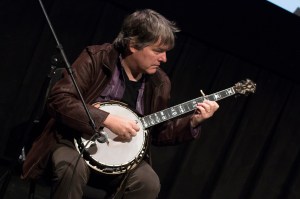
Bela Fleck recalls being laughed at when he first tried to play the banjo in public.
This wasn’t because he played the instrument badly.
It was because he played the instrument at all.
In the New York City of Fleck’s birth and upbringing, the banjo wasn’t taken seriously as an instrument…and that’s putting it mildly.
“There was a lot of laughter around the banjo at that time,” Fleck said in a phone interview. “This was because of the movie ‘Deliverance’ where the banjo was associated with male rape. You had these TV shows like ‘Hee Haw’ and ‘The Beverly Hillbillies’ that put the idea in people’s minds that the banjo was the butt of jokes.”
Fleck was heckled, essentially, when he played out during his high school years.
“People would laugh at it or dance around or make silly responses when I was first playing,” he said.
A predictable story arc would begin with Fleck being driven by anger to become what he has become: the man who reinvented the banjo, even for other banjo players.
But Fleck doesn’t sound angry now, and it doesn’t sound like he was angry then. Even in his teens, he was too driven to be waylaid by the eccentricities of the cultural moment.
“I had a secret dream that I didn’t really tell anybody about,” he said. “But it was sort of underneath everything else I was doing. But there was a pragmatic me who knew he had to make a living and find a way into the business. My secret dream was to do something like the Flecktones, like create a new kind of music with a bunch of great people.”
Fleck and his Flecktones will perform at the Sweetwater Performance Pavilion on June 29.
When Fleck was in his teens in the early 1970s, the edgy banjo player was a man named Tony Trischka. Fleck worshiped Trischka and studied under him, yet came to realize that he had to depart from the teachings of his master if he was going to find his own way.
Fleck said he had to “stop using a certain language.”
“This was hard to do because I was such a good imitator,” he said. “People were telling me that they could close their eyes and not be able to tell which of us was playing. That’s an achievement but the goal of every artist is to express his or her own point of view.
“It was time to drop a lot of things and look for areas where I could be different from Tony,” Fleck said. “I had to strike a lot of things from my playing.”
Fleck decided to move to Kentucky and study “a Southern way of playing.”
“I had to develop more of a ‘J.D. Crow’ right hand,” he said.
While living and learning in the tellingly nicknamed Bluegrass State, Fleck not only lost his northern way of playing. He also lost his New York accent.
“I didn’t want everyone to think of me as a northerner,” he said. “I don’t think I ever had a strong New York accent, but whatever was there, I deleted it. When I came back, everyone told me I talked like a southerner. I didn’t want to stick out down there. I just wanted to play music. I didn’t want it to be about where I was from.”
From Kentucky, Fleck moved to Boston, where he became a formidable presence on the New Grass scene.
Yet even as he was earning Grammy nominations and performing with bluegrass legends, Fleck was thinking about assembling a dream band that would perform music that had never been heard anywhere except inside his own head.
Unfortunately, he couldn’t find the right collaborators.
In 1988, Fleck was recruited to work on an episode of PBS’ Lonesome Pines series. He had to assemble a group of musicians for the project and they worked so well together that he decided to turn them into the Flecktones.
Fleck said he first encountered bassist Victor Wooten was when a friend basically held up the phone so Fleck could hear Wooten playing in a studio.
He liked Wooten’s playing but wasn’t sure it was something that would mesh well with what he was up to.
“He was plugged into the board and he was doing a lot of the stuff that he does where he kind of taps and thumps and does all these busy, fast things that no one has ever done, things that are central to his musical identity,” Fleck said. “And I was like, ‘Wow; that’s amazing.” But my first thought was, ‘What does that have to do with me?’”
But Fleck invited Wooten to a jam session and that was where he began to understand the full range — subtle to spectacular — of Wooten’s abilities.
“They came over and Victor and I sat at my kitchen table with a little practice amp,” he said. “We practiced for two-and-a-half hours and it was glorious. I was always impressed by his amazing techniques. But what really impressed me was how good he could make other people play. What a great team player he was. What a great line player he was. His listening ability. He made me play so much better.
“That’s what you like,” Fleck said. “Man, if you play someone who makes you play better? Oh, you want to play with them. That’s why I like to play with Sam Bush. That’s why I like to play with Chick Corea. That’s why I like to play with the Flecktones. The dirty little secret is they’re all better than me. I have to rise to the occasion every time and fight to hang in there.”
Fleck is in the unusual position in this world of having realized his childhood dreams, of having then been forced to come up with new dreams, and of having subsequently watched those backup dreams come true.
“I have had to constantly redraw my wish list,” he said.
One thing he didn’t plan on was clawhammer banjo player Abigail Washburn.
He met her at a square dance of all adorable places. Fleck said he admired her but didn’t think of her in romantic terms at first.
“She was with somebody and I was with somebody,” he said.
A cassette of her music that Fleck first listened to in his car got him in trouble with the law.
“I got pulled over and I had to walk the line,” he said. “Her music was so good that I just kept driving faster and faster.”
When the unattached Fleck heard that Washburn was newly single, “this thing kicked in,” he said.
“I was out of control,” he said. “I hadn’t thought about it before and suddenly it was all I could think about. I was like, ‘Wow. She’s available? That’s a possibility?’ I became more aggressive than I have been in my entire life. I’m typically a shy person.”
Washburn turned out to be “all in” herself, but she had one nonnegotiable stipulation : She wanted kids.
“I had never thought of having kids in a serious way,” Fleck said. “If I did think about it, it was in a negative way. I thought of it as an impediment to the position I wanted to be in. But if I had said no to her, that would have been a deal breaker.”
Thus it was that Fleck became a father for the first time at 54.
Today, Fleck and Washburn have two kids and they have reordered his priorities.
“Now I am a 60-year-old father of a one-year-old,” he said. “It’s crazy. It was the last thing I expected or wanted. But it’s the best thing that ever could have happened.”

My interview with Criss Angel, who performs tonight at the Embassy Theatre:
https://whatzup.com/feature/criss-angel-stage-persona-aside-angel-seeks-to-inspire

My interview with Neil deGrasse Tyson, who will give a lecture tonight at the Embassy Theatre:
https://whatzup.com/feature/neil-degrasse-tyson-science-goes-pop-at-lecture-at-embassy
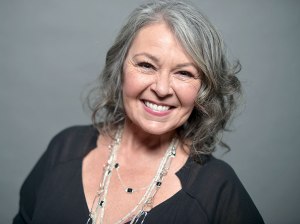
My interview with Roseanne Barr, who performs at Memorial Coliseum tomorrow night:
https://whatzup.com/feature/roseanne-barr-cantankerous-as-always-barr-chooses-fort-for-tour

My preview of the entertainment side of the 2019 Fort Wayne TinCaps season:
https://whatzup.com/articles/fort-wayne-tincaps-field-of-springtime-dreams

My interview with tabla player Zakir Hussain. Hussain will perform tomorrow with other international percussionists at Purdue Fort Wayne’s Auer Performance Hall.
https://whatzup.com/music/zakir-hussain-pfw-drums-up-world-renowned-percussionist

Your guide to Saint Patrick’s Day 2019 in Fort Wayne:
https://whatzup.com/articles/plan-your-st-paddys-celebration-its-easy-to-be-green

My interview with Steve Berlin of Los Lobos. The band performs at the Clyde Theatre on March 2:
https://whatzup.com/articles/los-lobos-latin-rockers-unpack-songs-at-the-clyde
 aloadofthis