Bass Instinct

Standard

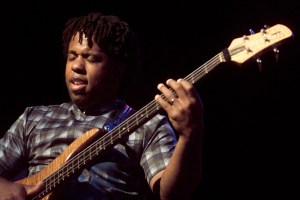
When you ring up Victor Wooten expecting one thing, you may come away with another.

Wooten is widely acknowledged as one of the finest bassists in American popular music, a man who has distinguished himself in multiple genres.

Wooten will bring his own ensemble to C2G Music Hall on October 29.

A journalist preparing to interview him might easily assume that such topics as superlative bass playing and acknowledgement for greatness will be on the agenda.

But it’s bigger than that for Wooten.

Wooten seems to have almost no ego – which is to say, he doesn’t have the fragile ego common to some famous artists.

He doesn’t need you to butter him up and he feels no need to butter himself up.

Wooten said he appreciates the awards his work has earned and the admiration it has elicited, but he doesn’t base his self-worth on them. He won’t let the opinions of others define him, even when they are flattering opinions.

Asked how he goes about choosing sidemen (a germane question given that Wooten is a virtuoso), he said that character is as important as acumen.

“It starts with how well they play but it always ends with who they are as a person,” he said.

Wooten is the youngest of five brothers.

The Wooten Brothers Band existed before he was born and it awaited his birth.

Wooten said his brothers knew he would be the band’s bass player when he was still in his mother’s womb.

Wooten was three when his brothers gave him a toy guitar and told him to try to play along with the band. By the time he reached five, he was the band’s official bass player.

“Any younger sibling looks up their older siblings,” he said. “This was a way for me to belong and participate with my four older brothers. I was definitely excited about that.”

A friend introduced Wooten to Bela Fleck in the late 1980s. When Fleck subsequently needed backing musicians for a TV show, he called Wooten and his brother Roy, a drummer.

“We knew it was special,” Wooten said of this opportunistic grouping of musicians. “We just didn’t think it was a band.”

Thirty years later, Victor and Roy Wooten (aka Future Man) are still members of Bela Fleck and the Flecktones.

At any given moment these days, Wooten could be performing with his own band, with Fleck, with the Wooten Brothers Band, in a trio with Stanley Clark and Marcus Miller or with some other luminary who has suggested they should make beautiful music together.

Wooten also teaches at a music camp outside Nashville that he founded in 2000: the Wooten Woods Retreat Center.

It’s a good bet that the Wooten Woods Retreat Center is a music school unlike most if not all.

Wooten said he got the idea to create the school from naturalist, tracker and author, Tom Brown Jr.

“I read a book of his and then I started taking his classes in New Jersey,” he said. “What he called nature, I called music. I liked the way he taught nature better than the way most musicians each music.”

Instruction at the Wooten Woods Retreat Center is collaborative and immersive.

There is no practicing, per se. No drills.

Think about how you learned to speak English, Wooten said.

“You weren’t made to practice,” he said. “No one told you to sit in a room and say these words over and over. You weren’t separated into a beginner’s class. Your parents never said, ‘You aren’t good enough yet. You can’t speak to us. Go speak to other babies.’”

Children learning to speak aren’t even corrected when they get things wrong, Wooten said.

“If you keep calling it a blankie, your parents start calling it a blankie too,” he said.

Wooten’s school emulates language immersion, which he believes is a more natural way to learn.

“Our approach is different,” he said. “It may not be for everyone. But it’s designed to free you up, to make all the things that used be hard a lot simpler and to have you leave there much better musicians and much better people.

Wooten said this is how he learned music, even though his brothers weren’t aware that they were choosing one approach over another.

“The reason I know this mindset so well is that it’s totally how I learned,” he said. “I was learning music and English at the same time and in the same way.

“My brothers would sit down to play,” Wooten recalled. “There would be an empty chair with a toy guitar. I knew it was for me and I would sit down and jam with them.

When babies first start imitating language and expressing themselves verbally, they’re not expected to get the words right, he said. The parents are just encouraged by the communication and want to encourage more of it.

“The parents adapt to the baby’s way,” Wooten said. “(Traditional music instruction) is exactly the opposite. You don’t get to express your way. You have to immediately learn someone else’s way and you’re wrong until you learn that way. And that’s the main thing that locks musicians up.”

A Star Is Born

Standard

On October 2, Fort Wayne’s Addison Agen wowed the world (and two judges) with her rendition of Ray LaMontagne’s “Jolene” on NBC’s singing competition, “The Voice.”

Soon thereafter, the 16-year-old was back at Concordia Lutheran High School.

While it is probably common for teenagers to imagine being hailed by their peers as conquering heroes, it surely doesn’t actually happen all that often.

But Agen had to contend with something very much like that when she returned to school.

“That was it was really interesting day,” Agen said in a phone interview. “It was a little bit overwhelming. I guess if that sort of thing isn’t overwhelming, it means you did something wrong and no one likes you.

“But everybody was very nice and supportive,” she said, “telling me that their grandma is excited for me or their baby cousin is excited for me.”

All of Fort Wayne is excited for her. The excitement in Fort Wayne is multigenerational.

Some of us welled up while watching her performance on October 2. Some of us out-and-out cried. And it wasn’t just because Agen is from Fort Wayne. It’s because Agen is good. Really good.

More than 40,000 people tried out for this season of “The Voice,” and Agen was among the 90 who made it to what are called “Blind Auditions.”

“Blind Auditions” involve the coaches (Adam Levine, Jennifer Hudson, Miley Cyrus and Blake Shelton) sitting with their backs to the auditioners initially, then turning their futuristic chairs dramatically when and if they hear something they like.

This it how they build their teams.

If more than one chair turns, the auditioner gets to choose which famous singer’s team he or she wants to be on.

Agen said she expected to be nervous, but a funny thing happened on the way to the jitters. Serenity.

“I was expecting it to be crazy and everything awful,” she said. “But it almost got to a point of Zen. I stuck out my hand to see how shaky it was and it was normal. I just thought about how hard we’d all worked to get to that point, those 90 people. I thought, ‘If I mess up, only people in the audience will know.’”

Agen said she just focused on getting just one chair to turn.

“Last season, Chris Blue had this mindset early on of, ‘I just know I am going to win,’” she said. “He was so confident. So I just told myself, ‘I know I am going to get a chair to turn.’”

Ultimately she got two chairs to turn: Cyrus’s and Levine’s. She ended up choosing Cyrus.

“She’s such a hard worker,” Agen said. “She’s 23 or 24, yet she’s been doing this for so long. She’s worked with people my age. She’s worked with females. She grew up singing folk and country just like I did.”

Levine lost out, but Agen said she watched the recording again and realized that he made some good points.

“I just had to go with my gut,” she said.

So what happens next? Well, Agen knows but she can’t say.

I talked to her less than a week after her blind audition. At that point, she seemed to have entered a TV singing competition’s version of the witness protection program.

She would say nothing about anything.

By the time this hits print, something even more major might have happened to her.

She was willing, however, to talk about the far-flung future.

Agen is about as levelheaded and down-to-earth as 16-year-olds get.

Expect no diva behavior if she doesn’t win the competition. No tear-filled rants on YouTube.

Whatever happens, she said, she will take it and “run with it as far as I can.”

Agen said she plans to record a follow-up to her debut CD, “New Places” (available at her dad’s Calhoun Street record store, Neat Neat Neat).

“I plan to get a booking agent and set up some shows,” she said. “Maybe do a little tour with other artists from the show. Work with new people. Go to new cities. Try to show as many people as possible what I can do.”

For many 16-year-olds, college is in the cards. Agen’s recent success doesn’t mean she has dealt herself a new hand.

Some people have advised her that she shouldn’t have a backup plan, which I told her is terrible advice.

But I am an old guy.

She agreed with me, however.

“Whatever happens, music will always be something I’m doing, Agen said. “Even if it’s not my main career. It would be a shame to completely let go of this. But I have always wanted to go to get a degree in visual art. That’s my other passion. I could see myself becoming an art teacher.”

Now, here’s an interesting wrinkle: Throughout her life, Agen has played about 10 mini-concerts at Neat Neat Neat.

She is scheduled to perform another on Oct. 27.

Of course, a lot has changed and Neat Neat Neat is not an enormous place.

It is impossible to guess how many people will attend and how far they will travel to do so.

Agen said she and her dad are discussing strategies for coping with a potential onslaught of new fans.

An Art Gallery’s Home Is Its Castle

Standard

When Jodi Hemphill-Smith and her husband, Mark Paul Smith, opened the Castle Gallery in a 100-year-old West Central residence in 1995, they had a far-flung dream.

The far-flung dream was that Castle Gallery would one day achieve a national reputation and serve as a conduit between Fort Wayne and the larger artistic world beyond.

They came very close to flinging away that far-flung dream in 2011 when they briefly considered selling the gallery, going so far as to put it on the market.

A resulting outcry, local and national, over the listing made them rethink their rethink.

Then, in 2016, Mark & Jodi experienced what Steve & Edie once referred to as “the start of something big.”

The Castle Gallery landed the Oil Painters of America’s Salon Show, a national juried exhibition of oil paintings.

Soon, the Castle Gallery will play host to the National Oil and Acrylic Painters’ Society’s annual Best of America show.

It opens Oct. 16. There will be a reception on Oct. 20.

“The amazing part of the story to me,” Mark Paul Smith said, “is that (Hemphill-Smith’s) dream of having a national artistic center in Fort Wayne, Indiana has come true.

“I’ll tell you what,” he said. “I know I bet heavily on it. But I never thought it would actually happen.”

The first Best of America show happened in 1991 on the Osage Beach, Missouri campus of Columbia College, not long after the National Oil and Acrylic Painters’ Society (NOAPS) was founded.

The purpose of a society devoted to both oil and acrylic painting was (and is) combatting a misperception among some collectors that oil paintings are de facto superior, said Nancy Haley, the NOAPS publicity director and treasurer.

“Oftentimes, you can’t tell the difference between oil and acrylic,” she said. “So part of what we’re trying to do is promote these amazing artists that paint in acrylic. When you put them with oil paintings in the same gallery – and maybe you don’t mention what’s oil and what’s acrylic – oftentimes collectors can’t tell the difference.

“They change their minds,” Haley said, “and it gives them a new perception on how amazing acrylic painting can be.”

The title “Best of America” really belies the scope of this show, Haley said.

In 2013, the decision was made to let international member artists submit work to Best of America jurors for consideration.

Hemphill-Smith said there were 837 entries this year. 124 paintings were selected by five judges.

The majority of entries came from the United States and Canada, Haley said, but they also saw work from Taiwan, Hong Kong and Germany.

Hemphill-Smith was asked to be a juror, but she declined due to the conflict of interest.

“Boy, am I glad I did,” she said. “You look at these and they’re all wonderful and you realize what a tough job these jurors had.”

Given the competition that the chosen paintings had to endure, it’s no surprise that the work is strong.

And varied: still lifes and portraits, landscapes and seascapes, city scenes and country scenes, realism and impressionism, foreign and domestic.

A couple of Fort Wayne artists made the show, including Sam Hoffman.

A show at the Castle Gallery is never just about the show. It’s also about the house.

The stone house was built at the turn of the century for the family of lumber baron B. Paul Mossman. It was designed by the Fort Wayne architectural firm of Wing & Mahurin “in the Romanesque style,” meaning that it is meant to evoke a European castle or church.

The B. Paul Mossman House was the home of the Fort Wayne Museum of Art from 1950 to 1984.

After that, it was artlessly divided into condos.

Hemphill-Smith and her husband lovingly and laboriously restored it.

And they still live there – many of the Castle Gallery’s spaces are rooms that they occupy when there isn’t a show going on.

So there is are storybook qualities without and within. Outside, it looks like the Palace of the Hobbit King. Inside, it looks much as it did when the Mossman family entertained guests there, albeit with some contemporary touches (a few of them of them reflective of Mark Paul Smith’s sense of humor).

Haley first visited Castle Gallery during the Oil Painters of America show.

“I thought it was a unique, beautiful gallery,” she said. “It’s that residential environment. It’s a beautiful, big home. Paintings are everywhere, from the upstairs third floor all the way to the main living room.”

Haley said Hemphill-Smith really knows how to sell a show.

“I have worked with a lot of galleries across the country and one of her strengths is her marketing,” she said. “She does not hold back. She gives it her all.”

Hemphill-Smith said that NOAPS has pulled out some stops of its own, taking out splashy ads about the Best of America show in several national fine arts magazines.

Mark Paul Smith said the upcoming opening reception is likely to be one where a glance to the left or right reveals a celebrity from the art world.

Castle Gallery existed when downtown was still in its pre-revitalized state, and Mark Paul Smith thinks it may have helped spur the ongoing revitalization we all enjoy (and await with confidence) today.

“We made it cool to come downtown for an art show,” he said.

Mark Paul Smith, a guy with panache, irreverence and joie de vivre to spare, said being an artist isn’t about what you hang on the wall. It’s about how you live your life.

“I always say, ‘Lifestyle is the ultimate artistic medium,’” he said. “You can be an artist in the way you walk your dog.

“This show isn’t just the art,” Mark Paul Smith said. “It’s the house. It’s the people involved. It’s their hopes and dreams.”

Bring Extra Bejabbers: Fright Night Will Scare Bejabbers Out of You

Standard

It’s not always easy to predict what new events will catch on and which will not.

But the Downtown Improvement District’s “Fright Night,” which debuted in 2007, seemed like a sure thing from the start.

Fort Wayne has an inordinate love of all holidays, but especially Halloween.

“Fright Night,” happening in various locales in and near downtown on October 21, will celebrate its tenth anniversary this year.

Rick Zolman, events & programming manager for the Downtown Improvement District, said the tagline this year is “A Night to Dismember.”

“We wanted to have a little fun with it,” he said.

“Fright Night” is generally a family-friendly event, so the DID has to be careful not to push the envelope too much, especially when devising the sort of marketing taglines that might get printed on envelopes.

“We always have to watch that,” he said, “We want it to be somewhat scary, but not too scary. It’s a fine line.”

There are plenty of new facets to the event this year, Zolman said.

In and around the University of Saint Francis Performing Arts Center, patrons will find DIA Fort Wayne, a multifaceted tribute to the Día de los Muertos, aka the Day of the Dead.

There will be live music, multiple taco vendors, a beer garden, face painting…even lucha libre wrestlers.

Lucha libre wrestling is a Mexican tradition even older than comparable wrestling traditions in the states. And its mythology is deeper and more culturally pervasive.

At DIA Fort Wayne, you can present offerings (ofrendas) to the spirits of the departed and you can be transformed (temporarily, to be sure) into a skeleton (calaca).

Prizes will be awarded for the best calaca costume.

The Dead Comics Comedy Battle at O’Reilly’s will have local comics impersonating deceased comics, although the meaning of the phrase “I’m dying up here” will probably remain unchanged.

Zolman said the downtown YMCA will be doing a “trunk or treat,” The Yummi Bunni will host an ice cream social, Parkview Field will be the scene of a scavenger hunt, and the Foellinger-Freimann Botanical Conservatory will have all sorts of pumpkin and gourd games for the kids.

The Fort Wayne Dance Collective, under new management these days, will present a hotel-themed performance at Parkview Physicians Group ArtsLab and the Fort Wayne Youth Ballet will offer a low-key Frankenstein-themed show at the Auer Center for the Arts & Culture.

Nashville, Tennessee funk band Here Come the Mummies will return to the Embassy Theatre. They will be preceded by the Fort Wayne Fright Orchestra, known the other 364 days of the year as the Fort Wayne Funk Orchestra.

Jim Sharmin’s and Richard O”Brien’s “Rocky Horror Picture Show” will unspool once more on the terrace of the Botanical Conservatory, where fans will try to use the original film to heal wounds incurred while watching the TV reboot.

Cinema Center will host a showing of the silent film, “The Cabinet of Dr. Caligari,” with live accompaniment from a group of Fort Wayne Philharmonic musicians known as String Shift.

Zolman said the Brain Eating Contest is scheduled to return this year (the “brains” will be cakes confected by Sweets So Geek).

Fright Night has so many components that it’s improbable to list them all here. Zolman said Fright Night technically starts at 10 a.m. and goes past midnight.

There really isn’t a main event, per se, but of there were, it would be the Zombie Walk.

Zombie Walk (living citizens dressed as undead citizens shuffling through downtown) had grown considerably since it debuted in 2008.

Around 2000 people showed up for the first Zombie Walk. Now it draws more than 10,000, Zolman said.

Ten years ago, Fright Night unfolded in a downtown area that looked very different from what it is today. It’s as if downtown has grown up around the event.

“It’s hard to describe the excitement that we have about this,” Zolman said. “For me this is my favorite event that we do.”

Zolman said Fright Night has always brought people downtown who don’t have a reason to visit regularly and now they’re seeing the major changes that have happened and are in the process of happening.

“If they haven’t read a newspaper or watched the TV, they’re coming down and seeing the momentum,” he said.

Zolman said the DID’s goal is to “activate space,” to get people downtown and get them enjoying the amenities.

Waynedale’s World

Standard

In mid-April, the Fort Wayne City Council provided the last piece of the Clyde Theatre renovation puzzle.

It approved a $1 million Legacy Fund loan for the refurbishment of the historic but long-shuttered Fort Wayne entertainment venue.

Even Keel Productions president Rick Kinney, who bought the theater in a tax-delinquent properties sale for $500 in 2012, said three funding components combined to make his Clyde Theatre dream a reality: the Legacy Fund loan, a sizeable investment from Sweetwater Sound founder and president Chuck Surack and a $1 million grant from the state’s Regional Cities program.

The Regional Cities grant money comes from the Indiana’s Regional Cities economic development initiative and the Legacy Fund loan is money from the sale of the city’s old power utility.

The Legacy Fund vote was unanimous, he said.

“Its pretty noteworthy that we got a nine to zero vote from the city council of support on the Legacy dollars for this,” he said. “That, in itself, was really the best feeling. City council members are voted in by the people on a local level.

“Local politics are pretty powerful,” Kinney said. “If people want to change something, they can vote for people and campaign for people. These people are our reps in Fort Wayne and they voted in favor of this public spending measure.”

Kinney’s plan is to turn the Clyde into a multi-use entertainment facility specializing in live music that can’t be enjoyed elsewhere in Fort Wayne.

He said it will be the largest standing room concert hall in Indiana. The roughly 10,500-square-foot lobby will double as an art gallery, Kinney said.

A long and arduous journey was required to get to this point, he said.

“Imagine being on shark tank every day for 5 years,” Kinney said. “That is basically what I did and I got run through the meat grinder until I refined my plan enough to get to the right people. It was a great experience and I gained a ton of knowledge along with a few grey hairs.”

Built in 1950, the 23,000-square-foot theater at 1808 Bluffton Road was one of the nation’s first movie houses to be based in a shopping center. It was widely praised for the beauty of its design.

It closed in 1994 and it has remained closed to this day despite numerous attempts to resurrect it in various guises.

Now, actual work on its rejuvenation has indisputably begun.

“Hagerman (Construction) has just completed all the demolition,” Kinney said. “And the local plumbers and carpenters are in their working on framing all of the offices out.”

“A local sheet metal company is in there laying out all of the HVAC,” he said.

While this structural and infrastructural work is going on, Kinney said he is talking to bands and performers and finalizing details of the sound and lighting systems.

Kinney said the sound system is being designed and constructed by Even Keel Productions and All Pro Sound, a Pensacola, Florida-based company that Surack acquired in 2011.

The Clyde will employ four full-time staffers and “well over” 20 part timers, he said.

It is on track to reopen mid-to-late summer 2018, Kinney said.

Surack said he has fond memories of frequenting the Clyde and was intrigued at the prospect of helping revive it.

“When Rick Kinney approached (my wife) Lisa and me,” he said, “we were immediately attracted by both his passion and his vision for the theater. He’s a great guy and extremely knowledgeable, so we decided to help him get to the finish line and make the project the best it can be.”

A venue gap has existed in Fort Wayne, Surack said, and the Clyde will close that gap by hosting shows designed to accommodate audiences in the 1000 to 2000 patron range.

“Most cities have something like this, but there’s no space like it in northeast Indiana, so performers just pass Fort Wayne by,” he said.

There’s a time for a venue like this, Surack said, and that time is now.

“The recent overwhelming success of other entrepreneurial live-music endeavors such as the Fort Wayne Music Fest and the Middle Waves Festival has demonstrated that the region is thirsty for live music.”

Dan Swartz, director of the Wunderkammer Gallery on Fairfield Avenue, said it is always exciting to see new projects popping up on the city’s South side.

“As they build momentum and attract audiences, our region begins to see more of the historic beauty and impeccable design which these parts of Fort Wayne contain,” he said. “My hope is that, ultimately, we see more projects on the southeast side to compliment the developments in the 46807 and Quimby Village areas.”

Kinney will be programming entertainment at two Fort Wayne venues in 2018: The Clyde and the Sweetwater Pavilion, a 3700-capacity outdoor concert venue.

In 2016, Sweetwater Sound announced its intention to construct a 200-foot-by-40-foot pavilion on its property at 5501 U.S. 30 West.

The finished pavilion was the location this summer for numerous events associated with Sweetwater Sound’s Gearfest and for additional concerts brought in by Kinney.

Rusted Root and Adrian Belew performed in the pavilion, thanks to Kinney.

Carl Palmer’s ELP Legacy appears there on Friday, September 28.

“That’s just laying the ground work for what we’re going to do in 2018 at the pavilion and also it’s setting the stage what we’re going to do at the Clyde Theatre,” Kinney said. “We’re getting a little bit ahead of the game and staying ahead of the curve for all the talent we’re going to bring to the Clyde.”

Kinney said Even Keel Productions will manage both the Clyde Theatre and the Sweetwater Pavilion in 2018.

Even Keel has partnered with Etix.com to handle ticketing for Clyde Theatre events, he said. Tickets will also be available at all Wooden Nickel Music locations and Neat Neat Neat Records and Music.

Plans for the rest of Quimby Village, the shopping center anchored by the Clyde, are more amorphous, but they are hopeful.

Kinney said Even Keel and its partners currently control 75 percent of the complex.

The entire 6-acre parking lot, in an extreme state of disrepair at present, will be resurfaced, Kinney said.

Kinney said he would love to see a restaurant or two come into the complex that use locally sourced ingredients a la The Golden and Tolon.

He also hopes the Hall family one day considers constructing a riverside deck near its Bluffton Road restaurants like the one it built downtown.

In July, the Hall family announced that it would be adding carhops back to its Hall’s Original Drive-In eatery at 1502 Bluffton Road.

Kinney thinks the return of carhops is a direct result of the commencement of the Clyde Theatre renovation.

“They made that announcement a couple of days after the groundbreaking,” he said. “So it’s definitely tied into that.”

Ideally, Quimby Village will one day be a one-stop source of “really good food, entertainment, recreation and art,” Kinney said.

“That’s the direction I’d like to see the shopping center take,” he said.

Surack said he believes the new Clyde will spur a lot of change.

“There is no question that Quimby Village needs new investment and the renovation of the Clyde will have a transformative effect on the area,” he said.

None of this would be happening were it not for Chuck and Lisa Surack, Kinney said.

Other people and entities he said he wants to thank: YLNI (Young Leaders of Northeast Indiana), Friends Of The Clyde Volunteer Crew, Citizens of Fort Wayne & Allen County, NEIRP (Northeast Indiana Regional Partnership), IEDC (Indiana Economic Development Corp.), Three Rivers Federal Credit Union, City of Fort Wayne, Fort Wayne City Council and the Allen County Council.

Bonus story follows: A Clyde Theatre update from January, 2018…

With the outdoor temperature regularly degrading to negative numbers, it may be hard to imagine the fun you’re going to have next summer.

It’s easy to crave that fun, but it’s hard to imagine it.

But Rick Kinney is very good at imagining the fun you’re going to have next summer.

He has to be.

Kinney is in the thick of signing acts for his Clyde Theatre – currently being renovated and scheduled to reopen sometime in the middle of the summer.

“Right now, I am making offers and approving offers for artists for the Clyde in 2018,” he said.

Kinney said the acts will be made widely known by way of a big reveal “sometime in February.”

“We’ll be able to announce the first three to six months of shows,” he said.

The Clyde began its life almost 70 years ago as a movie theater. It closed in 1994 and never reopened, despite at least one earnest effort.

Kinney bought it in 2012 in a tax-delinquent properties sale and spent five years trying to secure funds toward its rehabilitation.

Last spring, all the pieces came together.

The Clyde is now set to become the largest standing room concert hall in Indiana, catering to crowds in the 1000 to 2000 patron range.

The fact that he has reached the point in this long-nurtured dream where is actually booking shows in his very own venue seems a little surreal to Kinney at times.

“After thinking about this for most of my adult life,” he said. “Then buying the building, going out and raising all this money, and then going through the construction/planning process and finalizing process and all of that stuff goes along being an entrepreneur and trying to do everything right – I really did it all because I just wanted to throw some rock and roll shows.”

One of the biggest challenges of programming the Clyde, Kinney said, is that no one knows what it is. It has no track record.

“When you tell people, ‘I am opening up this venue and it will be done at this time,’ agents typically say, ‘Yeah, right.’”

Meanwhile, construction and rehabilitation work continues apace.

Kinney said the workmen have laid the foundation for the dressing room and are just getting started on the plastering.

“7000 square foot of concrete foundations for the dressing room and the load in and load out area and the backstage area,” he said. “The plaster repair is pretty extensive. We’re installing 11,000 square foot of acoustical plaster in the main hall. We want to make it one of the best-sounding rooms in the country.”

Kinney said all the plumbing is roughed in. The only thing left to do in the bathrooms is to add fixtures.

Polishing of the concrete floors is about halfway done, he said, and the stage extension still has to be completed.

While all of this handiwork is happening outside his office, Kinney is working on marketing, promotions, audio, lighting, security, ticketing and catering.

Clyde forms the core of an aging south side shopping complex called Quimby Village. Kinney and his partners control 75 percent of that complex.

Kinney said he has grand plans for the complex, but the Clyde Theatre is going to require most of his attention for quite a while.

“We’re really focused on getting the Clyde Theatre up and running and making it a success,” he said. “Those other properties are undervalued. We’re interested in driving up the value of those other properties.”

A model for Quimby Village is the cultural district in Indianapolis known as Broadripple, Kinney said.

“We’re seeking the right kind of tenants there,” he said. “We’re looking for something that’s going to cater to the Millennial generation. Our main goal for this whole thing is to attract and maintain a young talented workforce and break the status quo a little bit.

“We want businesses there that Millennials and Generation X are going to patronize,” Kinney said. “All that stuff is in our peripheral vision, but for now our eyes are focused on the Clyde Theatre.”

Kinney has been working closely on everything with partners Chuck and Lisa Surack.

“They have a huge team of people,” he said. “Talented professionals from all sorts of different backgrounds.”

A vibrant Clyde will give Chuck Surack another recruiting tool for his company, Sweetwater Sound, Kinney said.

“Chuck understands that the venue will cater to Millennials and Generation Xers,” he said, “and those are the type of people he is trying to attract and retain here – not only for Sweetwater and Fort Wayne as a whole.”

Kinney said Chuck trusts his programming ability.

“He knows that I understand the type of music that people my age want to see,” he said.

Kinney recently launched a new web site for the venue: http://www.clydetheatre.com.

After the February schedule announcement, tickets for shows will begin to become available for purchase via the site, he said.

There will be a hiring fair for part-time positions sometime in March, Kinney said.

Kinney said this is the most exciting time of his life.

“I have never been happier,” he said.


Joe’s Dirt

Standard

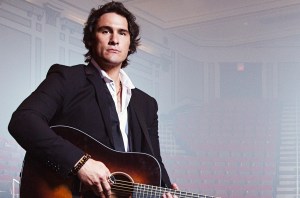
Joe Nichols said he’s been counted out plenty of times in the country music business, but he always seems to have another comeback in him.

This has conditioned him to roll with the lulls.

Nichols performs October 13 at the Honeywell Center.

Earlier this year, Nichols released a studiously traditional record called “Never Gets Old.” It sounds like something Randy Travis might have recorded in his prime.

Here’s why that was an edgy thing to do: Despite trend pieces to the contrary, the so-called bro-country subgenre is far from dead: songs sung (and partly rapped) by white guys about back roads, dirt roads, cheap beer, moonlight, tailgates, pickup trucks used for purposes other than keeping the wood from falling out, and women dressed like “Hee Haw Honeys.”

The nonsensically simplistic lyrics have an almost nursery rhyme quality that is calculated to drill songs into skulls.

The current number one hit on the country charts is Sam Hunt’s “Body Like a Back Road.” Hunt has been described as the guy who will save country radio from the clutches of bro country, but “Body Like a Back Road” may be the most bro country song ever.

In an article that mostly heaps extravagant praise on Hunt, Rob Harvilla of The Ringer website wrote, “The mainstream country conveyor belt requires artists to run a silly race that demeans the runners to the great amusement, but not so much the enrichment, of the spectators…Bottom line: good artist finds great success with bad song. ‘Body Like a Back Road’ is an expert bit of shameless pandering, giving the people exactly what they want and none of what they need.”

This is the business climate in which Nichols is trying to survive.

When asked about his return this year to a more traditional sound, Nichols doesn’t sound defiant.

He doesn’t thumb his nose at anything or anyone.

He said a musician who wants thrive would be foolish not to pay close attention to whatever is popular at any given moment.

“It’s like the stock market,” he said. “No one is going to question you when you invest in Netflix instead of Blockbuster.”

Nichols said he went old school after recent attempts to tap that still-rich bro country vein weren’t as successful as he’d hoped.

He consulted the people that he trusts the most and they all recommended that he take a break from chasing trends.

Songwriters aren’t to blame for the homogeneity of the songs on the charts at any given moment, Nichols said. Executives are.

“It’s corporate guys who want to turn $1 into $1.25,” he said.

Nichols said the corporate plan is working very well, which is why songwriters who want to write out of feeling rather than obligation have to work extra hard.

Social media has helped immensely, he said.

“A person can put out something independently and it can catch on fire,” he said.

Things were different when Nichols moved to Nashville from Rogers, Arkansas in his late teens.

The music industry as it had been known for more than a century had not yet collapsed by the mid-1990s, so getting signed to a label was the only way for an artist to excel.

Nichols said he was “scared to death” in Nashville at first.

“I only knew one person there,” he said. “I crashed at his house for the first couple of weeks until I found a little, bitty, terrible apartment.

“It was intimidating to say the least,” Nichols said. “That was 1997. The city was big; the music industry was daunting. It was full of people who were celebrities behind the curtain. The guys who pulled the strings. I was like, ‘How am I going to put myself in front of these guys?’”

Nichols had a couple of promising early encounters with labels small and big, but they went nowhere. He ended up having to take on a succession of odd jobs, including selling steaks door to door out of a freezer truck.

It may be that a man who can successfully sell meat door to door out of a freezer truck can sell anything to anybody, but Nichols was not that man.

He was fired after the first day.

When Nichols finally found success with the 2002 release of “Man with a Memory,” it wasn’t his salesmanship that people were responding to. It was his earnestness.

Perhaps Sam Hunt could sell meat door-to-door out of a freezer truck.

Nichols also had to wrestle with an unintended but common consequence of the pressures of mainstream success: a substance abuse problem.

“After 2004 or 2005, I don’t know if I thought I was bigger than I was or if I started hanging around with the wrong crowd,” he said. “I started getting sideways with everything. Not showing up for meetings. Doing things I shouldn’t have been doing. I just kind of felt like everything was out of control.”

Nichols said the death of his dad, a sometimes abusive, long haul trucker with whom he had a complicated relationship, accelerated the downward slide.

This all came to a head after Nichols had reunited with his high school sweetheart, Heather Singleton, and the thought of losing her gave him the resolve he needed to kick his habits.

“It was clear that there was only room for one of them, my party life or Heather,” he said. “So I had to change it and think about Heather.”

Ironically, one of Nichols’ biggest eventual hits was “Tequila Makes Her Clothes Fall Off,” a song written the perspective of a rueful yet amused husband.

It’s not a party anthem, but it doesn’t exactly condemn the drinking of mezcal either.

Nichols said the original version of the song, by Gary Hannan and John Wiggins, was sort of slow and sad so he punched it up (the country music equivalent of investing in Netflix, maybe).

The reason mainstream country adopted rock, pop and soul to the extent it has is because it was “always the red-headed stepchild of the music business,” Nichols said.

We have come a long way from the days when Garth Brooks was condemned by some country music fans for making too many concessions to the pop charts in his music.

“In the old days, you were taking a big risk if you put out a record that was perceived as an attempt to crossover,” Nichols said. “Nowadays the biggest risk is putting out something that is traditional.”

A guy who wants to make traditional music has to ask himself a hard question about how those songs will sound when played before and after what is currently popular, he said.

“That’s neither good or bad,” Nichols said. “It just is.”

Sometimes an “investment in Blockbuster” turns into a blockbuster.

But a guy has to be careful.

All New Cheap Moves: The Unlikely Career of Joel Murray

Standard

Joel Murray is the youngest member of “the Chicago Murrays,” a phrase that sounds like it could only describe royalty or the mafia.

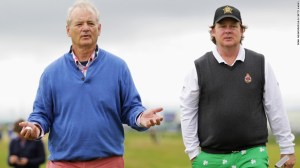
It may be a little of both in this case: Murray’s older siblings include Brian Doyle Murray and Bill Murray, two men who are as revered for their mischief as they are for their art.

Joel Murray will perform with Ryan Stiles, Jeff Davis and Gregg Proops as part of “Whose Live Anyway,” a night of improv comedy at the Embassy Theatre on September 21.

The “Whose Live Anyway” tour is a spin-off of “Whose Line is it Anyway?” – a 30-year, international, TV and radio tradition in which Murray has never participated.

Murray, a seasoned improv comic and character actor, was recruited for the live tour by his friend, Stiles.

He replaced Chip Esten, who left the tour five years ago to star in the TV series “Nashville.”

Murray grew up with nascent celebrities who were cutting their teeth on the Windy City improv scene, so it isn’t surprising to learn that he eventually distinguished himself on that same scene.

What may surprise is the discovery that Murray owes his entire career to a night he spent in Fort Wayne in the early 1980s.

How it happened was that Murray was sitting in a Chicago bar with his friend David Pasquesi, who currently plays Julia Louis-Dreyfus’ ex-husband on “Veep.”

They started chatting up two women who revealed that they had a sketch comedy performance the following night and that they really didn’t know as much about sketch comedy as two women in their situation should know.

Even though both men, especially Pasquesi, would one day come to be known as some of this country’s best improv comics, they may have known even less at that time about the topic than the women did.

But they pretended that they were experts, as single men in bars tend to do.

“What Pasquesi and I did was lie outright,” Murray recalled. “We said, ‘Yeah, that’s what we do. We do sketch comedy.’ So these girls wrote us into their sketches and we wrote a couple of things.”

Thus it was that Murray and Pasquesi found themselves in Fort Wayne the next evening, performing eight minutes’ worth of sketch comedy on Night Shift, a long-running local talk show hosted by comedian Kevin Ferguson.

After they returned to Chicago, Murray and Pasquesi enrolled in a class taught by Chicago improv legend, Del Close.

Close told them to improvise something based on the over-the-counter menstrual drug, Midol, and the duo recalled a sketch they’d performed in Fort Wayne that involved rifling through a woman’s purse.

“It was really slow, hungover comedy and Del Close went nuts for us,” Murray said. “Afterwards, he said, ‘I really enjoyed what you guys did up there. Your brothers have been very good to me over the years. So I am going to give you a scholarship to study here.’

“Then he goes, ‘But I really enjoyed that Pasquesi, so I am going to give you both a half-scholarship.”

Murray was off and (half) running. He said he had his appearance on “Night Shift” on his resume for many years.

Murray has had an interesting and diverse career. He was a regular on the sitcoms “Love & War” and “Dharma and Greg,” then went on to more dramatic stints in shows like “Mad Men” and “Shameless.”

“’You’ve had a wonderful life after all,’” Murray said, spoofing Christmas angel Clarence Oddbody. “It’s easy to get pigeonholed in this town: ‘Oh, he’s just a sitcom guy.’ And then someone takes a chance on you and all of a sudden you’re a dramatic actor and people forgot you ever did comedy.”

Going into show business was not a foregone conclusion for the all of the nine children sired by Murray’s dad, lumber salesman Edward Joseph Murray II.

Only four went on to pursue comedy and acting. One became an Adrian Dominican nun.

Comedy ensued in the Murray household because Murray’s dad was a slow eater.

“We would eat in 45 seconds and he would take an hour,” Murray said. “We weren’t allowed to leave the table until he was finished so our goal was to make him laugh with milk in his mouth.”

Murray learned a lot about comic timing bantering with his siblings.

“It was handy that you had the funniest people in the world around,” he said. “It was an interesting place to grow up. You learn about a lot of things when you grow up in a three-bedroom house with 11 people.”

Being Bill Murray’s younger brother means that you get asked a lot about the most famous of the Chicago Murrays.

Bill Murray has almost been deified by his fan base. They seem to see him as a pixie or sprite who goes around making the world a better place by way of enchanted non sequiturs and bursts of magical randomness.

“It is fascinating,” Murray said. “The mystique is good since I am in business with him on a clothing line. We’re all for the mystique.”

Murray said he’ll always think of Bill as “the goofy long-haired guy with the Fu Manchu who walked the dog 20 miles one day.”

“He’ll always be goofy Billy in my mind, a little bit,” he said. “People treat him like he’s the oracle – everything he says is right. You know, in retrospect, half the time he’s wrong. But he is an amazing guy. He’s an amazing judge of character.”

Murray said some of the best times of his life were spent with his brother.

“He can bring a room from zero to 100,” he said. “He can also bring a room from 100 to zero, depending on his mood. He does have a way of bringing a weird energy that changes everything.”

Murray recalled a night he spent with his brother at a karaoke club in Venice, Italy that ended with Bill pinwheeling the wives of Japanese executives on the dance floor.

“Billy gets out there and sings ‘Sukiyaki’ for this crowd of Sanyo executives and he knows all the words in Japanese,” he said. “They’re singing along with him and laughing. At the end of it, this woman comes up to hug him and he picks her up – of course; he loves to pick people up – and turns her upside down and shows everybody her underwear.

“The next thing you know,” Murray said, “all these Japanese men look at their wives like, ‘Go on. Get in line.’ All of a sudden, there’s a line of 20 Japanese women asking to have their underwear shown to the crowd.”

As the Murrays left, the ecstatic owner of the embellishment kept handing them random items from around the club as parting gifts.

“We’re walking out with products and I said, ‘That was the weirdest thing I have ever seen.’”

When Murray watched his brother in “Lost in Translation” for the first time, he had a unique insight into a certain scene.

“I could tell by the look on (Bill’s) face what happened,” he said. “He’s by himself and he’s on this beautiful golf course and he hits this beautiful drive and he just starts walking. And I said to him, ‘You left at that point, didn’t you?’

“And he said, ‘Yeah. The drive was phenomenal,’” Murray said. “It just kept going and going. I just went and played the round of golf.’ He just gave this look to the Japanese film crew like, ‘Hey. You gotta play that one, right?’ And he left.”


He Sure Don’t Want To Hurt No One: The Mellowing of Steve Miller

Standard

On August 23, one of the most momentous rock music events of the 21st century occurred.

Steve Miller posted a personal video message on Facebook.

If that doesn’t seem all that momentous to you, perhaps you don’t know Miller.

Miller is one of rock music’s more reclusive geniuses. He declines most interviews and is, by many accounts, a bit of a curmudgeon.

So this personal message, telling fans to look out for a new retrospective recording, came as something of a shock.

The Steve Miller Band comes to the Foellinger Theatre on September 20.

Reached by phone, Kenny Lee Lewis – Miller’s bassist and one of the band’s songwriters – said he understands fans’ astonishment.

Lewis explained that Miller’s fourth wife Janice appears to be having a mellowing effect on him.

“His new wife is really working hard to get his brand a little more out there,” Lewis said,” and trying to get him to interact with his audience more.”

Lewis knows all about wives who know best.

On two occasions in his musical career, Miller asked Lewis to drop everything and join him on the road and Lewis, nudged by his wife, decided to drop everything both times.

The first time, Lewis was cultivating a respectable solo career and the second time, he was making good money designing and selling musical equipment.

Music fans assume these decisions are no-brainers, but there are mitigating factors to consider, Lewis said.

Like dental insurance.

“When you went on the road back then,” he said, “you sort of had to tell everyone else, ‘Sorry, but I am not going to be available.’ You had to turn down a lot of clients and a lot of work.”

Lewis’ first encounter with Miller happened in the early 1980s.

Lewis, guitarist John Massaro and drummer Gary Mallabar were working on songs together for an amorphous project: probably a band to be named later.

Miller showed up and offered to buy all eight songs the trio had written. The songs make up the bulk of Miller’s hit 1982 album, “Abracadabra.”

Lewis joined Miller’s touring band for a few years and departed after Miller decided to play jazz for a while.

“He basically wanted to go in a different direction,” he said. “He used Ben Sidran as a producer. Ben had a band and Steve decided to go with that.”

Miller eventually asked Lewis to return to the fold to write and perform the 1993 release “Wide River.”

Lewis said he isn’t the only one in the band who’s been asked to drop everything by Miller.

A few years back, Miller recruited guitarist Jacob Petersen in similar fashion.

At the time, Petersen was living in Austin, Texas. His local band had become popular enough that he’d been able to quit his day job at Guitar Center.

The Steve Miller Band rolled through town and Lewis called Petersen, ostensibly to see if Petersen wanted to watch the show and hang out backstage for a bit.

But he had an ulterior motive.

Tacos.

“I knew he lived in Austin and I really wanted a taco after the gig,” Lewis said. “But I didn’t have a car. So I called Jake. That’s literally why I called him.

“He didn’t want to come,” he said. “But I finally talked him into it. Because I really wanted a taco.”

Miller recognized Petersen in the green room, recalled seeing perform and hired him on the spot.

“Jake and his wife thought they were just coming for free guacamole and a beer backstage,” Lewis said. “They were in a catatonic trance. I had to invite them up to my room. I explained to him how his life was going to be totally upside down and disrupted.

“We did get the tacos by the way,” he said.

Next year, Miller will mark the 50th anniversary of the band that bears his name and Lewis said Miller is commemorating it by releasing a collection of laboriously remastered songs called “Ultimate Hits.”

It drops September 15.

Miller has been sufficiently disheartened up to now by the digital revolution not to have much interest in recording new material, Lewis said.

But he thinks that is about to change, given Janice Ginsberg Miller’s calming and encouraging influence on her husband.

Meanwhile, Lewis has many irons in the fire.

He recently self-published a horror/sci-fi novel called “Skeleton Children,” which is getting rave reviews on Amazon.

It’s about a pair of twins who seem to invent their own language, a language that turns out to be ancient and long thought lost.

Lewis said he is also embarking on a series of detective novels set in the music industry.

Moreover, he has a screwball comedy script that he is shopping around and he is writing a biography of Deney Terrio.

Yes, Deney Terrio. The seventies disco dance king.

Lewis said he pursues multiple artistic projects because it makes him happy, but also because an artist has to be prepared.

“We were prepared in the early ‘80s when Steve called looking for songs,” he said. “He sold 8 million copies and I bought my first house.

“You never know,” he said. “You have to be prepared in many areas, because you can’t know what’s going to catch on next. You just have to keep creating, even if there may not be a goal. Art for art’s sake. That’s the thing a lot of people in the music business have lost sight of.”

Catching the Next Wave

Standard

Middle Waves is as important to Fort Wayne as Stonehenge is to Wiltshire, England.

OK, perhaps not. But I had to find a cheesy way to segue into the news that Middle Waves will have rock sculptures this year (among other delights).

The 2017 edition of the non-profit music festival happens September 15 and 16 in Headwaters Park East and West.

Describing Middle Waves as a mere music festival is a little like describing Austin, Texas as a mere cowtown.

While it is true that Middle Waves aims to bring an exciting and atypically varied mix of contemporary musicians to several stages, the festival also tries to make the event so diverse that an attendee could, hypothetically, enjoy himself or herself without hearing a note of music.

Middle Waves’ word for these extras and embellishments is “vibes.”

One of the festival’s organizers, Matt Kelley, said the vibes aspect of Middle Waves will be punched up this year.

In addition to the rock sculptures, there will giant pink flamingos, a VW Bus cruise-in (of sorts), art installations and a festival-within-the-festival called Mini Waves.

Even though Middle Waves strives to be a family-friendly phenomenon, Kelley said the event’s organizers wanted to add an element that was specifically designed for kids.

Mini Waves (happening from 11 a.m. to 3 p.m. on September 16) will include a face painting, balloon twisting, a unicorn meet-and-greet, an exotic petting zoo and a hands-on musical equipment display provided by Sweetwater Sound.

Kelley said Mini Waves might become a separate event in the future.

An innovation from the inaugural edition of Middle Waves has wisely been carried over from last year to this.

Most festivals in Headwaters Park West use the main pavilion for musical performances.

Middle Waves uses it as a village for food trucks and sellers of wares.

This strategy not kept only people out of the rain last year, but it kept them on their toes.

Which is to say, it made them see Headwaters Park West in a different light.

“We have all seen so much music in that pavilion that – if you wanted it to feel new – you almost had to invert it,” Kelley said.

Kelley said there will be many more vendors this year.

Last year, some potential vendors were reluctant to get involved because they did not quite understand the festival.

Understanding had since grown.

Another objective of all these vibes, he said, is to let people who can’t afford the cost of a ticket know that they can enjoy the festival.

Kelley said a few captains of various industries have expressed confusion about all the free stuff Middle Waves offers and why it offers it.

“Two of three stages are free and the village is free,” he said. “We don’t want it just to be for people of a certain economic means”

Whereas most area music festivals stick to one genre, Middle Waves showcases a little of everything: pop, rock, soul, techno, punk, hip-hop, Americana and fusions of several of those musical genera.

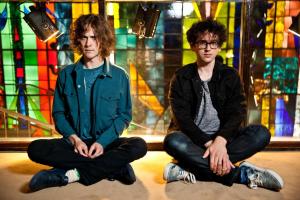
The headline act this year MGMT, a psychedelic pop band known to most for their singles, “Electric Feel” and “Time to Pretend.”

Other national acts scheduled to perform at this year’s Middle Waves include Thao & The Get Down Stay Down, Super Duper Kyle, Shannon & The Clams, The Lemon Twigs, Flint Eastwood and Selector Dub Narcotic.

Kelley said the festival has tried to provide more party- and dance-oriented hip-hop this year in answer to customer complaints.

One of the goals of the festival’s organizers this year was to “tighten” everything: simplify processes, streamline the flow, etc.

A major challenge last year had to do with local excise laws that prohibited alcohol purchased on one side of the street from being carried to the other side of the street.

That prohibition is still in effect, Kelley said, but there is a loophole.

“One thing they are allowing us to do this year is that you can go underneath the street at the MLK Bridge,” he said.

The enthusiastic and effusive response to Middle Waves last year was unexpected and heartening, Kelley said.

“One of the biggest surprises for us was the passion with which the community claimed it as its own,” he said.

Kelley said heavy rains made setting up the Flaming Lips show last year difficult, but patrons were up for any and all challenges.

“It was a soupy mess,” he said, “We had all this hay coming in and patrons joined us on the back of these pickup trucks and helped us spread hay.”

“I thought, ‘They paid to be here and they’re getting muddy,’” Kelley said. “That was just huge for us. People were helping carry amps. The positivity we felt during and after the event – it was more than we’d hoped for.”

Keillor Signs Off

Standard

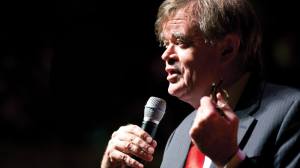
In the summer of 2016, Garrison Keillor gave up his longtime radio program, “A Prairie Home Companion.”

He is currently touring with a live show, “Garrison Keillor’s Prairie Home Love & Comedy Tour,” that is loosely based on his former radio broadcast. He promises that this tour will be his last. It will stop at the Foellinger Theater on September 5.

Sometime after the release of his 2012 detective spoof, “Guy Noir and the Straight Skinny,” Keillor quit writing fiction. He is currently working on a memoir and a collection of limericks, and after those come out, he said he will quit writing books altogether.

Asked via email if he anticipates feeling a little bereft in the coming years, Keillor responded, “I was born feeling a little bereft. As a Christian, I was taught to shun worldliness and yearn for the Second Coming, to be a pilgrim in an alien country. I’m a reformed Christian now and am guided by a powerful sense of gratitude. One must be aware of blessing, especially the blessing of grace, and try to live up to it.”

Keillor’s career path has been a serendipitous one. He was born in 1942 in Anoka, Minnesota and grew up intending to follow in the footsteps of such great New Yorker writers as E.B. White and A.J. Liebling.

He sold his first story, “”Local Family Keeps Son Happy,” to that magazine in 1970. Regular assignments followed. In 1974, he was sent out on a fateful journalistic mission to the Grand Ole Opry.

A longtime fan of old-time radio, Keillor caught the germ of an idea while immersing himself in the world of the Opry.

He thought of creating a contemporary radio show that owed a debt, not only to the Opry, but also to the National Barn Dance, a long-running country music radio program that originated out of WLS-AM in Chicago in the early 1920s.

Keillor’s “A Prairie Home Companion” – a gallimaufry of homespun songs, skits and advertising spoofs – debuted on public radio in 1974.

Keillor said he’d put enormous pressure on himself at the New Yorker to produce a certain caliber and character of work, so the radio show proved to be immensely freeing.

“I loved the old New Yorker, worked hard to emulate its offhand tone, imitate writers such as Liebling and White and Thurber, but gave up on that when I launched a radio show in 1974,” he said. “I found my own voice there, doing the News from Lake Wobegon. I loved being at the magazine and still have friends there, but my work was imitative and there comes a point when one must give that up and be yourself.”

“A Prairie Home Companion” with Keillor as host lasted 42 years. Musician Chris Thile took over in September 2016. Keillor said he misses the show and hasn’t listened to it since he left because he’s afraid he’d miss it even more.

On the radio and during his summer stage shows, Keillor has surely told several thousand stories about the fictional Minnesota town of Lake Wobegon.

That’s a lot of plot to keep straight in one’s head. Keillor admitted that he never tried to keep it straight in his head.

“I didn’t keep track of things, as any writer should have done, and so there were numerous inconsistencies,” he said. “People aged and then got younger, children came and then disappeared. Sometimes a man had a new wife and then went back to the old one. Thank goodness for short attention spans. A few people wrote in to point out the flaws but always in amusement. I guess nobody takes oral storytelling seriously.”

The longtime residents of Lake Wobegon tended to be flinty-eyed pragmatists who were suspicious of ambition, celebrity and overly inflated self-regard.

Keillor wrote about them with affection, while living a life they might have disapproved of.

But Keillor said he has become more like them in recent years.

“I write about small-town skeptics because they saw through me when I was young and I honor them for that,” he said. “I was good at imitation, at impersonating talent. I had no real talent, just persistence, and that has served me well. I believe that nothing is ever finished, nothing is ever good enough. Artists get way too much credit. Only a handful of them are worth our time: they know it, too. I’ve become that small-town critic, the kind who says ‘my child could do better than that.’”

Keillor’s most recent child, Maia, is 19 and works in a daycare center.

“She has stronger social impulses than I do and I think her life will always be wrapped around friendship and commingling with peers and admiring her heroines,” he said. “That seems to be her calling, to be a friend to all and an admirer of a few.”

As memoirs go, Keillor’s forthcoming autobiography won’t be the usual angst-filled (and prevarication-filled) wallow in the muck.

“The memoir is called ‘Just Passing Through,’ and it’s a light memoir, given that I have skated through 75 years pretty happily, enjoyed my work, avoided depression and addiction, have few regrets, and survived a fundamentalist upbringing with a sunny disposition,” he said. “This sort of life is closer to the lives most people lead than most of the memoirs written today, so I’m obligated to write it. The challenge, of course, is to tell the truth. Most memoirs don’t.”

When Keillor is done writing books, he said he intends to read more of them.

“Time to sit down and start reading them, especially the classics,” he said. “I want to get through Dickens and Faulkner and Flannery O’Connor and Updike and what’s his name before my time is up. The French philosopher. You remember.”

Most celebrity interviewees tell interviewers that they have no regrets, but Keillor admits that he has a few.

“I would’ve worked harder when I was young,” he said. “I wasted acres and acres of time, as if I were immortal. Now I’m 75 and every hour is important to me and I sometimes wish I could buy back some of the tens of thousands of hours I frittered away watching TV, poring over the newspaper, sitting at dinner parties, going on pointless trips. I do not, however, regret a minute I spent at ballgames or playing tennis or trying to impress women.”